Clara’s Verdict
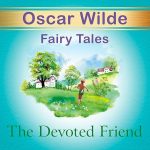
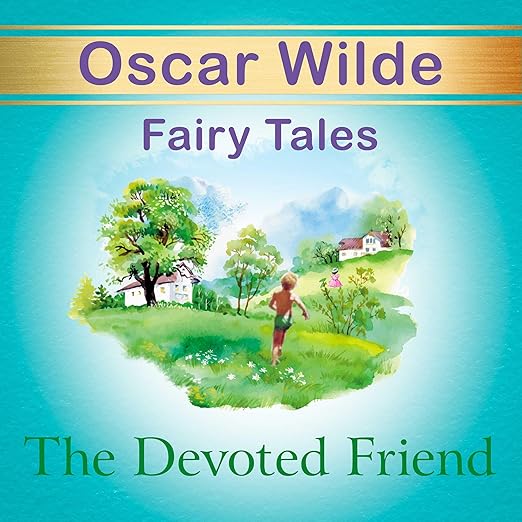
Twenty-five minutes. That is all the time The Devoted Friend asks of you, and it is among the more unsettling twenty-five minutes you will spend with an audiobook this year. Oscar Wilde published this short story in 1888 as part of The Happy Prince and Other Tales, and it has lost none of its capacity to disturb. The story operates as a fable about the language of friendship being used to dress up exploitation, and Wilde’s wit is at its most surgical precisely because it never quite tips into satire. It simply observes, with devastating clarity, the ways that affection can be weaponised by those who have more.
I find myself returning to this story periodically when I need reminding of why Wilde deserves his reputation beyond The Importance of Being Earnest and Dorian Gray. The short form suited him perfectly: here, every sentence carries weight, and the moral arrives not with a lecture but with an image so bleak and so darkly comic that it stays with you long after the audio ends. For twenty-five minutes of listening, this is an extraordinary return.
About the Audiobook
The story’s world is a small one: Hans, a gentle gardener who tends his flowers and asks little of life, and Hugh the Miller, a prosperous neighbour who speaks endlessly of the duties of true friendship while consistently arranging matters so that Hans bears all the costs of that friendship. Hugh visits Hans enthusiastically in summer when the garden is beautiful and Hans has flowers to give away. In winter, when Hans is impoverished and subsisting on a few pears and hard nuts, Hugh stays comfortably at home, rationalising his absence as an act of generosity: he does not wish to make Hans jealous by displaying his own warmth and abundance.
Wilde constructs the moral architecture of the story with characteristic precision. Hugh’s rhetoric is perfectly calibrated to extract labour and loyalty while offering nothing of substance in return. His promised gift of a broken wheelbarrow, falling apart and not even usable, is the comic and tragic centrepiece of the arrangement. In return for this promised but never-delivered gift, Hans works for Hugh day after day, selling his flour, mending his roof, running errands at all hours. The denouement, Hans’s death on a winter night while running an errand for Hugh’s sick son, and Hugh’s subsequent self-congratulatory eulogy at the funeral, arrives with the force of a trapdoor opening.
The frame narrative involving a duck and a water-rat discussing the story adds a layer of ironic distance and situates the moral within a broader meditation on what we choose to call generosity and devotion. It is a typically Wildean device: the animals are the audience, and their incomprehension of the moral mirrors the comfortable incomprehension of Hugh himself.
At a 4.5 average from 15 Audible listeners, this recording from Strelbytskyy Multimedia Publishing has found a small but appreciative audience. A note in the synopsis confirms that reference material accompanies the audio, which will be useful for listeners engaging with the text in an educational context.
The Narration
Abigail Reno narrates with a lightness of touch that suits Wilde’s register well. The challenge with any Wilde fable is resisting the temptation to oversell the irony; too much knowing delivery and the bite disappears entirely, leaving only cleverness without consequence. Reno maintains the right balance throughout, letting the text carry its own weight while giving Hugh’s self-serving speeches just enough unction to be recognisable without becoming caricature. For twenty-five minutes, the performance is well judged and holds the attention throughout without a false step.
What Readers Say
The 4.5 average across 15 ratings points to a consistently positive reception from a small but engaged audience. No extended written reviews are available on Audible for this recording, but the steady rating suggests that those who listen finish satisfied with both the text and its delivery. At this runtime, The Devoted Friend carries a very low barrier to entry, and the numbers suggest most listeners find the time well spent. The text itself has been in continuous circulation for over 130 years, which is the most reliable quality signal available.
Who Should Listen?
Anyone with twenty-five minutes to spare and an appetite for Wilde’s particular brand of moral storytelling will find this a satisfying listen. It works as a standalone introduction for those new to Wilde’s prose fables, and as a compact revisit for those who already know The Happy Prince collection. It is also an excellent choice for classroom use, given its short runtime, the richness of its themes around friendship, exploitation, and class, and the clarity with which Wilde embeds the moral in the story’s action. Parents looking for something to share with older children who can handle moral complexity will find it rewarding, and anyone needing Wilde at their best in the smallest possible portion of time will not be disappointed.