Clara’s Verdict
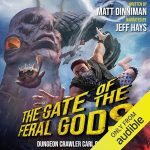
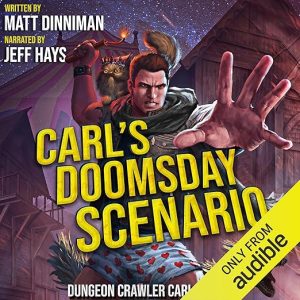
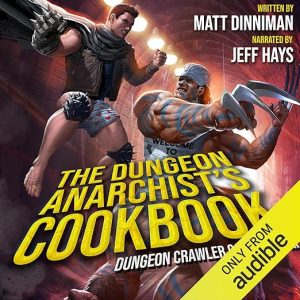
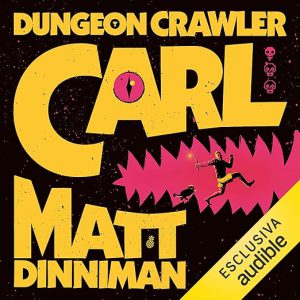
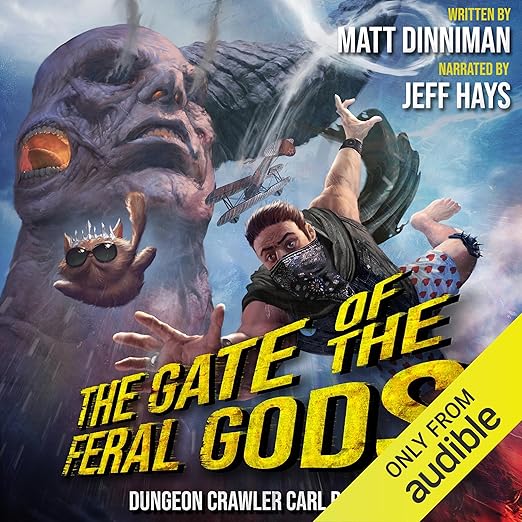
Four books into the Dungeon Crawler Carl series and I genuinely cannot fully explain why it works as well as it does, only that it does. The series features a man and his ex-girlfriend’s Maine Coon cat navigating a dungeon that has been installed inside the Earth by alien entertainment executives broadcasting the apocalypse as a reality television programme. The premise is completely, irreducibly absurd, and Matt Dinniman leans into every gram of that absurdity with evident pleasure. The Gate of the Feral Gods, Book 4, somehow manages to be simultaneously more ridiculous and more emotionally grounded than what came before it, which is a genuine structural achievement that deserves more analytical credit than genre fiction routinely receives.
Published by Audible Studios in September 2021, this is the book in the series that most fans cite as the point where everything fully comes together. The narrative ambition expands, the character relationships deepen, and the game mechanics are used with enough sophistication that they generate genuine drama rather than serving as a backdrop for action sequences.
The Fifth Floor and What It Costs
The fifth floor of the dungeon is structured around a bubble containing four castles: a floating fortress occupied by warrior gnomes; a castle built from sand; a derelict submarine guarded by malfunctioning machines; and a haunted crypt surrounded by lethal traps. Carl’s team cannot capture these castles alone. For the first time in the series, they must genuinely rely on other crawlers, people who are low-level, barely surviving, and not obviously trustworthy. That shift in relational dynamic, from a small core group to something closer to an alliance, changes the emotional texture of the book considerably.
Dinniman’s particular skill is constructing a game system that feels internally consistent while deploying it to generate consequences that feel human rather than mechanical. The achievement notifications and system messages that punctuate the narrative are written with a bureaucratic deadpan that serves as comedic counterpoint to the actual chaos they describe. The Donut character, a cat with a talent for spectacular magical combat and an obsessive relationship with her social media following, has become a cult figure among progression fantasy listeners, and this book gives her some of the series’ best scenes.
At 18 hours and three minutes, the pacing is tight enough that listeners consistently report losing track of time, which for a long listen is the ultimate endorsement. The fifth floor’s castle structure creates a series of distinct set pieces within a single narrative arc, preventing the sprawl that can afflict LitRPG entries at this length.
Jeff Hays and the Art of the System Message
Jeff Hays is the definitive voice of Carl, and his performance is one of the primary reasons the series has built the audience it has. The specific challenges of this genre are considerable: system notifications must sound distinct from narrative prose; combat sequences need momentum without losing clarity; the protagonist’s sardonic internal commentary must land without becoming wearying over 18 hours; and the ensemble of non-player characters must be individually recognisable without caricature.
Hays manages all of these simultaneously, with evident enjoyment. His ability to deliver the AI character with what one reviewer generously described as “a foot fetish” entirely straight is exactly the correct approach to that brand of horror-comedy. Playing it for laughs would undermine the joke; playing it straight makes it deeply unsettling and therefore very funny. The system achievement notifications, which Dinniman uses throughout the series as a kind of dark chorus, are delivered with precisely calibrated bureaucratic flatness that makes each one land differently.
What Readers Say
Thirty-five Audible UK reviews at 4.7 stars represents a strong endorsement from an engaged audience. Chokeholdbyfiction praised the ensemble expansion and specifically highlighted the AI character: “someone give a standing ovation to the creepy AF AI with the foot fetish. I live for that weirdo.” Benjamin offered the most analytical review, calling it “utterly ridiculous, relentlessly clever, and impossible to put down,” while noting Dinniman’s ability to escalate the chaos without losing narrative control. Steve Shepherd kept it simple and accurate: “the future is bleak but Carl is the hero we need.” Mr W J Durrant’s review, “Read this book. Don’t not read it. You’ll upset Mongo,” is either extremely cryptic or extremely knowing, depending on where you are in the series. Matthew C Stillman’s account of reading four books in a little over a week after not reading for a decade is perhaps the most compelling endorsement of all.
Who Should Listen?
Start at Book 1 of Dungeon Crawler Carl. This is not a series where jumping in mid-run is advisable; the character relationships, the world’s internal logic, and the running jokes all depend on what came before. If you have already read Books 1 through 3, Book 4 is where most fans report the series reaching full maturity. Series veterans should not hesitate.
For newcomers: if you enjoy comedy that earns its darkness, ensemble casts with sharply differentiated personalities, and game mechanics used to create genuine narrative stakes rather than as an end in themselves, begin at the beginning and trust the escalation.