Clara’s Verdict
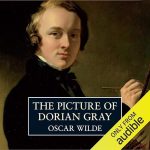
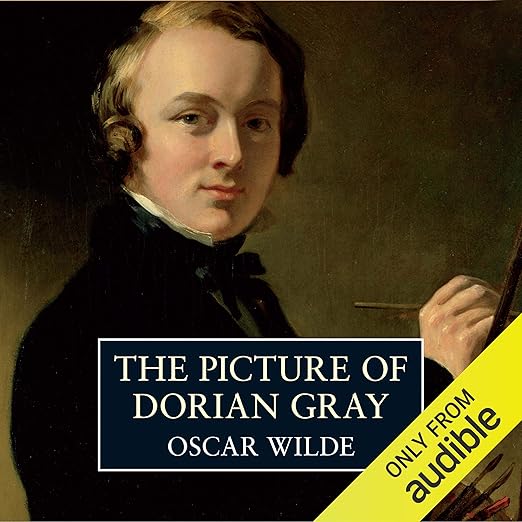
I first encountered The Picture of Dorian Gray at university, in a seminar that spent more time debating whether Wilde was writing a moral fable or a seduction fantasy than it did attending to the prose itself. I came back to it in this Audible Studios edition narrated by Edward Petherbridge, and what struck me most forcibly was how the audio format resolves that academic ambiguity. When you hear Lord Henry Wotton speak rather than read him silently on the page, his epigrams land differently. They are not the voice of the author so much as the performance of a brilliant, morally bankrupt man who has found the perfect audience for his worst ideas in the impressionable young Dorian. The gap between Wilde’s evident delight in Lord Henry’s wit and his judgment of its consequences is suddenly unmistakable when you are hearing it rather than reading it.
This is Wilde’s only novel, and it remains one of the most formally controlled Gothic fictions in the English language. Published in 1890 in Lippincott’s Monthly Magazine and revised in 1891 into the form most readers know, it tells the story of a beautiful young man who makes a Faustian bargain: his portrait will age and bear the marks of his sins while he remains eternally young. What follows is less a horror story in the conventional sense than a forensic study of what happens to a soul given permission to do whatever it wants without consequence. Wilde understood corruption as a gradual process, and the novel’s pacing reflects that understanding.
About the Audiobook
The Audible Studios edition runs to 8 hours and 5 minutes and was released in August 2007, making it one of the older recordings in the platform’s catalogue. It carries a 4.4-star average from 24 ratings. The relatively modest rating count reflects the availability of competing editions of this public-domain novel rather than any deficiency of this one. For a novel of this stature, multiple narrators and publishers have produced versions, and listeners who approach Wilde’s prose regularly tend to have strong preferences about casting.
The novel’s structure is worth understanding before you begin. The first half is almost entirely dialogue, driven by the aesthetic debates between Lord Henry, Dorian, and the painter Basil Hallward. It is one of the most idea-dense works in Victorian fiction, and the pace is deliberate by design. The action accelerates in the second half, culminating in events that one reviewer accurately calls “brilliantly harrowing.” The infamous Chapter 11, in which Wilde digresses at length on perfume, music, jewels, and textiles as manifestations of Dorian’s moral vacancy, is the passage that divides readers most sharply and is the most frequently cited source of difficulty in listener accounts.
The Narration
Edward Petherbridge is an exceptionally distinguished choice for this novel. A classically trained stage actor with a career spanning decades of work in theatre and television, he possesses exactly the combination of technical precision and emotional restraint that Wilde’s prose demands. His Lord Henry is silky and dangerous without ever tipping into camp; his Dorian shifts convincingly from innocence to studied corruption across the novel’s timeline, which covers approximately twenty years and requires subtle vocal ageing that many narrators do not attempt. Basil Hallward, the conscience of the novel whose moral clarity makes his presence all the more tragic, is given a warmth that makes his scenes genuinely affecting rather than merely expository.
Petherbridge understands that the text’s theatrical qualities, its speeches, its reversals, its moments of sardonic observation arriving at the precise moment of maximum impact, are to be performed rather than merely read aloud. The result is one of the most satisfying recordings of a Victorian classic currently available on Audible.
What Readers Say
Intriguing (5 stars, Fidelina): “Super book. Beautifully written. Intriguing story.”
A (Mostly) Wondrous Read (4 stars, Debbie McGowan): “On the whole this is a beautiful piece of classic literature. The narrative is largely driven by Wilde’s remarkable prose.”
Wonderful heartrending tale (5 stars, Carol Lange): “Wilde should never have gone to jail. Wonderful story.”
Brilliant moments but a slog to get through (3 stars, Kindle Customer): “The ideas and morals are the best bits. The parts where Dorian is confronted with his actions are a fascinating exploration. The endless description of clothing and furniture becomes overbearing.”
Who Should Listen?
This is an essential audiobook for anyone interested in Victorian literature, Gothic fiction, or the relationship between aestheticism and moral philosophy. It is also an outstanding introduction to Wilde for listeners who know only his plays: the novel shows him working in a longer form with remarkable discipline and reveals the darker currents beneath the wit his comedies make so amiable. The one caveat is Chapter 11, which tests attentive listeners as much as any chapter in the Victorian canon. Push through it. Wilde intended the discomfort as part of the novel’s formal argument, and the final act more than compensates. Listeners who found the novel slow should note that the audio format genuinely helps: Petherbridge’s pacing across the dialogue-heavy opening sections is more engaging than silent reading of the same pages.