Clara’s Verdict
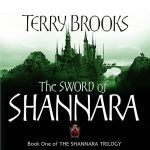
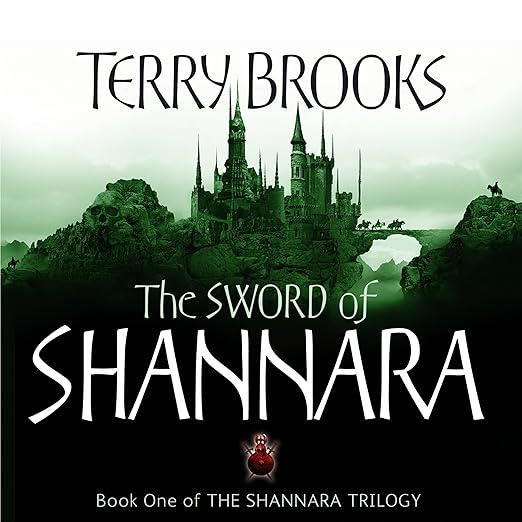
There is something almost archaeological about returning to The Sword of Shannara in the present day. Terry Brooks published the original novel in 1977, the same year Star Wars arrived in cinemas and a generation decided that epic fantasy was their natural habitat. The book was a commercial phenomenon and, for many readers, their first encounter with secondary world fantasy after Tolkien. It made Brooks one of the genre’s defining figures and launched a series that would eventually run to dozens of volumes across multiple interconnected trilogies.
The unavoidable conversation about this book is the Tolkien comparison, and I want to address it honestly before anything else. The structural resemblances to The Lord of the Rings are substantial. The farm-boy-to-hero arc, the small company assembled to defeat a resurgent dark lord, the wise druidic guide, the ancient weapon as the key to salvation: the scaffolding is borrowed. Brooks himself has acknowledged this. The question is whether what he builds on that scaffolding has its own value, and the answer, across a twenty-six-hour Scott Brick performance, requires some nuance.
About the Audiobook
The world of the Four Lands is post-apocalyptic in a way that 1977 readers were only beginning to appreciate. This is our world, thousands of years hence, after some unnamed catastrophe has allowed magic to return and reduced humanity to quasi-medieval conditions alongside elves, dwarves, and gnomes. Shea Ohmsford is half-human, half-elfin, living peacefully in the Vale until the druid Allanon appears with the news that the Warlock Lord has returned, and that only the Sword of Shannara, whose power lies in a quality of character rather than physical force, can stop him.
What Brooks brings that Tolkien does not is a more contemporary narrative pace. The prose moves. The quest structure, while familiar, is executed with genuine storytelling confidence, and the world’s post-apocalyptic backstory gives it an undertow of melancholy that distinguishes it from pure sword-and-sorcery. The characters are somewhat thinly drawn by the standards of later fantasy, but the protagonist’s internal struggle with whether he is truly the person the quest requires of him provides a psychological thread worth following across the full length of the book.
With fifty million copies sold and a television adaptation in The Shannara Chronicles, this is a book with a proven audience. For fans who came to the series via the television version, the books offer considerably more depth and detail than the screen adaptation managed to convey, particularly regarding the world’s backstory and the moral complexity of Allanon as a character. The series was published starting from December 2015 in its audiobook form, and the production by Little, Brown Audio remains strong.
At twenty-six hours and twenty-one minutes, this is a substantial commitment, but one that rewards listeners who engage with it as a work of genre history as much as pure entertainment. Reading it now, you are reading a book that shaped what modern epic fantasy became.
The Narration
Scott Brick is among the most prolific and technically accomplished narrators in American audiobook production, and his performance here is a demonstration of why. He handles the ensemble of characters with clear vocal differentiation, manages the tonal range from high adventure to quieter character moments without strain, and keeps the momentum of a very long listen moving. Listeners who have encountered Brick on thrillers will find his register somewhat different here, more ceremonial, appropriately so. His authority over long-form fantasy narrative is evident throughout.
What Readers Say
The Sword of Shannara holds a 4.4 rating from five UK reviewers, with responses that map onto the book’s inherent tension between nostalgia and critical reassessment. Vickster called it the biggest rival to Tolkien and described getting hooked on fantasy at fourteen in terms that will resonate with many. Gianluca Memoli, who first read it in Italian nearly forty years ago, found particular pleasure in encountering it in the original language, praising the careful use of adjectives. Raphowl, reviewing in February 2026 after returning to the book as an adult, was blunt: “almost a carbon copy of LOTR” with the resemblance verging on plagiarism. But he acknowledged it remains a decent read regardless. Alex’s four-star review struck the balance most precisely, noting the LOTR similarities while arguing that Brooks’s protagonist arc and world-building detail earn the book independent standing.
Who Should Listen?
For listeners who are new to epic fantasy and want a foundational text in the genre’s history, this is a strong and appropriately vast introduction. For those who have already read Tolkien extensively, the similarities will be impossible to ignore, and enjoyment will depend significantly on how much weight you give them. Fans of the television series who want to understand its source material should start here rather than with The Elfstones of Shannara, which the show adapted. Those willing to commit to a long investment will find the Shannara world expands considerably as the series develops across its many subsequent volumes.