Clara’s Verdict
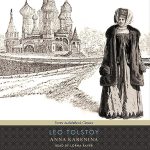
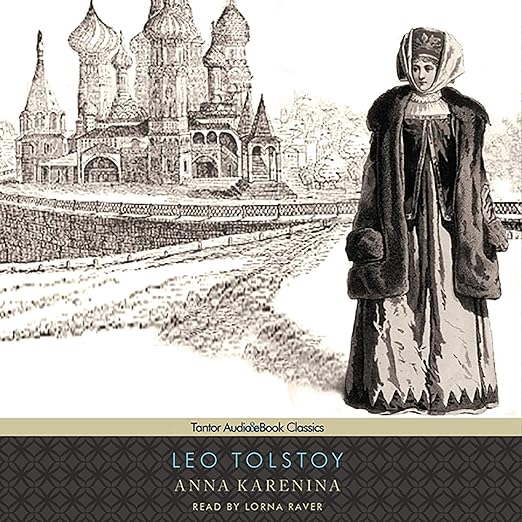
I came to this Tantor Audio edition of Anna Karenina on a grey February Sunday, which I now think is the only correct meteorological condition for beginning Tolstoy. There is something about the novel that requires a certain quality of light — or lack of it. This is a book about people making catastrophic choices in full view of the consequences, and Tolstoy’s genius is to make those choices feel not just understandable but almost inevitable. At thirty-nine hours and forty-four minutes, Lorna Raver’s narration is a sustained commitment of a very particular kind. You will live inside this world for a significant stretch of your listening life.
One note on the reviews attached to this product: several mention typographical errors. Those reviews appear to be evaluating a print edition sold under the same product grouping — the audiobook is a separate production and the print complaints are not relevant to the listening experience. I raise this only to prevent unnecessary concern from prospective listeners.
About the Audiobook
Tolstoy’s novel, completed in 1878, opens with one of literature’s most celebrated sentences: ‘Happy families are all alike; every unhappy family is unhappy in its own way.’ What follows is a dual narrative of enormous scope. The primary thread follows Anna Karenina, a beautiful and intelligent woman married to a senior government minister in St Petersburg, who falls ruinously in love with Count Vronsky, a wealthy cavalry officer. Their affair is not clandestine gossip; it is a public rupture that costs Anna her social position, her son, and ultimately far more. Vladimir Nabokov called this one of the greatest love stories in world literature, and the framing is accurate to what the reader experiences, though it undersells the philosophical breadth of the book considerably.
Running in parallel is the story of Konstantin Levin, a landowner whom Tolstoy drew substantially from his own experience — melancholic, intellectually restless, searching for meaning through labour, marriage and eventually faith. The contrast between Anna’s destructive search for fulfillment through passionate love and Levin’s slower, more practical journey toward contentment gives the novel its philosophical architecture. Surrounding both threads is a tapestry of secondary characters that constitutes a fully realised portrait of nineteenth-century Russian society in transition, covering agrarian reform, revolutionary thought and the rituals of an aristocracy that sensed its own precariousness.
The Narration
Lorna Raver is a narrator of considerable range and stamina. Nearly forty hours of Tolstoy is an extraordinary undertaking. The novel demands differentiation across dozens of characters, tonal shifts between drawing-room society and rural estate life, and the capacity to carry extended interior monologues without losing the listener’s thread. Raver manages this with consistency and intelligence. Her Anna is appropriately compelling — you hear the intelligence and restlessness that makes the character sympathetic even at her most self-destructive. Her Levin is quieter and more interior, which is entirely as it should be.
At least one reviewer describes the translation used in this edition as much more readable than ponderous Victorian versions — less formal, more immediate. That is a significant editorial choice; the translation underpins everything Raver does, and a lively contemporary translation will produce a noticeably different audio experience than a stiff Victorian rendering. For audio listening particularly, the quality of the translation matters as much as the quality of the narration itself.
What Readers Say
The 4.3 rating from 298 listeners is a solid score for a canonical text, though opinions divide predictably along lines of what listeners were expecting. One reviewer came expecting a love story and found instead a philosophical examination of Russian society, agrarian economics and revolutionary thought, with the romances providing relief rather than driving the whole. Another, having read the novel forty years earlier in a different edition, found this translation much more readable and called the story ageless. A third found parts tedious and hard going while still appreciating why it is a classic. These responses feel honest and accurate to the actual text. Anna Karenina is not an easy read in the conventional sense, and the audio format does not change that fundamental characteristic.
Who Should Listen?
Anna Karenina in audio is for listeners prepared to invest the time and sustained attention this work requires. The nearly forty-hour runtime is not incidental — Tolstoy’s density is part of his effect, and the philosophical digressions that some listeners find tedious are integral to the architecture of the whole. If you have previously been defeated by the novel in print, Raver’s narration may offer a more tractable path through it — audio has a way of carrying you past the slower passages that print does not. If you are expecting a propulsive romantic narrative rather than a vast social and philosophical novel, look elsewhere.