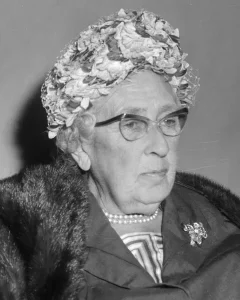
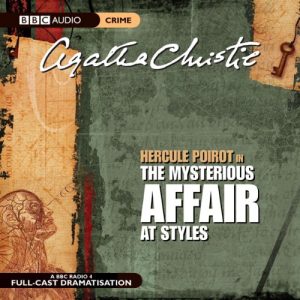
Agatha Christie (1890 to 1976) remains the best-selling novelist of all time, with more than two billion copies sold, and the most-translated individual author on record. Born into a wealthy upper-middle-class family in Torquay, Devon, and largely schooled at home, she collected six consecutive rejections before The Mysterious Affair at Styles – the 1920 debut of Hercule Poirot – changed everything.
Across 66 detective novels and 14 short-story collections she gave crime fiction three immortal detectives: Poirot, Miss Marple and the husband-and-wife pairing of Tommy and Tuppence. Writing at the heart of the Golden Age of Detective Fiction, she earned the title Queen of Crime, wrote the world’s longest-running play in The Mousetrap – performed in the West End since 1952 – and was made a Dame in 1971 for her contribution to literature.
Her life fed the work. Dispensary service in both world wars gave her a specialist’s knowledge of poisons; marriage to the archaeologist Max Mallowan took her on annual digs in the Middle East that surfaced in the fiction; and in 1926, after the collapse of her first marriage, she made headlines of her own by disappearing for eleven days.

 2 hours and 13 minutes