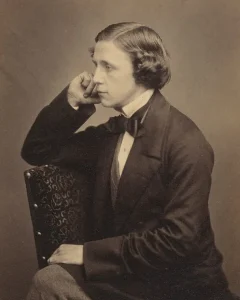
Lewis Carroll was the pen name of Charles Lutwidge Dodgson, born in 1832: an English author, poet, mathematician, photographer and reluctant Anglican deacon who spent most of his life at Christ Church, Oxford, as scholar and teacher. It was there that he produced the works that made him immortal – Alice’s Adventures in Wonderland in 1865 and its sequel Through the Looking-Glass in 1871, two of the most important books in Victorian literature.
Carroll’s genius lay in word play, logic and fantasy. His poems Jabberwocky and The Hunting of the Snark defined the genre of literary nonsense, and some of Wonderland’s skewed logic reflects his published work on mathematical logic – the nonsense, in other words, was built by a professional. Alice Liddell, daughter of the Dean of Christ Church, is widely identified as the original inspiration for Alice, though Carroll always denied it. An avid puzzler, he also invented the word ladder, which he called Doublets. He died in 1898; in 1982 a memorial stone was unveiled at Poets’ Corner in Westminster Abbey, and societies around the world still gather to celebrate his work.

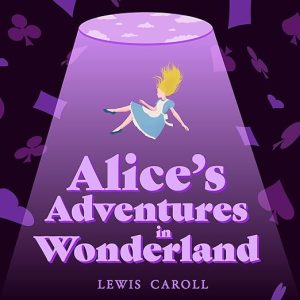 2 hours and 53 minutes