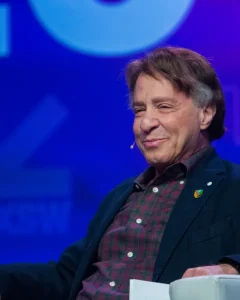
Ray Kurzweil, born in 1948, is an American computer scientist, inventor, entrepreneur and futurist – one of the rare technologists whose name carries weight far beyond the industry. His practical inventions span optical character recognition, text-to-speech synthesis, speech recognition and electronic keyboard instruments, and the honours list is genuinely remarkable: the National Medal of Technology and Innovation in 1999, presented by President Clinton, the Lemelson-MIT Prize in 2001, election to the National Academy of Engineering, induction into the National Inventors Hall of Fame in 2002, and twenty-one honorary doctorates.
As a writer, Kurzweil is the great optimist of the machine age. His books range across artificial intelligence, health technology, transhumanism and the technological singularity, and he lectures widely on the prospect of extending human life through nanotechnology, robotics and biotechnology. PBS counted him among the revolutionaries who made America; Inc. magazine called him Edison’s rightful heir. Whether you find his forecasts thrilling or fanciful, he has earned the right to make them.

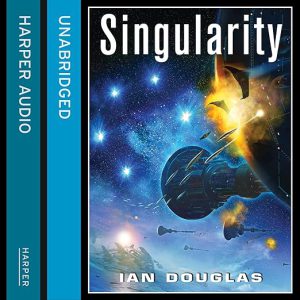 10 hours and 25 minutes