Clara’s Verdict
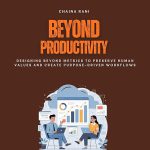
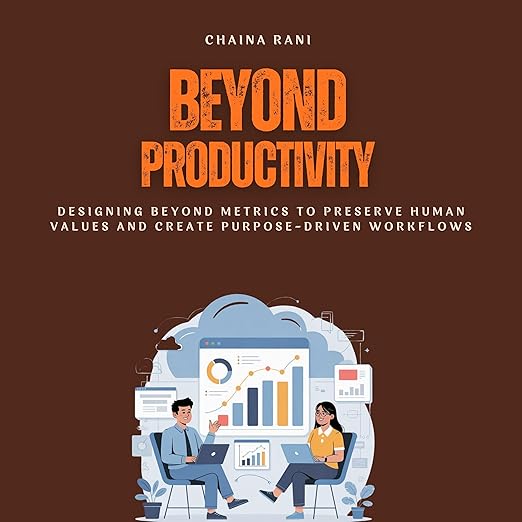
The question at the centre of this book is a good one, and its description asks it without hedging: what do we lose when speed becomes the highest virtue? Chaina Rani is writing directly against the grain of an entire publishing category. The productivity shelf has spent two decades teaching people to remove friction, and this audiobook proposes that the friction was doing something for us, and that clearing it away has cost us creativity, empathy, moral agency and spontaneity without anybody noticing the bill.
I find the framing genuinely interesting because it refuses the easy move. It would be simple to write an anti-technology book, and this is not one. The target is narrower and harder to dismiss: a culture in which metrics quietly outrank meaning, in which algorithm-driven workflows shape what we make before we have decided what we want to make, and in which measurable performance has become the only kind of success anybody knows how to argue for. That is a real argument about values rather than a complaint about phones.
About the Audiobook
The listed release date is 7 March 2026, and that is very nearly everything the listing offers. No publisher is named. No runtime is given. That second gap is the one that would give me pause, because for a book of ideas the length is a substantial part of what you are choosing. A brisk provocation of three hours and a properly developed argument of ten are very different propositions, and the listing gives you no way to tell which this is before you begin.
The description also breaks off in mid-word, stopping at the point where it starts to explain what disciplines the book blends. I can tell you what it promises to cover, which is a fair amount: the psychological and cultural price of frictionless living; the way algorithms quietly redirect what we make and how spontaneously we make it; the friction between what can be counted and what can only be valued; the limits of optimisation as a definition of success; moral agency treated as something to be actively protected inside data-driven systems, never simply assumed; purpose-first professional philosophies; automation adopted without surrendering intention; and workplaces designed for fulfilment as well as output.
That is an ambitious spread, and it points at the book’s central risk as well as its appeal. The first half of that list is cultural criticism. The second half is applied advice for managers and organisations. Books that attempt both often do one well and the other dutifully, and without a runtime or a fuller description I cannot tell you where the balance falls here. What I can say is that the question driving it would justify a substantial listen, and that the promise of moral agency as a design problem rather than a personal virtue is an unusual and welcome angle.
The Narration
Here the missing credit costs you something tonal rather than technical. An argument like this one sits on a knife edge between two registers. Read with too much conviction, a critique of optimisation culture turns into scolding, and nobody has ever been argued out of a habit by a voice that sounds disappointed in them. Read with genuine curiosity, the same sentences become an invitation to think, which is plainly what the book intends.
There is a second and slightly delicious irony to consider. A book arguing that we have lost something by removing friction needs a reader willing to slow down, to leave the pauses in, and to let a difficult idea sit for a beat before moving to the next one. A brisk, efficient, optimised delivery would undercut the thesis with every sentence. With nobody named, pace is the quality I would want to satisfy myself about before committing to the whole thing.
What Readers Say
This is a listing with no listeners attached to it. Nobody has scored it and nobody has written about it. With a March 2026 date and not even a publisher recorded, that silence is unsurprising rather than damning: a book released this recently has had little chance to gather an audience, and plenty of genuinely good non-fiction sits unrated for a year.
What it does mean is that you have no crowd to hide behind. With a well-established title you can measure your instincts against a few thousand strangers first. Here the description and a short sample are the whole of the available evidence, and you would be forming a view early rather than confirming somebody else’s. Some readers rather enjoy that. Others will want to wait, and waiting is entirely reasonable.
Who Should Listen?
This is aimed at the person who has done everything the productivity books told them to do and feels obscurely worse for it. If you manage a team and have started to suspect that your dashboard is measuring the wrong things, or if you make anything creative and can feel the tooling shaping the work before you have chosen a direction, the argument here is pitched at you. It would pair well with a walk rather than a desk, which is presumably the point.
Hold off if you want case studies, named research and a documented evidence base, because the description promises frameworks and philosophy, not evidence, and no published record exists yet to tell you how rigorous the underlying material is. Anyone who simply wants to get more done in less time should look at a different shelf entirely. This book is arguing that the shelf is the problem.