Clara’s Verdict
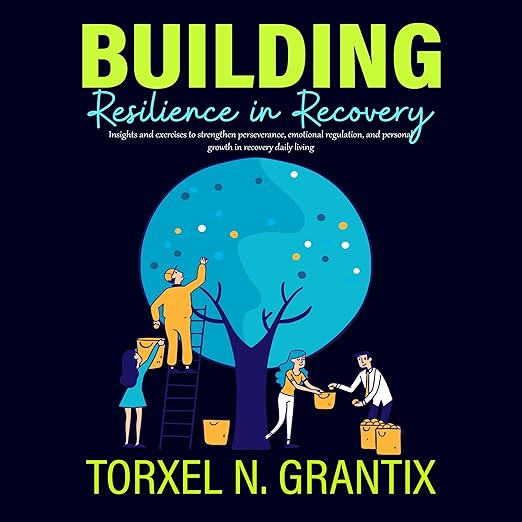
The recovery genre has a persistent problem: too many books either traffic in cautionary memoir or lean so hard into clinical language that the person actually struggling cannot find themselves anywhere in the text. Building Resilience in Recovery by Torxel N. Grantix navigates that gap with some care. It is not especially original in its framework, since resilience as a learnable skill rather than an innate quality is well-established ground, but it is executed with a warmth and lack of moralising that makes it considerably more useful than the average title in this space.
At under four hours, it does not overstay its welcome. That runtime signals an author who has thought about what to leave out, which in a genre prone to repetition and over-padding is itself a recommendation. The book gets in, makes its case, offers its tools, and exits without the filler that afflicts so many comparable titles. That discipline is rarer than it should be.
The framing that I found most genuinely useful is the treatment of setbacks. Most recovery content, at least implicitly, treats any backwards movement as a kind of failure that needs to be accounted for. Grantix refuses that framing entirely and builds the alternative with care: setbacks are information, not verdicts. That reframe has real consequences for how listeners relate to their own recovery. It addresses the self-judgment that is often more damaging than the setbacks themselves, and it does so with enough practical specificity to be actually applicable rather than merely reassuring.
About the Audiobook
Published in March 2026 by Graeme Bowles, Building Resilience in Recovery positions itself explicitly as a guide for anyone navigating healing: from addiction, trauma, mental health difficulties, or significant life disruption. The book’s central claim is that resilience is not something you either have or lack. It is a capacity that can be developed deliberately, with the right tools and the right framing, and that development is available to anyone willing to approach it with patience.
Grantix draws on evidence-based psychology to structure the journey: understanding the emotional, physical, and cognitive impact of recovery; learning to respond to setbacks without shame; and, crucially, reframing relapse and emotional pain not as failures of character but as information. That last move, away from shame and towards curiosity, is where the book does its best work. The self-judgment that accompanies most people through recovery is often more damaging than the setbacks themselves, and addressing it directly rather than implicitly is the right instinct.
The book covers self-trust, the establishment of sustainable habits, boundary-setting with others, and the role of community in sustaining recovery over time. It reads as pragmatic rather than prescriptive: more interested in helping listeners build their own frameworks than in handing them a programme to follow without modification. The section on responding to fear without being governed by it is particularly strong, combining practical cognitive techniques with a broader discussion of what fear is actually signalling during recovery.
There is also useful material on the relationship between physical health and psychological resilience. Sleep, movement, and nutrition are addressed not as performance optimisation goals but as foundations for the nervous system regulation that recovery depends on. That integration of the physical and psychological is relatively rare in this genre and reflects a genuinely holistic understanding of what sustained recovery actually requires over the long term.
The Narration
Eddie Leonard Jr. brings a warm, grounded voice to this material that serves it well. His delivery is calm without being clinical, and he handles the more emotionally weighted passages, particularly around shame and self-judgment, with genuine sensitivity rather than performed empathy. Leonard Jr.’s pacing is measured and unhurried, which suits a book designed to be returned to rather than consumed in a single session. For content this personal in nature, the narrator’s tone is genuinely load-bearing, and he carries the material credibly across the full runtime.
What Readers Say
No Audible ratings have accumulated for this title at the time of writing, given its March 2026 release date. The absence of early reviews makes it difficult to triangulate the response from those with lived experience of the subjects covered. For a book in this category, reader testimony about personal resonance is particularly meaningful, and it will be worth checking the listing for reviews from listeners in recovery before purchasing, as those voices will tell you far more than a general literary assessment can.
Who Should Listen?
This will speak most directly to listeners who are somewhere in a recovery journey and need practical, compassionate framing rather than clinical instruction or inspirational memoir. It is also well-suited to those who support others through recovery, whether family members, friends, or carers, and want a better understanding of the psychological landscape involved. It is not a substitute for professional support, and Grantix does not position it as one. At under four hours, it works well as a single extended listen or as a short-session companion across a week of commutes or walks. Listen on Audible UK