Clara’s Verdict
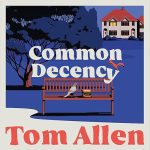
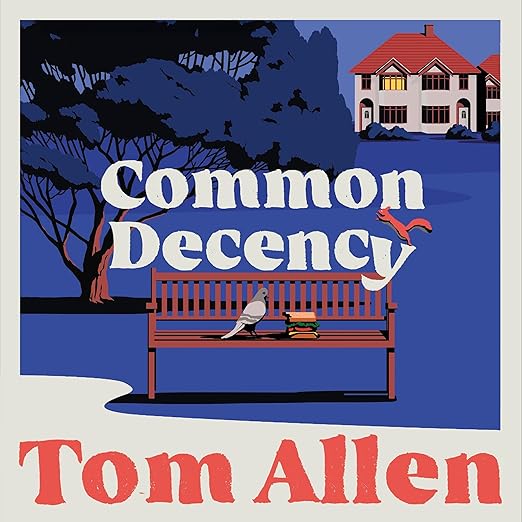
Tom Allen’s comedy has always had a particular quality that separates it from the louder end of British stand-up: it observes suburban life with genuine affection and very sharp eyes, and it understands that the small indignities of respectability are often funnier and more revealing than the large dramatic gestures. Common Decency, his debut novel published by Hodder and Stoughton in May 2026 and read by Allen himself, applies that sensibility to fiction with considerable success. Oak Drive is not a generic fictional suburb; it is recognisably the landscape Allen has been observing his whole career, and the specificity shows on every page.
The setup is familiar enough. Residents band together to save a beloved tree, tensions surface, secrets emerge. But Allen’s execution brings something that distinguishes the book from the comfortable tradition of English village-community fiction it formally resembles. There is real bite beneath the cosiness, and the LGBTQ+ perspective embedded in the narrative adds a dimension that Barbara Pym or Miss Read would not have provided. Allen is writing from the inside of suburban life rather than looking at it from a comfortable distance, and that positioning makes a genuine difference to the texture of the work.
About the Audiobook
Common Decency chronicles the residents of Oak Drive, a street in an unnamed English town, as they unite against a development threat to an oak tree that anchors their shared space. What begins as a community action gradually surfaces the repressed grievances, neuroses, and secrets that the uniform front gardens and tasteful paintwork have been quietly containing. Allen frames this with the precision of a comedian who knows that English manners are largely a system for not saying the thing everyone is thinking, and that the moment those manners crack, the results are simultaneously chaotic and illuminating.
The novel sits in the tradition of British suburban comedy of manners, with the contemporary register of a writer who grew up in the suburbs, still partly identifies with them, and refuses to be entirely satirical about a world he understands from the inside. The 10-hour runtime gives the ensemble cast enough space to develop without any single storyline dominating at the expense of others. Forthcoming from May 2026, the early praise from other writers reflects the warmth and humour that have always been Allen’s signature. Jeff Goldblum called it “absolutely fantastic.” Jacqueline Wilson described it as “a fantastic frothy read.” Claudia Winkleman simply called it “a brilliant book.” Josh Widdicombe, who knows Allen and knows the subject, described it as “a beautiful book about a much-ignored area of British life.”
That characterisation of suburban life as overlooked rather than exhausted as a subject is perhaps the most interesting claim the book makes. Allen seems to believe that the English suburb is still capable of producing genuine comedy and genuine drama, and that belief appears to be vindicated by the early response.
The Narration
Tom Allen reading his own debut novel is the only plausible version of this audiobook. His voice carries a comic authority in the spoken register that is practically a prerequisite for material this tightly dependent on timing. Allen’s stand-up is characterised by an apparent effortlessness that conceals considerable craft: the pauses are placed precisely, the comic rhythms are exact. That quality appears to carry over into his fiction narration. For a novel whose comedy of manners relies so heavily on what is left unsaid, having the author control those silences is an advantage that no other narrator could replicate.
What Readers Say
As a May 2026 release, no Audible listener reviews are available at the time of writing. The early reader response quoted in the publisher’s notes is enthusiastically positive across a wide range of voices. One early reader described it as making them “spit out my tea with laughter” before bringing them “close to tears,” which is in its way the highest praise available for a comic novelist who aspires to genuine emotional range alongside the jokes. Another called it “the cosiest of suburban observational dramas, with the smart sass and wit you would expect from Tom Allen.” A third found it “humorous, charming with a bit of edge to it.” The consistency of the early response suggests Allen has translated his stage sensibility into fiction with more ease than debut novelists often manage.
Who Should Listen?
Highly recommended for fans of Tom Allen’s comedy, for whom this will feel like an entirely natural extension of everything he does on stage. Also well-suited to readers of British suburban fiction who want their village comedy with a contemporary perspective and some genuine darkness underneath the politeness. LGBTQ+ listeners will find the novel’s perspective embedded in rather than imposed on the narrative. Less suited to listeners who want high drama or narrative propulsion. This is a novel of atmosphere and observation rather than plot momentum, and it rewards patience. If you are the kind of listener who enjoys spending time in a fictional world rather than racing through it, Oak Drive is a place worth visiting.