Clara’s Verdict
Duneen keeps its own rhythms, far enough from the big towns to be left alone, and Graham Norton understands that this sort of quiet is never empty: it is a lid. We meet PJ, the town’s dejected policeman, through the shape of his loneliness, an uneventful life punctuated only by the next meal, and that small, precise portrait won me over before anything had actually happened. Then a grim discovery turns up on a building site by the old school, the lid lifts, and long buried secrets and rivalries begin their slow rise to the surface.
What I admire in Frankie is its patience with ordinary lives: the family of three spinster sisters, each carrying her own sorrows, and the town gossip who thinks she has all the answers. My caveat concerns pace. This is not a procedural, and listeners who need momentum above atmosphere may grow restless in the middle stretch.
What This Edition Is and Who It’s For
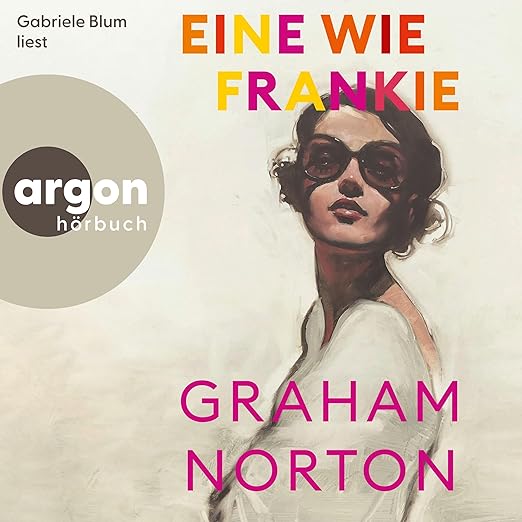
Published by Sceptre and released on 6 October 2016, the audiobook runs to 7 hours and 26 minutes. It is a standalone novel, shelved under fiction and literature, and it belongs to the durable tradition of small-town stories in which a crime is the catalyst rather than the engine. What a listener gets is a community study: a silent, repressed, innocent-seeming town revealed to have a darker, hungrier undertow, observed through people who have spent decades not saying things to one another. Norton, whom many will know first as a broadcaster, works here in a quieter register than his public persona might suggest. Come for the mystery by all means, but stay for the loneliness, the meals, the small kindnesses and the sharp-eyed portrait of a place where everybody knows everybody and nobody knows anything.
The Narration
No narrator is credited in the information I am working from, so let me describe what the novel asks of a reader instead. An ensemble story like this lives on differentiation: PJ’s weary deliberateness, three sisters who must remain distinct despite sharing a house and a history, a gossip whose certainty needs a cadence all of its own. At 7 hours and 26 minutes, the length is comfortable for a slow reveal, long enough to let the town breathe, short enough that the secrets do not outstay their welcome. Sample the opening before you commit, and listen for warmth above all: material like this curdles if delivered coldly, because its heart is sympathy for people life has quietly passed by.
What Readers Say
The audiobook holds 4.2 from 33 ratings: a respectable score from a modest crowd, liked rather than worshipped. My file contains no written reviews to quote, so I shall not put words in listeners’ mouths. A 4.2 in this territory usually reflects exactly the book I have described, one that rewards readers who came for a whodunit and stayed for the character work, while shedding a few who wanted more forward gear. The number and the novel are consistent with each other, which is quietly reassuring.
Who Should Listen?
Listen if you are drawn to small-town fiction where the crime matters less than what it dislodges: secrets, rivalries, decades of things unsaid. Fans of character studies and slow reveals will be well served, and those who seek out LGBTQ fiction will find the novel catalogued under that heading too. Skip it if you want forensic detail, tight plotting and a detective who solves things briskly; Duneen does not move at that speed, and neither does its policeman. For the patient listener, this is the good kind of quiet: the kind with something moving underneath.