Clara’s Verdict
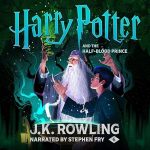
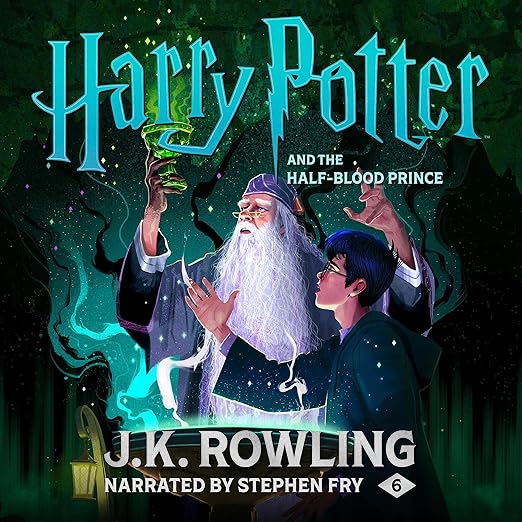
I listened to The Half-Blood Prince for the first time in audio, having read the book twice in print, and discovered that Stephen Fry’s narration transforms certain scenes in ways I did not anticipate. The cave sequence, Dumbledore and Harry searching for the Horcrux through increasingly unbearable conditions, has a quality in audio that the printed page, for all its craft, cannot quite replicate. Fry slows down at exactly the right moments. The darkness thickens in real time. It is among the finest sequences in this entire recording project, and it confirmed what many listeners have long suspected: the Fry Harry Potter recordings are not a secondary way to experience these books. For certain readers and certain moments, they are the primary one.
Harry Potter and the Half-Blood Prince, Book 6 in the series, is published by Pottermore Publishing and runs for 20 hours and 31 minutes. It holds a 4.8 average across 71 Audible listeners, which for a book this widely read and this carefully reviewed reflects something close to genuine consensus rather than enthusiasm bias.
About the Audiobook
The sixth year at Hogwarts is the darkest before the final darkness. The wizarding world is at war in ways it can no longer deny or conceal, Voldemort is gathering followers openly, and Dumbledore has begun preparing Harry for what must eventually happen. At its heart, The Half-Blood Prince is a novel about grief and knowledge: what it costs to know what is coming, what it costs to carry that knowledge alone, and whether love is a form of power or a form of vulnerability. Rowling answers that last question definitively in the final chapters, in a way that divides readers even now.
The Prince of the title, whose annotations in a battered Potions textbook become central to the year’s mysteries, is one of Rowling’s most economically constructed subplots. The anonymous presence in the margins, brilliant and ruthless and ultimately revealed to be someone whose full story belongs to a different book entirely, tells us something important about the nature of inheritance and the choices we make with the gifts we are given. That revelation lands differently on a second reading, and differently again in audio, where Fry’s voice carries the weight of everything we now know.
The romance between Harry and Ginny receives more careful development here than in the film adaptation, which compressed it almost beyond recognition. The relationship matters to the emotional structure of the novel’s final act, and listeners who came to the story first through the films will find more here. The audio edition includes theme music composed by James Hannigan, which frames the listening experience appropriately without intruding on the story. For series newcomers, this is emphatically the wrong place to start. For those who have followed Harry since Book 1, it is the novel that makes everything feel genuinely irreversible.
The Narration
Stephen Fry’s command of this series at Book 6 is complete in the way that only sustained investment in a cast of characters can produce. He has been inhabiting these voices for years by this point, and it shows in the way he deploys each one as dramatic shorthand: Dumbledore’s particular cadence of wisdom and concealment, Snape’s controlled contempt that covers something else entirely, Slughorn’s jovial self-interest with its layer of genuine decency underneath, Harry’s increasingly strained urgency. These are not just vocal disguises; they are characterisations built across six novels and 20 hours of continuous narration. The result is something closer to a performance than a reading, and the 20-hour runtime passes with the kind of ease that only the most assured narrators produce.
What Readers Say
The 4.8 average from 71 Audible listeners reflects the sustained affection this recording has generated across a wide range of listeners. One reviewer called it the penultimate instalment in the best saga ever written, noting that the slightly shorter page count compared to Order of the Phoenix gives this book a tighter, more urgent quality that suits its subject matter. Another praised it as equally brilliant to its predecessors, specifically noting how the relationship between Harry and Ginny, so compressed in the films, receives the full development it deserves in Rowling’s text. There is even a review of a different Harry Potter book filed under this listing, which speaks to both the enthusiasm of Rowling’s readership and the occasional chaos of online reviewing. The consensus among listeners who have actually read the right book is strongly and consistently positive.
Who Should Listen?
This audiobook is for Harry Potter series listeners who have reached Book 6 through the Fry recordings and want to continue with the narrator they have invested in through five previous books. It is not an entry point, and nothing about this review should suggest otherwise: the emotional weight of the cave sequence, the revelation of the title character, and the losses of the final act depend entirely on what has come before. For those who began the series in print and are considering the audio format for the later books, this recording makes a compelling case for making the switch: Fry’s narration adds a dimension that approaches the written text differently and, for this particular novel, often more powerfully. Parents reading the series with children will find the audio reduces the vocal burden considerably while maintaining the dramatic quality the material has always deserved.