Clara’s Verdict
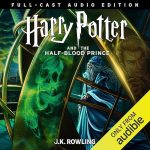
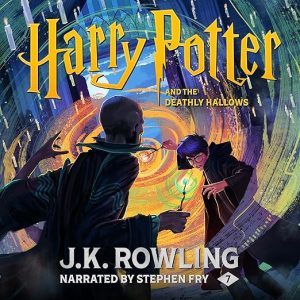
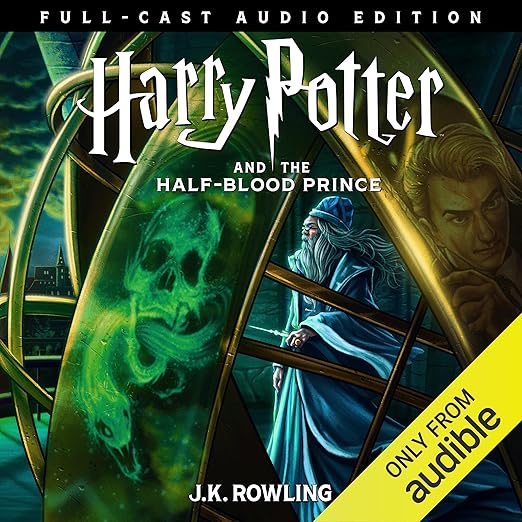
I was halfway through my evening when I put on the opening minutes of this full-cast production and then, rather involuntarily, kept listening. The Harry Potter full-cast editions have been doing something that audio productions almost never manage: taking a story that exists in millions of readers’ heads with deeply personalised voices and internal versions, and replacing all of that with something so well-realised that you find yourself willing to let the mental reconstructions go. The Half-Blood Prince is the sixth book in the series and, I would argue, the one where Rowling’s plotting is at its most precise. Every element laid down in earlier instalments is being drawn towards a conclusion, and the book has an elegiac quality that the 2009 film adaptation failed to capture adequately.
This production, featuring Hugh Laurie as Dumbledore, Riz Ahmed as Snape, Matthew Macfadyen as Voldemort, and Ruth Wilson as Bellatrix Lestrange, is an event rather than simply an audiobook. It is available in Dolby Atmos, which means that on appropriate hardware the spatial audio is genuinely extraordinary. I would strongly recommend good headphones.
About the Audiobook
The Half-Blood Prince opens with Dumbledore arriving at Privet Drive to collect Harry, his wand hand blackened and withered from some encounter he declines to explain. The wizarding world is at open war: Voldemort’s forces are in the ascendant, Death Eaters are operating openly, and Hogwarts itself is under a shadow that the school’s routines cannot quite normalise. Harry’s sixth year is defined by two parallel projects: the private lessons with Dumbledore that take him through memories of Voldemort’s past, revealing the origin and nature of the Horcruxes; and the increasingly complex social life of adolescence, including the relationships with Ginny and Ron that the films dramatised so inadequately compared to Rowling’s actual writing.
The book’s central mystery, the identity of the mysterious annotator of Harry’s Potions textbook whose marginalia transform his academic performance and hint at a complex, troubling history, is one of the series’ best sustained puzzles. The reveal, when it comes, is earned, and its emotional implications extend well beyond the plot mechanics into territory that reframes much of what has come before. It is the kind of revelation that rewards re-reading or, in this case, re-listening, because Rowling has laid the groundwork with a care that only becomes visible in retrospect.
The Dolby Atmos production deserves separate mention. The Quidditch matches have physical spatial presence. The corridors of Hogwarts have depth and dimension. The new musical score adds orchestral emotional weight that the single-narrator Stephen Fry and Jim Dale editions, however beloved, simply cannot replicate. Cush Jumbo narrates the bridging sequences with warmth and authority, providing the connective tissue between the full-cast scenes with real skill.
A Cast Worth Discussing
Hugh Laurie as Dumbledore is the casting choice that defines this production and the one I was most curious about before listening. Laurie brings both the warmth and the opacity that the character requires at this late stage in the series. There is something deliberately withholding about his Dumbledore, a quality of managing information with terrible care, that gives even the gentlest scenes a tremor of unease that enriches the book’s final revelations enormously. Riz Ahmed’s Snape is precisely as ambiguous as the role demands: cold, theatrical, genuinely frightening, and already, on repeated listening, carrying the weight of everything the audience knows that Harry does not. Ruth Wilson’s Bellatrix is operatic and delightfully unhinged. The younger cast, Jaxon Knopf, Rhys Mulligan, and Nina Barker-Francis, acquit themselves with an ease that suggests careful direction across a very large cast.
What Readers Say
The seventy-one Audible UK ratings average 4.8 stars, reflecting both the power of the source material and the quality of this specific production. Sam described the book as equally brilliant to its predecessor with plot twists that make it very hard to put down. Emmie Ford’s extended review championed the novel’s treatment of Harry and Ginny’s relationship, arguing convincingly that the book does considerably more justice to that storyline than the films managed. One reviewer, David, reviewing from 2014, appears to have reviewed the print Goblet of Fire rather than this audiobook entirely, which says something interesting about how deeply embedded the series is in its readers’ lives. The overwhelming weight of the reviews is enthusiastic and specific in ways that signal genuine engagement with the text.
Who Should Listen?
Harry Potter readers who have followed the series in any format and have not yet experienced the full-cast productions should treat this as a genuine event rather than a casual listen. It is the most ambitious and arguably the best-cast of the series so far, and it rewards listening in conditions where the Dolby Atmos spatial audio can be properly appreciated. Good headphones or a quality speaker setup will transform the experience significantly. Children and adults alike will find something here; the book’s elegiac tone, the gathering darkness, and the emotional weight of what Dumbledore is quietly preparing Harry for, make this particularly rewarding for adult re-reads of a series that grows with its readers.