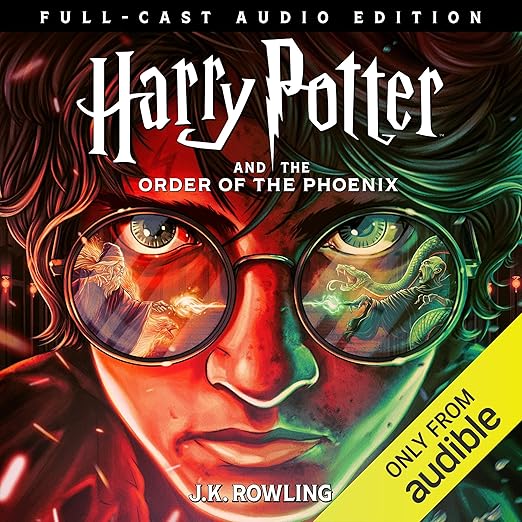
Clara’s Verdict
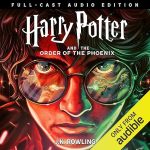
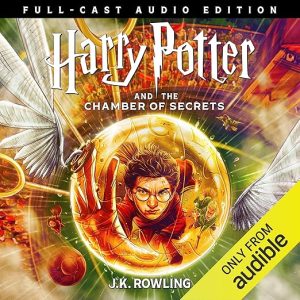
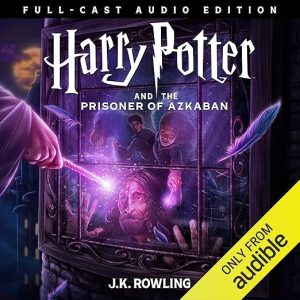
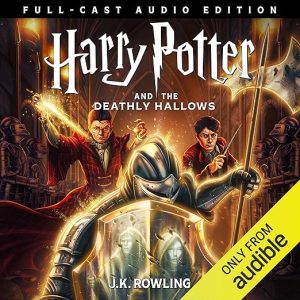
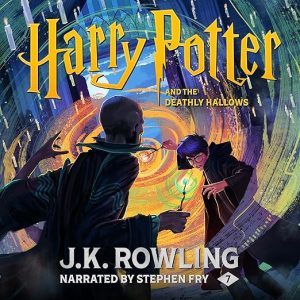
I was mid-afternoon on a Sunday when I first put this on, planning to listen for an hour before making dinner. Three hours later, I surfaced. The Harry Potter Full-Cast Order of the Phoenix is not a subtle experience. It is a spectacle, consciously and deliberately constructed as such: Dolby Atmos spatial audio placing voices in three-dimensional space, hundreds of individual voice credits, a new full orchestral score, sound design that reportedly lets you hear the Golden Snitch dart past your ear during a Quidditch match. Pottermore Publishing and Audible Studios have made something that functions less like a narrated book and more like a theatrical event delivered directly into your headphones.
Released in March 2026, this is the fifth entry in the full-cast series. Order of the Phoenix is the longest book in the series and, for many readers, the most emotionally difficult: Harry at his most furious and most isolated, the Ministry of Magic at its most corrupt and most wilfully blind, Dolores Umbridge at her absolute worst.
A Cast List That Demands Attention
The production’s ambition is announced by its cast. Jaxon Knopf returns as Harry Potter, having appeared in the earlier full-cast editions. Hugh Laurie plays Albus Dumbledore, a casting decision that takes a moment to settle given Stephen Fry’s total dominance of the traditional UK narrations, but which proves, on the evidence of reviews, entirely right for this particular book. Riz Ahmed is Professor Snape. Michelle Gomez is Professor McGonagall. Matthew Macfadyen plays Lord Voldemort. Keira Knightley is Dolores Umbridge. James McAvoy is Alastor “Mad-Eye” Moody. Ruth Wilson is Bellatrix Lestrange. Simon Pegg plays Arthur Weasley. Cush Jumbo narrates.
This is a film-calibre cast delivered in a format that has none of cinema’s visual compensations, relying entirely on voice, sound design, and the listener’s imagination. The Dolby Atmos spatial audio requires compatible headphones to fully appreciate the three-dimensional placement of voices and environmental sounds. On standard earbuds the experience will be different, though the 4.8-star rating from 86 reviews suggests it satisfies at any level of audio equipment.
At 26 hours and 39 minutes, this is a long listen by any measure. Order of the Phoenix is a long book, and the full-cast treatment does not compress it. That is the right decision: the novel’s length is part of its atmosphere, the sense of Harry’s fifth year stretching interminably while the danger grows.
Hugh Laurie’s Dumbledore and Jaxon Knopf’s Harry
The two performances generating the most listener comment are Laurie’s Dumbledore and Knopf’s Harry, and they succeed in opposite ways. Laurie brings a certain mournful gravity to Dumbledore that suits this book specifically: a Dumbledore who is deliberately, painfully keeping his distance from Harry, whose wisdom is not comfort in this volume but source of additional anguish. Laurie’s voice has a quality of weight and slightly suppressed emotion that makes the estrangement between Dumbledore and Harry feel genuinely costly.
Knopf’s achievement is different. Order of the Phoenix is essentially a 26-hour portrait of adolescent fury and grief, and carrying that without tipping into melodrama is a genuine performance challenge. Meghan Thompson’s UK review described it precisely: “What a tough role, delivering line after line of emotion without ever drifting into melodrama or relieving the tension.”
What Readers Say
Eighty-six reviews at 4.8 stars is a strong endorsement. Kelly praised the series over the films for depth and detail. M. Paddon’s review confirmed the enduring quality of the source material across multiple decades of reading. Meghan Thompson offered the most detailed performance assessment, calling Knopf’s Harry definitive for this format. Mary, returning to the book as an adult, found it “just as good as I remember.” The most considered reservation came from BookWorm, who gave four stars and called it “overlong, but generally enjoyable,” acknowledging the series’ cultural significance while noting that expectations around the fifth book’s original publication had been “impossibly high.” The production apparently justifies the runtime even for sceptics.
Why Order of the Phoenix Works as an Event
Part of what makes this particular book in the series well suited to the full-cast treatment is the nature of its source material. Order of the Phoenix is built around institutional power and its abuse. Dolores Umbridge occupies the Defence Against the Dark Arts position and then the High Inquisitor role, dismantling Hogwarts’s authority structure from within with bureaucratic precision and a smiling cruelty that is genuinely more unsettling than Voldemort’s open menace. Keira Knightley’s casting as Umbridge is a decision that communicates exactly the right register: a voice capable of surface sweetness over genuine malice. The Department of Mysteries sequence at the novel’s climax, with its spatial demands and multiple simultaneous voices, is precisely the kind of scene that benefits most from spatial audio and full cast differentiation. It is difficult to imagine how that sequence would sound anything other than extraordinary in Dolby Atmos.
Who Should Listen?
This is for Harry Potter listeners who have followed the full-cast series from the beginning and want Book 5 in the same format. It is also for anyone who has always found Order of the Phoenix the most daunting of the novels and wonders whether the full-cast treatment transforms the experience. The evidence suggests it does. If you are a Stephen Fry loyalist who cannot imagine Dumbledore in another voice, that loyalty is entirely understandable, but the response to Laurie’s performance suggests he earns his place.
New listeners should start at Book 1, not here. The series builds from the beginning and the full-cast format requires no familiarity with prior editions to work, but the story does.