Clara’s Verdict
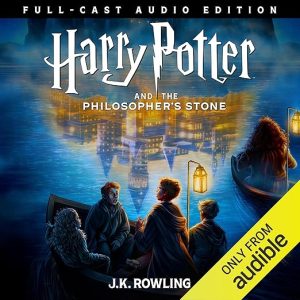
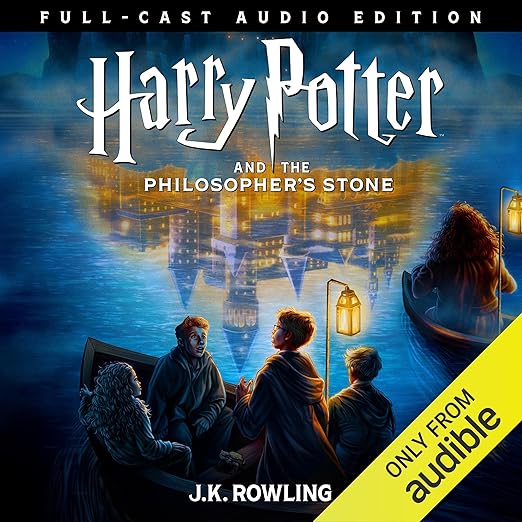
This is a genuinely new thing, and I want to be careful not to compare it unfairly with what already exists. The Stephen Fry recording of Harry Potter and the Philosopher’s Stone has been the definitive audio version for a quarter of a century, and a significant portion of listeners will arrive at this full-cast Dolby Atmos production with Fry’s voice already living inside their memory of the books. Those listeners will need to adjust their expectations, because this is not an alternative reading in that sense. It is a different format entirely: closer in kind to a BBC radio drama than to an audiobook in the traditional sense, and it should be assessed as such.
I listened to the first two episodes on headphones, as the production recommends, and the spatial audio is genuinely impressive rather than merely technically capable. The whoosh of the Golden Snitch is not a marketing metaphor; it actually moves through the audio field. The Great Hall genuinely sounds cavernous. The production crew has used Dolby Atmos with intelligence rather than simply demonstrating that they can.
About the Audiobook
The production stars Frankie Treadaway as Harry, Max Lester as Ron, Arabella Stanton as Hermione, Riz Ahmed as Professor Snape, Michelle Gomez as Professor McGonagall, Matthew Macfadyen as Lord Voldemort, and Cush Jumbo as narrator, with Hugh Laurie as Albus Dumbledore. That is, on paper, an extraordinary cast list, and the choices are mostly inspired. Hugh Laurie brings something unexpected to Dumbledore: a weariness and warmth that does not overlap with either Richard Harris or Michael Gambon in the films, and is entirely his own reading of the character. Riz Ahmed’s Snape is more quietly menacing than the theatrical version the films established, which is a legitimate and interesting reading of where Snape sits at this point in the narrative.
The full-cast format means the story moves differently from a traditional narrated audiobook. Cush Jumbo bridges the action sequences and scene-setting with skill, but dialogue scenes unfold as ensemble performance rather than narrated reading. For the opening books in the series, which are lighter in register and more comic in their approach to Hogwarts life, this works well. Whether the format can sustain the darker and more psychologically complex later volumes is a question for future productions, but as an approach to book one it is appropriate.
The new musical score, produced specifically for this release, adds a layer of atmosphere that a traditional audiobook cannot provide. It is used judiciously rather than continuously, which is the right call.
The Narration
Calling this narration in the traditional sense undersells the production. This is ensemble performance with hundreds of distinct voices, an original musical score, and spatial sound design that places the listener inside scenes rather than at a narrative remove from them. The technical achievement is considerable, and the creative decisions behind it are generally sound. The legitimate concern with this format is that it leaves less imaginative room than a single narrator allows. One of the specific pleasures of audio fiction, and one of the things Stephen Fry’s recording did particularly well, is the space it creates for the listener’s own imagination. A full production fills that space with its own choices, which is not a criticism so much as a trade-off worth being conscious of.
What Readers Say
The 4.8 rating from 143 listeners is a strong signal of genuine enthusiasm. The reviews available are largely warm about the Harry Potter series in general rather than specifically analytical about this production’s choices, which is a limitation of the data. Among listeners specifically engaging with the full-cast audio format, the response has been positive. The book is being given as a gift for children by grandparents and great-grandparents, which suggests the production is finding its intended audience as a family event rather than a solo listening experience. That is likely exactly what it was designed for.
The production’s timing is also worth considering. The November 2025 release came alongside renewed public interest in the wizarding world through various media, and the investment in Dolby Atmos technology and an ensemble cast of this calibre suggests a long-term commitment to the full series in this format. If the subsequent books in the Harry Potter series receive the same production treatment, the casting choices made in book one, and the creative decisions about how to handle the transition from the lighter early books to the darker later volumes, will matter more than they do in isolation. Book one is a promising foundation.
Who Should Listen?
Families listening together, particularly with children encountering the story for the first time. The production’s showpiece quality makes it an event worth planning around rather than background audio. Committed fans of the Fry narration who are curious about a different approach will find this worth experiencing, understanding that it is a companion rather than a replacement. Use headphones. That recommendation is not incidental to the experience; the Dolby Atmos spatial audio is meaningless without them and the production knows it.