Clara’s Verdict
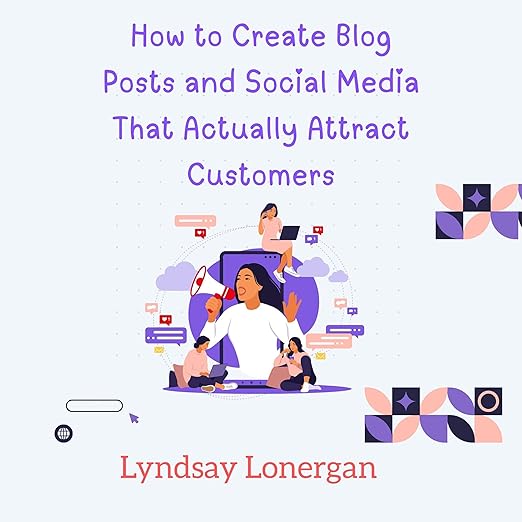
Content marketing guides occupy a peculiar position in the business audio market. There are a great many of them, they share a significant and sometimes indistinguishable amount of conceptual territory, and their practical value depends almost entirely on whether the specific framing and examples land for the specific listener who picks them up at the specific moment when the problem feels urgent. Lyndsay Lonergan’s one-hour guide, How to Create Blog Posts and Social Media That Actually Attract Customers, is aimed at a clearly and usefully defined audience: entrepreneurs, freelancers, bloggers, and small business owners who know they should be producing content but are not producing content that actually converts browsers into paying customers. That is a large and underserved audience, and the title’s directness, the word actually doing meaningful work in the sentence, is a sensible and honest attempt to distinguish this from the more aspirational end of the genre, which promises audience and presence and engagement without being clear about what any of those things mean in terms of revenue.
One hour is a short time in which to cover both blog posts and social media content comprehensively. The book knows this, and the scope is managed accordingly.
Content That Converts Rather Than Content That Exists
Self-published by the author and released in March 2026, the guide runs one hour exactly. Lonergan’s approach is described as hands-on and beginner-friendly, and the content is structured around the practical mechanics of writing content that leads to customer action rather than content that merely accumulates impressions and engagement metrics with no clear commercial outcome. The core argument is that attention, trust, and conversion are sequential goals rather than simultaneous ones, and that most beginner content fails not because it is poorly written or aesthetically lacking but because it is trying to achieve all three at once without a strategic understanding of which comes first and what different types of content are designed to accomplish.
The guide addresses both blog posts and social media content, which in sixty minutes necessarily means treating each at the level of orientation and principle rather than platform-specific detail. Blog content receives attention as a long-form trust-building and organic search asset, social media as a shorter-form community and engagement tool that serves a different function in the customer journey. The book does not attempt platform-specific guidance on Instagram algorithms, LinkedIn post frequency, or Twitter engagement tactics, which is both a genuine limitation and a sensible editorial decision given how quickly platform mechanics change and how quickly any platform-specific advice becomes dated.
For listeners already working in digital marketing or content creation at a professional level, this will cover familiar conceptual ground without adding significant new insight. For a small business owner who has been managing their digital presence reactively and intuitively rather than strategically, the basic framework it provides is genuinely useful as a starting organising principle, even if it requires substantial supplementation to translate into actionable content plans.
Myriam Berger in Her Element
Myriam Berger narrates, a choice that will be familiar to listeners who have encountered her across a range of short-format business and practical non-fiction titles. Berger’s delivery is measured and precise, well suited to material that needs to be clearly understood and remembered rather than emotionally inhabited or persuasively argued. At one hour, there is limited opportunity for the narration to make or break the experience in any significant way, but her consistent reliability in this instructional register is a genuine asset rather than a neutral background factor. The production is clean.
What Readers Say
No listener reviews or ratings are available at the time of writing, consistent with the March 2026 release date and the limited initial distribution typical of self-published short-format business guides. The lack of a review base makes it impossible to assess how the practical advice has translated into listener behaviour change, which is the only meaningful test of a guide of this kind. Early listener responses for content marketing guides of this format typically focus on whether the framework felt specific enough to actually implement, or too abstract to translate into the next day’s work. Both are reasonable concerns, and both are likely to produce responses from different parts of what will be a varied listener base.
Who Should Listen?
Small business owners, sole traders, freelancers, and early-stage entrepreneurs who are starting to think about content strategy for the first time will find this a reasonable and efficient orientation. It is not for experienced content marketers or anyone already operating with a defined content and conversion strategy. The one-hour format is appropriate as a first listen but will need to be followed by more detailed resources on specific platforms, content formats, and keyword and audience research. If you have already engaged with Donald Miller’s Building a StoryBrand framework, or read any of the widely available content marketing guides at full book length, this will feel like a partial revisit of ideas you already hold. If you are approaching the question of content creation and customer acquisition for the first time, it is a reasonable sixty-minute starting point.