Clara’s Verdict
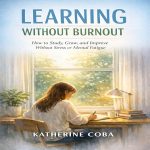
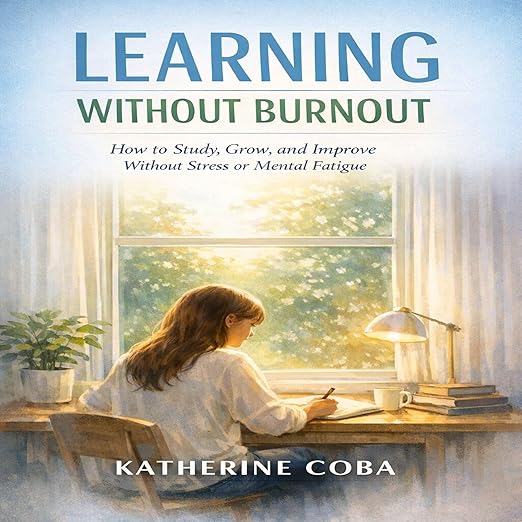
I was a chronic over-preparer at university – the kind of student who colour-coded notes during an all-nighter and then promptly forgot everything by the morning of the exam. Katherine Coba opens Learning Without Burnout by describing, with uncomfortable precision, exactly that pattern: the late-night cram session that leaves you not sharper but hollowed out, wondering why your retention has evaporated despite the hours invested. If you have ever sat in an exam hall feeling like you studied the wrong thing in the wrong way, this book will feel like someone has finally put a name to your frustration.
Coba’s argument is not that you need to study less. It is that the way most of us were taught to study is neurologically counterproductive, and that sustainable learning requires a fundamental shift in how we structure time, rest, and attention. That is a more useful claim than the genre’s usual vague promises of smarter effort, and Coba, drawing on neuroscience and educational psychology, makes it with reasonable rigour for a popular audiobook.
About the Audiobook
The book is organised around what Coba calls the three pillars of burnout-free learning, a framework that distinguishes between cognitive load, motivational depletion, and environmental friction. The most compelling sections address why motivation is the first thing to go – and why treating burnout as a failure of willpower is the wrong diagnosis. Coba makes a strong case that many learners burn out not because they care too little, but because they care too much and have built unsustainable pressure into their relationship with study.
Practical strategies include the use of focused cycles rather than marathon sessions (a well-evidenced approach), the integration of sleep and movement as genuine cognitive tools rather than indulgences, and what Coba terms the Calm Achiever Blueprint, a framework for building repeatable study routines that do not depend on peak motivation to function. The section on recovering from mental fatigue without guilt is particularly well-handled, and will resonate with anyone who has spent a recovery period feeling guilty about recovering.
At one hour and 23 minutes, this is a compact listen, and some listeners may wish for greater depth in places. But for the target audience – students, adult learners, and working professionals juggling skill development – the format feels deliberately appropriate.
The Narration
Scott LeCote delivers a warm, engaged performance that avoids the motivational-speaker register that can plague this genre. He reads with genuine attentiveness rather than performed enthusiasm, which makes the practical guidance feel grounded rather than evangelical. His pacing through the more conceptual sections is particularly assured.
What Readers Say
Published in March 2026, this title has not yet accumulated a public rating on Audible UK. It is a very recent release from an independent author, and reader feedback is still forming. The absence of reviews should not be read as a negative signal – it simply reflects timing. The content itself is solid and well-researched for its format, and the audiobook sits within a genre that reliably finds its audience.
Who Should Listen?
Students at any level who feel trapped by a cycle of exhausting study and disappointing results will find the most immediate value here. It is also well-suited to adult learners taking on new qualifications alongside work, and to parents trying to help children build better study habits. Those looking for a deep academic treatment of educational psychology will need to look elsewhere – this is a practical guide, not a textbook. But as a concise, actionable listen, it delivers more than its runtime suggests. Listen on Audible UK