Clara’s Verdict
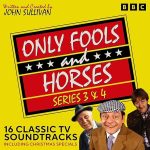
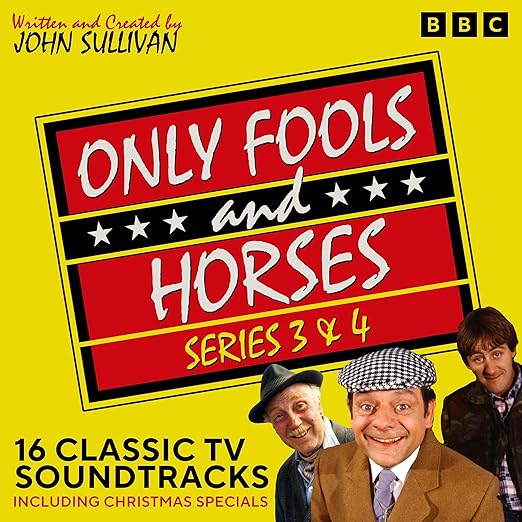
Some things in British culture are simply irreplaceable, and Only Fools and Horses is one of them. Named in 2022 the nation’s best-loved television programme of all time, John Sullivan’s creation has a claim on the national imagination that no other sitcom – not Blackadder, not Fawlty Towers, not The Office – can quite match. The BBC has now released the complete soundtracks of Series 3 and 4, plus Christmas specials, in a single eight-hour-and-fifty-four-minute audio collection, and for anyone who grew up with Del Boy and Rodney, or who came to the series later and wondered what all the fuss was about, this is an absolute treasure.
I should be clear about what this is: not a dramatised adaptation or an audiobook, but the original broadcast soundtracks – the television episodes, complete, without the pictures. That distinction matters both practically (certain visual jokes translate less cleanly) and artistically (it reveals just how extraordinarily well-written these scripts are).
About the Audiobook
Series 3 and 4 represent the point at which Only Fools and Horses moved from a much-loved sitcom to a genuine national institution. Series 3 (broadcast November to December 1983) contains some of the finest half-hours in British television history: “Homesick”, “Healthy Competition”, “Friday the 14th”, “Yesterday Never Comes”, “May the Force Be With You”. The writing has a density and humanity that most contemporary comedy can’t approach – Sullivan understood that the Trotters worked because they were real people in real financial desperation, not buffoons to be laughed at from a comfortable distance.
Series 3 also carries a particular poignancy in this format: Grandad, played by Lennard Pearce, is here in full, and the knowledge that Pearce died in December 1984 – before Series 4 was filmed – makes “Thicker Than Water” (the 1983 Christmas special) a bittersweet reunion with a version of the family that couldn’t last.
Series 4 (February to April 1985) introduces Buster Merryfield’s Uncle Albert, the seafaring replacement whose “during the war” monologues became as beloved as anything in the earlier series. “To Hull and Back” – the 1985 Christmas special – sends the Trotters and the magnificently crooked DCI Slater (Jim Broadbent) on a diamond smuggling adventure and stands as one of the great British sitcom episodes in any format.
A note: the recording preserves the language of the era, with minor edits for music copyright. This is the show as it was broadcast, warts and all, which is exactly right.
The Narration
This is not narration in the conventional sense – it is a full ensemble cast delivering Sullivan’s dialogue in the original performances. David Jason as Del Boy, Nicholas Lyndhurst as Rodney, Lennard Pearce and Buster Merryfield, Roger Lloyd Pack’s Trigger, John Challis’s Boycie, Jim Broadbent’s Roy Slater. The BBC audio archive is of consistently high quality, and the production clarity – warm, immediate, un-fussy – does full justice to the performances.
The absence of visuals is genuinely the only caveat. Del’s falling chandelier, Rodney in the Batman costume – these lose something without the image. But Sullivan’s dialogue is strong enough to carry the comedy independently, and the audio format reveals, perhaps more clearly than watching does, the precision of the comic architecture.
What Readers Say
At time of writing, formal Audible UK reviews are yet to accumulate for this January 2026 release. But the series’ reputation speaks for itself across four decades of consistent affection. For fifty years, critics and viewers have reached for the same vocabulary: warm, funny, humane, rooted in a specific vision of working-class south London life that manages simultaneously to be universal. A sitcom that made a country laugh has proved, with time, to be a sitcom that made a country feel understood.
Who Should Listen?
There’s also an argument that audio is, in some respects, the purest format for material this dialogue-driven. Sullivan’s scripts depend almost entirely on voice – on the specific rhythm of Del’s patter, on the precise timing of Rodney’s bewildered responses, on Trigger’s impeccable comic density. Visual comedy is welcome when it arrives, but it was never the engine of Only Fools and Horses. The engine was always the words, and the words are all here, delivered by performances that have never been bettered.
There’s also an argument that audio is, in some respects, the purest format for material this dialogue-driven. Sullivan’s scripts depend almost entirely on voice – on the specific rhythm of Del’s patter, on Rodney’s bewildered responses, on Trigger’s magnificent density of comic timing. The words were always the engine, and the words are all here.
Anyone who grew up with Only Fools and Horses and wants to revisit it in a new format; younger listeners encountering the series for the first time via audio; anyone who simply wants to spend eight hours in the very good company of people who remind us what British comedy, at its best, can do. This is the BBC at its public service finest – entertainment that earns its permanent place in the national memory.
Find the complete Series 3 and 4 soundtracks on Audible UK. Also available on Kobo, Scribd, and Storytel.