Clara’s Verdict
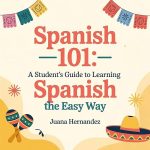
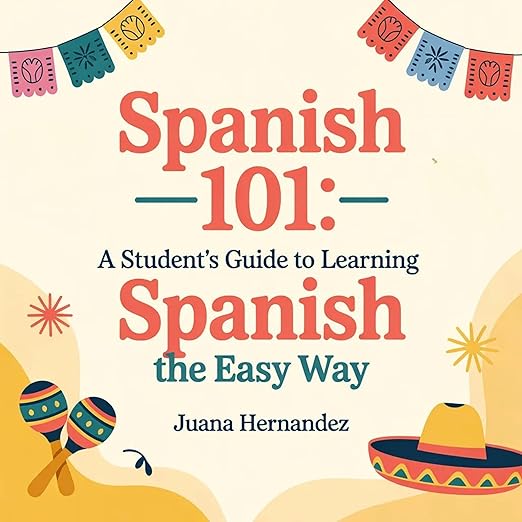
Twenty-nine minutes. That is the honest starting point for any review of Spanish 101, because the duration shapes everything about how this audiobook should be assessed and how it should be used. At under half an hour, this is not a Spanish course, it is a single structured orientation, closer in scope to a very good introductory lecture than to a programme of study. Juana Hernandez’s stated aim is to make the language feel manageable and even enjoyable for beginners, and within those tight parameters, the content is sensibly focused and the approach is sound.
Released in March 2026 by Learn Spanish in Your Sleep Inc., this sits in a crowded genre of short-form language learning audio, and it knows its purpose: it is a starting point, not a destination. There is something to be said for a resource that understands its own limitations and designs accordingly, rather than one that promises more than its runtime can deliver.
About the Audiobook
The guide covers the basics with commendable clarity: present tense structures, gender and articles, everyday vocabulary, sentence construction from the first session, and some practical exam preparation strategies. The treatment of ser versus estar, one of the most reliable stumbling blocks for English speakers approaching Spanish, is handled accessibly, with Hernandez’s emphasis on understanding how the language works in real conversation rather than in grammatical abstraction. That pedagogical instinct is correct: the biggest obstacle for beginners is not the rules themselves but the feeling that grammar is an end in itself rather than a means to communication.
The section on study technique, spaced repetition, pattern recognition, active recall, the case against rote memorisation, is genuinely useful and applies well beyond Spanish. This is the section that a listener who takes nothing else from the audiobook should absorb and implement. The evidence base for these methods is solid, and presenting them in accessible audio form makes them available to learners who might not otherwise encounter them. The audiobook is explicit that it is a companion to practice rather than a replacement for it, and that honesty is to its credit.
The limitations are structural rather than qualitative. There is a ceiling on how much pronunciation guidance audio alone can provide without interactive correction: you can hear correct Spanish, but you cannot receive feedback on your own production from a recording. Twenty-nine minutes also does not permit any real depth of vocabulary or grammar coverage. This is an entry point, and it functions best when used before a class, a language app, or a conversation exchange, not instead of them. The publisher, Learn Spanish in Your Sleep Inc., positions this as part of a broader learning ecosystem, which is the appropriate framing.
The Narration
Marisol Yanes narrates, and her voice is a well-chosen asset for language learning content: clear diction, patient pacing, and the kind of natural warmth that makes a beginner feel that Spanish pronunciation is an invitation rather than a test. Yanes handles both the English explanation and the Spanish examples with audible confidence in the target language, which matters, the listener needs to hear someone who sounds at ease with Spanish, not tentative about it. The transitions between English instruction and Spanish demonstration are smooth, and the pacing allows the listener time to process each concept before moving on. For material of this length and type, the performance is exactly what it needs to be.
What Readers Say
No listener reviews are available for this title at the time of writing, which is consistent with a very recently released, short-form educational audiobook from an independent publisher. The Learn Spanish in Your Sleep Inc. catalogue targets learners who want accessible, low-pressure entry points into the language, and the absence of reviews reflects newness rather than quality. For prospective listeners, the most useful comparison is against the broader field of beginner Spanish resources: this sits comfortably at the lighter end of that range, useful as a primer or a refresher but not as a primary learning programme. Those who want a more comprehensive audio course should look at programmes specifically designed for full language acquisition over many hours of structured content.
Who Should Listen?
This is for absolute beginners who want a friendly, structured overview before starting a more comprehensive Spanish course, or for anyone who studied Spanish years ago and wants a quick conceptual refresh before a holiday, an exam, or a new job. It is also useful for anyone encountering key grammar concepts, the present tense, ser versus estar, gender in nouns, for the first time and wanting a clear verbal explanation before working through exercises. It is not suitable as a standalone learning resource for anyone who needs to reach functional conversational Spanish, the runtime makes that structurally impossible. Use it as a starting block, not a finishing line. At under thirty minutes, the commitment is minimal and the conceptual orientation it provides is sound.