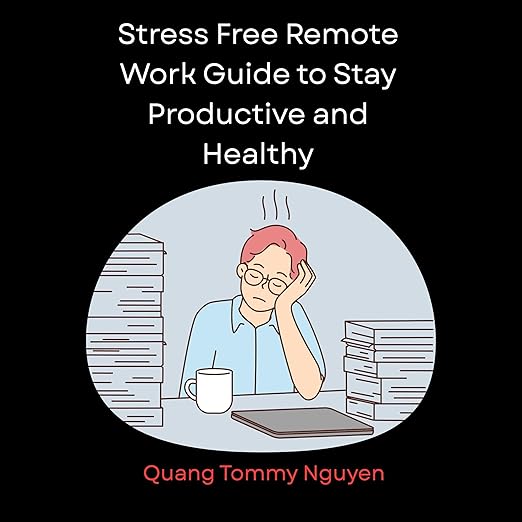
Clara’s Verdict
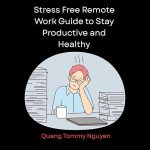
Remote work guides have proliferated to the point of self-parody since 2020, and I approach new entries in the category with a degree of wariness that I will not pretend is entirely fair. Every few months brings another book promising that the secret to thriving from home is either a morning routine more demanding than anything you ever did in an office, or a radical simplicity that sounds appealing on a Wednesday morning and impossible by Thursday afternoon. Quang Tommy Nguyen’s Stress-Free Remote Work Guide disarms some of that wariness by being brief enough to make its argument without overstaying its welcome, and by being honest enough to name hustle culture explicitly as something it is not trying to sell.
At exactly one hour, this is a booklet rather than a book, and it should be assessed accordingly. The question is whether it delivers actionable value within its runtime. The answer is generally yes, for the right listener in the right circumstances, and at the right point in their relationship with remote work.
About the Audiobook
Published in March 2026 by the author, the guide covers six interconnected areas: workspace ergonomics and setup, the design of daily routines that protect mental energy rather than simply maximise output, time management without the anxious productivity culture that makes remote work feel worse than the office ever did, burnout prevention, the specific challenge of maintaining the boundary between work and personal life when both happen in the same physical space, and long-term motivation maintenance. Each section is concise and oriented toward immediate action rather than extended analysis.
The section on digital fatigue is particularly timely and particularly useful. The accumulated cognitive cost of back-to-back video calls, constant messaging platforms, and the blurring of professional and social technology use is increasingly well understood, and Nguyen’s practical guidance on creating friction between work and non-work digital spaces is both sensible and immediately actionable. The recommendation to treat notifications as a designed choice rather than a default condition is the kind of framing shift that makes a practical difference to a working day without requiring any significant investment of time or resource.
The workspace ergonomics section covers the basics competently, addressing monitor height, chair posture, and the importance of physical separation from the domestic environment where possible. Listeners looking for detailed technical guidance will need a more specialised resource, but for the majority of remote workers who have simply worked at whatever table or surface was available without giving it much thought, the section offers a useful prompt for change. The daily routine framework is practical and flexible rather than prescriptive, which is exactly the right approach for a working pattern that varies significantly between individuals and roles.
The section on work-life boundary management addresses something that productivity guides frequently sidestep: the specific guilt of finishing work at a normal hour when your office is also your living room. Nguyen engages with the psychological dimension of this, not just the logistical, acknowledging that the structure he recommends requires a shift in how we think about presence and availability, not just a change in how we organise our calendar. That willingness to take the emotional dimension of remote work seriously, rather than treating it as a discipline problem to be solved with a better task list, is the most distinctive feature of his approach.
The Narration
Jimmy Trisler brings a clear, professionally warm delivery to the material. His pacing is well matched to the guide’s instructional register, and he gives the practical sections a rhythm that makes the steps easy to follow and retain. For a one-hour audio guide where the listener needs to hold specific advice without the support of a physical page to return to, clarity and pacing are more important than performance range or dramatic variation. Trisler delivers on both counts throughout, and the production is clean. The runtime is handled with appropriate economy; there is no impression of content stretched to fill a predetermined slot.
What Readers Say
No Audible reviews have been recorded for this title at the time of writing. As an independent publication released in March 2026, it is at the very beginning of its listener relationship. The subject matter has a large potential audience across remote employees, freelancers, and the growing community of digital nomads working across time zones and from locations that did not exist as workplaces five years ago. The anti-hustle positioning should resonate with the segment of that audience who have found conventional productivity advice counterproductive, and who are looking for a framework built around sustainability and health rather than maximum output.
Who Should Listen?
This guide is for remote workers, freelancers, and digital nomads who are experiencing stress, persistent low energy, or creeping burnout and want a short, structured framework for rethinking their working habits without committing to an elaborate system that will collapse under the pressure of a busy week. It is particularly suited to those who have found more aggressive productivity approaches exhausting rather than enabling, and who want practical advice rooted in wellbeing rather than performance metrics. The one-hour runtime makes it ideal for a single commute, a lunch break, or an evening when you need a reset rather than a deep read. Those already working with a refined and functioning remote work system will find much of this familiar ground.