Clara’s Verdict
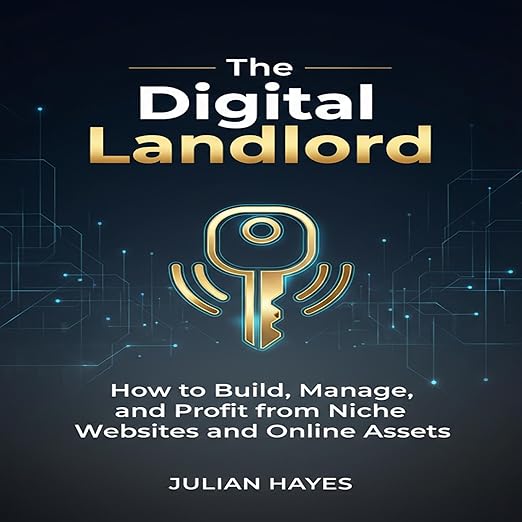
The phrase digital landlord is doing a considerable amount of work in the title of this audiobook, and it is worth unpacking before anything else. Julian Hayes is not talking about property in the conventional sense – he is using landlord as a metaphor for owning income-generating assets that require minimal day-to-day presence once they are properly established: websites, digital products, affiliate revenue streams, online tools. The underlying proposition is passive income derived from internet real estate, and The Digital Landlord is a step-by-step blueprint for building that estate from a standing start. Whether that proposition is achievable depends heavily on what the listener brings to the method in terms of patience, initial effort, and tolerance for the slow compounding that makes any real asset-building strategy work over time rather than immediately. But the method itself, as described in this 69-minute audiobook, is coherent and practically grounded in ways that distinguish it from the more breathless and less honest entries in the online income genre.
Released March 2026, narrated by Gordon Webster. No Audible UK ratings yet, consistent with a recent release in a crowded and competitive niche.
About the Audiobook
Hayes structures the book as a clear sequential blueprint, moving through the stages of building a digital asset portfolio in logical order: choosing a profitable niche with genuine audience demand rather than arbitrary personal interest, setting up domains and hosting without unnecessary technical complexity, mastering the SEO fundamentals that determine whether anyone actually finds what you have built, monetising through display advertising and affiliate marketing, and creating digital products with the kind of margins that physical goods simply cannot match. The later sections address portfolio management – how to track profits across multiple sites without losing clarity, how to outsource the operational work that does not require your specific expertise, and how to buy and sell digital properties for meaningful lump-sum exits through the active and growing website M&A market.
The book explicitly positions itself as accessible to complete beginners: no tech degree required, no complicated jargon. That claim is more credible here than it typically is in this genre because Hayes grounds it in the honest observation that building digital assets is slow in the early stages and requires consistent effort before passive income becomes a material reality. He is not selling the fantasy of overnight transformation but the mechanics of a specific, learnable process that compounds over time. The property analogy is apt in at least this fundamental respect: buying a house requires a large initial commitment that produces returns over years rather than weeks. The digital version has a lower entry cost and faster initial setup, but the same patience and consistency apply.
The Narration
Gordon Webster reads with the same clean, serviceable delivery he brings to other practical nonfiction titles in this part of the catalogue. His approach is well-calibrated for instructional content: when the listener needs to follow a sequential process, clarity and appropriate pacing matter considerably more than expressive range or dramatic characterisation, and Webster delivers both throughout. At 69 minutes, there is no risk of the performance outstaying its welcome, and the compact runtime makes a single focused listening session the obvious and natural way to consume this.
What Readers Say
No Audible UK reviews have accumulated for this March 2026 release at the time of writing. The book will appeal most to listeners who have already been seriously considering building some kind of online income stream and want a structured, practical framework for beginning rather than another motivational argument for why they should. Listeners who have read around the topic and found the available resources either too technically dense or too vaguely inspirational will find the step-by-step format here a more useful entry point. Self-publishing and digital entrepreneurship communities tend to generate reliable word-of-mouth quickly for practical guides that deliver genuine methodology, so early listener response, as it accumulates, will be informative about whether the frameworks land as well in practice as they do in description.
It is worth noting that the landscape Hayes is describing has changed significantly over the past two or three years. The rise of AI-assisted content creation has lowered some of the barriers to building niche websites while simultaneously making the competitive environment more crowded and the SEO game more complex. A book published in March 2026 should reflect this landscape, and listeners whose primary interest is in niche website building specifically may want to supplement Hayes’s framework with more current resources on how the content and search environment has evolved. The broader principles of digital asset building – choosing a niche thoughtfully, building consistent traffic, monetising through multiple channels, and treating the portfolio as an asset to be managed and potentially sold – remain durable regardless of the shifting tactical environment.
Who Should Listen?
This is for anyone who has been seriously curious about building digital assets – affiliate websites, niche content sites, downloadable digital products – and wants a practical, jargon-free framework for actually starting rather than continuing to research the idea indefinitely. It is not a replacement for deeper resources on any individual aspect of the process, but it works well as an orientation document that gives you a map of the territory and a clear sense of the sequence before you begin walking it in earnest. At 69 minutes, the time investment is low enough to justify on the basis of a single genuinely useful idea it might prompt. Listen on Audible UK