Clara’s Verdict
I tested this one on a nine-year-old of my acquaintance – the daughter of a colleague who had already worked through the first two Lottie Brooks books and was pestering her mother for the third with the specific urgency that only children and completionists experience. She sat through the first two hours without once reaching for her tablet, which is more than can be said for some adult audiobooks I have reviewed. Katie Kirby writes with an ear for the specific frequency of tween embarrassment – the terror of eating ice cream in front of your crush without looking like a disaster, the question of whether boys are actually nice or merely a necessary category of person that life has unfortunately introduced – and Charlie Sanderson’s narration transmits that frequency intact.
The diary-format-to-audio conversion is always a test. Kirby’s Lottie Brooks books are illustrated diary fiction on the page, with doodles, lists, and the visual texture of a real girl’s private journal. The audiobook cannot reproduce the illustrations – that much is given – but Sanderson compensates through vocal characterisation rather than description, and the result works considerably better than I expected. Lottie’s voice on the page becomes Lottie’s voice in your ear, and the transition is seamless enough that the absence of the visuals stops being an absence and becomes simply a different mode of experiencing the same story.
About the Audiobook
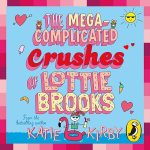
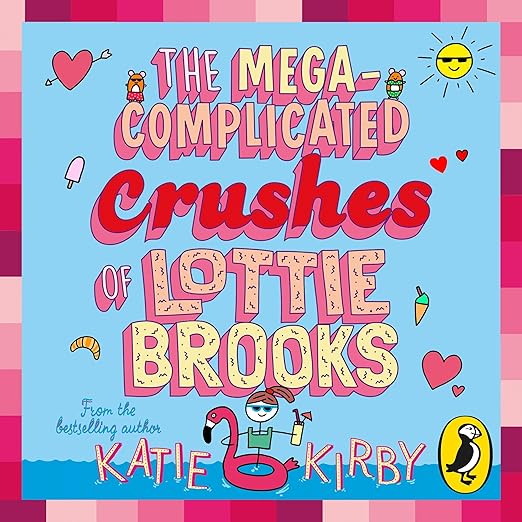
Published by Puffin in August 2022, The Mega-Complicated Crushes of Lottie Brooks runs to 6 hours and 23 minutes and holds a 4.8-star rating from 3 Audible UK reviews. It is Book 3 in the Lottie Brooks series. The plot follows Lottie through the summer holidays: a first date with Daniel at a fancy gelato parlour in Brighton, the looming terror of a potential first kiss, two weeks camping in France while Daniel is dispatched to a Greek island, and a new friendship with a French boy called Antoine who is rather good-looking despite the language barrier being almost total.
The series is designed for readers aged roughly 8 to 12, though Kirby’s humour has enough register and range that adults reading alongside children will find it genuinely amusing rather than merely endured. The format is light but not weightless – Kirby understands that early adolescence involves real confusion and real embarrassment alongside the comedy, and she honours both without overweighting either.
The Narration
Charlie Sanderson voices Lottie with the kind of specificity that the character requires: not a generic young girl voice but a particular person with a particular way of processing embarrassment and excitement simultaneously, often at the same time and about the same situation. She captures the diary-entry cadence well, so the conversational asides – the mental brackets, the sudden capitalisations, the self-interruptions that characterise Kirby’s written style – land as natural spoken thought rather than read text. Her voice is consistent across the series, which matters for listeners moving straight from Books 1 and 2 into this one; there is no adjustment period, no sense of meeting a slightly different Lottie than you left.
What Readers Say
All three Audible UK reviews award five stars, which for a children’s title tends to reflect genuine audience satisfaction rather than promotional enthusiasm. Bay E, aged 9, provided the most direct assessment available: this is a great book. Amazonka described watching her daughter devour it in two days while giggling non-stop and saying this is SO me repeatedly – the diary format and Kirby’s illustrations apparently making it feel like reading a real girl’s secret journal, a response that suggests the book is doing exactly what it is designed to do. Sarah Riggs noted that her daughter desperately needed this book to complete the series, which is the most authentic form of series endorsement: not enthusiasm but urgency. One four-star response came from a grandparent who purchased it for a nine-year-old granddaughter and found it well-received.
Who Should Listen?
Ideal for children in the 8-to-12 range who enjoy diary-format humour and the specific comedy of first crushes, family holidays, and the general catastrophe of early adolescence. It works well as a family car journey listen – the humour is clean enough for mixed-company audiences and engaging enough that nobody needs to ask how long until we get there. The characters and their relationships carry across the series, so start from Book 1 of Lottie Brooks to build the emotional investment that Book 3 rewards.
This instalment in particular benefits from familiarity with Daniel and Lottie’s dynamic from the preceding books – the first date in Brighton lands harder, and the anxiety around Antoine is funnier and more complicated, if you have followed their relationship since it began. As a standalone introduction to the series for a new reader who simply wants to sample the world, it is perfectly comprehensible; as the third entry for someone who has been with Lottie from the start, it is noticeably richer and more satisfying. Start at the beginning if you can.