Clara’s Verdict
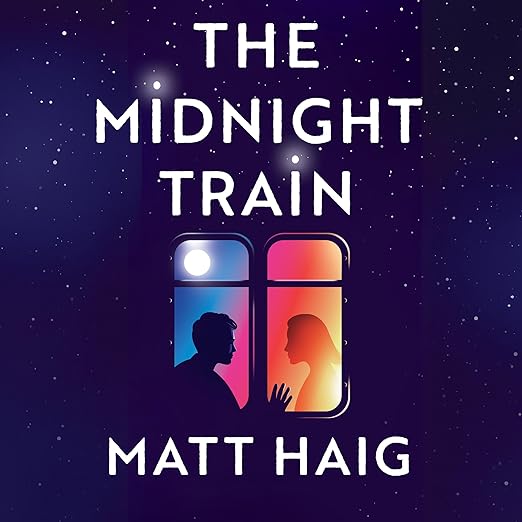
Matt Haig’s The Midnight Train is not yet released at time of writing, with a publication date of 21 May 2026. I am reviewing it on the basis of the available synopsis, the publisher’s framing, and the narrator casting, because these together tell us quite a lot about what to expect. Haig has been one of the most commercially successful and emotionally resonant British fiction writers of the past decade, and this is described explicitly as a story from the world of The Midnight Library, which means it shares that novel’s metaphysical furniture of second chances, unlived lives, and the weight of choices made and unmade.
Narrated by James Norton and published by Canongate Books, this runs to 10 hours and 50 minutes. There are no listener ratings yet, as expected for a pre-publication title, but the pre-publication interest in Haig’s work tends to be substantial and well-evidenced.
About the Audiobook
The title itself carries significant resonance. Trains, like libraries, are transitional spaces: you enter them in one state and emerge in another, often without fully understanding what changed during the journey. Haig’s choice of the train as his central metaphor suggests a story concerned less with arrival than with the experience of moving through time, of revisiting rather than simply remembering, of inhabiting the past rather than observing it from a distance.
Due for release on 21 May 2026, The Midnight Train follows a protagonist named Wilbur who once had the love of his life, Maggie, and who gave it all away. The Midnight Train offers him the chance to revisit the past, to re-live the moments that meant most and to see what kind of person he really was before he gave it away. But to go back risks everything. The synopsis is deliberately elliptical, which is consistent with Haig’s habit of building his narratives around a central metaphysical premise that unfolds through the story rather than being front-loaded in the description.
The connection to The Midnight Library is significant marketing context. That novel sold millions of copies worldwide and occupied a very specific cultural space: accessible literary fiction about regret, choice, and the weight of unlived lives. It appealed to readers who do not typically read speculative fiction but found the metaphysical premise emotionally illuminating rather than genre-adjacent. The Midnight Train appears to be working similar emotional territory, with the train as metaphor serving a comparable function to the library. The shift from Nora Seed’s parallel-lives structure to a time-travelling love story focused on a specific relationship suggests Haig is developing and refining the formula rather than repeating it.
The Narration
James Norton is an interesting and promising choice for this material. Known primarily as a screen actor, his voice carries the warmth and capability for internal complexity that Haig’s introspective but accessible style requires. Haig’s prose tends to be emotionally direct without being mawkish, and a narrator who oversells the feeling could undermine that balance considerably. Norton’s instinct from his acting work seems likely to tend toward restraint and believability rather than demonstration, which would serve the material well.
This is necessarily speculative reasoning about a performance I have not yet heard. A full assessment will require the actual listen, which will be possible after 21 May 2026. What the casting signals is a serious and considered approach from Canongate to matching the emotional register of the material with the right voice.
What Readers Say
There are no listener reviews at time of writing, as the audiobook has not yet been released. The pre-publication interest will be informed almost entirely by Haig’s existing and considerable readership and by the track record of The Midnight Library, which remains one of the most widely discussed British novels of its generation. Pre-orders and early reader response will likely accumulate rapidly around the release date.
Listeners who came to The Midnight Library through book clubs, recommendations, or the BBC adaptation and found it emotionally resonant will be the natural primary audience for this title. Whether it achieves the same emotional clarity and structural elegance is a question only the listen itself will answer definitively.
Who Should Listen?
What Haig has established across his fiction is a readership that wants emotionally honest speculative premises rather than genre mechanics. They want the metaphor to do real feeling-work rather than plot-work. On the evidence of his previous novels, he understands this, and the choice of a love story at the heart of The Midnight Train suggests he is aiming for the same emotional territory rather than trying to expand into something more narratively complex. Whether that focus produces the same quality of feeling is the question May 2026 will answer.
Recommended for readers who loved The Midnight Library and want more of Haig’s particular combination of accessible metaphysics and emotional honesty. Also for listeners drawn to time-travel premises with a strong romantic core rather than science-fictional mechanics or plot complexity. Those who found The Midnight Library too emotionally manipulative or too structurally neat may approach this with caution. As with any pre-publication title, I recommend returning here after release for a full assessment once listener response is available and the performance can be evaluated properly.
The Midnight Train is available for pre-order on Audible UK. Listen on Audible UK