Clara’s Verdict
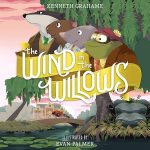
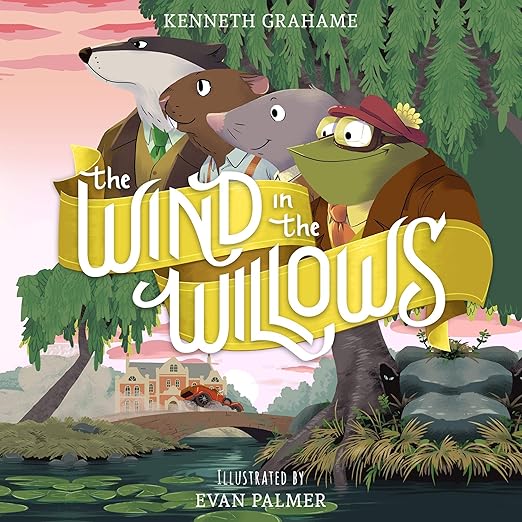
I was rereading The Wind in the Willows alongside this audiobook – partly for professional reasons and partly because, after enough years with literature, you develop an understanding of which books reward return visits indefinitely. Kenneth Grahame published this novel in 1908, and it remains one of the most unusual books in the English canon: a pastoral idyll that contains genuine menace, a friendship story with real philosophical weight, and a comedy of manners about an anthropomorphic toad that somehow doubles as a meditation on belonging, home, and the wildness lurking beneath civilisation’s surface. It deserves serious attention even when, especially when, it presents itself as simply a charming story about animals on the river bank.
There is a tendency to read The Wind in the Willows purely as a children’s classic, which undersells it considerably. The chapter titled The Piper at the Gates of Dawn is one of the stranger pieces of prose in the Edwardian canon – a vision of Pan that sits entirely outside the comedic register of the rest of the book, introduced without warning and allowed to resonate before the story resumes its lighter course. Grahame knew exactly what he was doing.
About the Audiobook
Published by Brilliance Audio on 20 December 2016, this recording runs for 6 hours and 14 minutes. The story follows Mole, Rat, Badger, and the magnificently irresponsible Mr Toad through adventures that begin at the River Bank and expand to encompass Toad’s obsession with motorcars, a spell in prison following a theft conviction, a daring escape, and the eventual reclamation of Toad Hall from the weasels who have occupied it in his absence. The opening chapters, before Toad’s misadventures consume the narrative, are among the most quietly beautiful prose in English fiction – Mole’s emergence from his underground spring cleaning into the sunlight, his first encounter with the River and with Rat, are written with a kind of attentive wonder that has not aged.
Beneath the comedy, this is a book about friendship and its obligations, about the grief of losing and recovering one’s home, and about the competing pulls of wildness and comfort that every one of Grahame’s characters embodies in a different proportion. This edition carries no listener ratings at the time of writing, which reflects the specific profile of this Brilliance Audio recording rather than anything about the text itself.
The Narration
Michael Page is a narrator whose credits span an extensive range of classic and contemporary fiction, and his reading here is assured and well-suited to the tonal demands of Grahame’s prose. He handles Toad’s bombastic self-confidence with particular relish – there is a comic energy in the Toad chapters that Page brings out fully without sliding into caricature. The quieter riverside passages are read at a pace that allows their atmosphere to settle properly, which takes confidence and trust in the material. Page navigates the book’s considerable tonal range – from pastoral reverie to farcical adventure to the genuinely eerie Pan chapter to emotional tenderness – with appropriate flexibility throughout six hours.
What Readers Say
This edition has not yet accumulated listener reviews on Audible UK at the time of writing. The text itself carries over a century of critical and popular endorsement; the absence of Audible-specific ratings for this particular recording reflects its profile on the platform rather than any comment on the listening experience.
One thing that the audio format does particularly well for this text is Toad. Grahame’s portrait of Toad – vain, impulsive, incorrigible, deeply loveable – is one of the great comic characters in English literature, and he plays much better aloud than on the page. His enthusiasms, his self-justifications, his operatic repentances, his determination to escape whatever custody he finds himself in: all of these are fundamentally theatrical, and Michael Page’s performance captures that theatrical quality without making Toad merely a clown. He is a comic figure who is also a genuine friend, and that balance matters to the book’s emotional core.
Who Should Listen?
This is a book for everyone – children who want an adventure with memorable characters, adults who want to remember what wonder felt like, and serious readers who want to encounter one of the genuinely enduring works of English fiction in a format that allows its prose rhythms to breathe properly. Audio is an unusually good medium for Grahame’s writing because so much of the pleasure is sonic: the sound of the river described in the opening pages, the warmth of Badger’s underground kitchen, the noise of Toad’s disastrous motorcar encounters. Those who find the pacing of Edwardian prose too slow will want to give it the first thirty minutes before judging – the rhythm is deliberate and rewards patience with something real. This is one of the books that stays with you for decades, and Michael Page’s narration serves it with the respect it has earned.