Clara’s Verdict
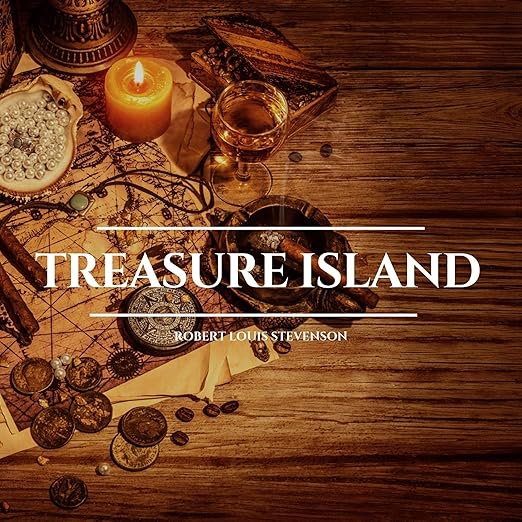
I reread Treasure Island at university as part of a module on adventure fiction and spent most of the seminar defending Long John Silver against a room full of people who wanted him to be a straightforward villain. He is not, of course. That ambiguity is Stevenson’s central achievement in this novel, and it is what elevates Treasure Island from a competent adventure yarn to something that has genuinely earned its place in the English literary canon. Reading it again now, via Sam Taylor’s narration on this Page2Page edition, I was struck again by how much Stevenson is doing while appearing to do very little. The surface is pure adventure, pirates and treasure and a boy who proves more resourceful than anyone had a right to expect. Underneath it, something more unsettling is at work.
The novel was first serialised in Young Folks magazine in 1881 and has been in continuous print since. At 6 hours and 44 minutes in this audio edition, it remains one of the most efficient adventure stories in the language: taut, atmospheric, and built around a moral question that the 21st century has not made any simpler.
About the Audiobook
The story is Jim Hawkins’s: a boy who finds a treasure map in the belongings of a dying sailor at the Admiral Benbow Inn, sets out with a crew of uncertain loyalty, and discovers on a remote island that the line between piracy and respectability is considerably less solid than the adults in his life have led him to believe. Long John Silver, the ship’s cook who is also the leader of the mutinous pirates, is the figure that makes the whole thing work. His charm is genuine even as his treachery is real, and Stevenson refuses to resolve that contradiction. Jim admires and fears him simultaneously, and the reader is permitted no simpler response.
The island sequences are among the finest set-pieces in Victorian adventure fiction. The stockade, the hidden treasure, the shifting allegiances and the midnight watches are handled with the precision of a writer who knows exactly where his story is going but takes the time to build the atmosphere that makes each development feel inevitable. G. K. Chesterton described the novel as the realisation of an ideal promised in its provocative and beckoning map: a vision not only of white skeletons but of green palm trees and sapphire seas. That vision translates exceptionally well to audio, where the atmosphere Stevenson creates through physical description and pacing becomes something the listener inhabits rather than reads across.
The ending, which some readers find abrupt, reflects Stevenson’s deliberate choice not to over-explain the moral. The treasure is found, the pirates are defeated, the survivors return home. But Silver escapes, and Jim is left uncertain whether to feel relief or regret at the fact. That openness is the most honest thing in the book, and it is the reason Treasure Island rewards rereading in ways that tidier adventure stories do not.
The Narration
Sam Taylor’s narration is well suited to the source material. He gives Jim Hawkins a youthful energy without making him callow, and his Long John Silver is credibly warm and dangerous at once, the charm always present even when the threat is clear. The atmosphere of the island, the fog, the hidden watchers in the treeline, the precarious night marches and the desperate standoffs, is well served by Taylor’s pacing, which knows when to slow down and let the tension build. For a 19th-century text that could easily sound archaic in lesser hands, Taylor keeps the prose feeling alive without modernising its rhythms or flattening the period diction that is part of the novel’s charm.
What Readers Say
The audiobook holds a 4.3 average across 33 Audible listeners. One reviewer called it well worth reading first or revisiting, praising its atmospheric quality and grip, invoking days of yore with evident affection. Another, returning to the novel for an Open University course after decades away, described it as a very exciting read that would be lovely shared aloud between generations, noting that some older vocabulary adds texture rather than obstacle. A third, more critical listener who reread the novel before a voyage on a tall ship, found that while the opening is genuinely strong, the conclusion wraps up too neatly and leaves something of an anticlimax. That reservation is fair: Stevenson makes a choice at the end that some readers find unsatisfying. But it should not deter new listeners from experiencing one of the founding texts of adventure fiction in a production that does it justice.
Who Should Listen?
Treasure Island is for everyone, which is its triumph and occasionally its limitation for any single audience. Children of about ten and upwards will find the adventure compelling. Adults who read it as children and have not returned will find considerably more in it than they remembered. Students of Victorian literature will find it a rewarding text for the moral complexity it hides beneath its adventure surface. Parents looking for something to share with children will find the audio edition reduces the vocal burden considerably. And anyone who wants 6 hours and 44 minutes of beautifully crafted storytelling from one of the finest prose stylists of the Victorian era should simply begin at Chapter One and follow Jim Hawkins to the island.