Clara’s Verdict
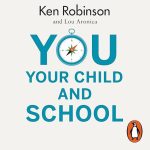
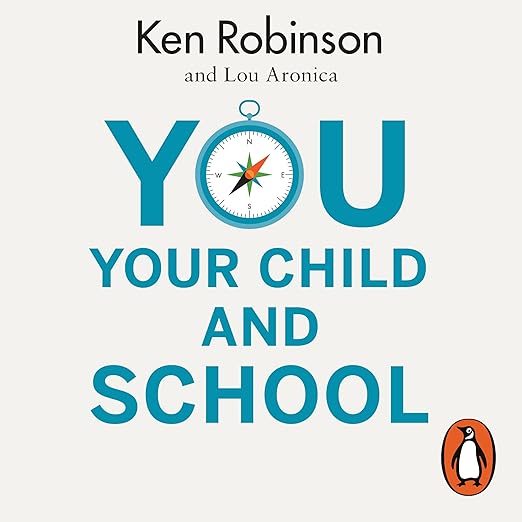
Sir Ken Robinson spent years telling education systems that they were wrong about creativity, wrong about standardisation, wrong about what children need in order to genuinely learn and flourish. His TED talk on the subject is one of the most-watched in the organisation’s history, which tells you something about how many people recognise the problem he is naming even when they cannot quite name it themselves. When he turned that argument into a book specifically for parents, the result was You, Your Child, and School: a practical application of ideas he had spent decades developing in policy and academic contexts, addressed now not to governments or institutions but to the people who have to navigate the system every day on behalf of a specific child they actually know and love. I listened to this on a long train journey and arrived at my destination having missed my stop and with several pages of notes.
Robinson died in August 2020. This 2018 book is therefore a particularly valuable record of his thinking in accessible, applied form, a version of his work that trades ambition for practicality and loses very little in the exchange.
The Case Against One-Size Education
Published by Penguin in March 2018 and co-written with Lou Aronica, the audiobook runs seven hours and thirty-one minutes. Robinson’s argument, built across his career, is that mainstream education systems are calibrated to produce a narrow range of outcomes, prioritising academic attainment in specific subjects, particularly mathematics and literacy in standardised forms, while neglecting other forms of intelligence, creativity, and passion that may be equally or more valuable to an individual’s life and work. Here, he applies that argument at the level of practical parental decision-making.
The book addresses questions that parents actually ask: how to talk to teachers in a way that is productive rather than confrontational, how to identify when a child is genuinely disengaged from learning rather than simply avoiding effort, what homeschooling and unschooling actually involve as genuine options rather than eccentric or marginal choices, and how to support a child whose path to a meaningful adult life does not run through university. Robinson is careful throughout to acknowledge the constraints that most parents actually operate under. Not everyone can homeschool. Not every school can be meaningfully changed by parental pressure. The practical advice is calibrated to what is actually possible within real institutional and economic constraints rather than what would be ideal in a differently designed world.
This groundedness separates You, Your Child, and School from the more theoretical education manifestos Robinson produced earlier in his career, and it is what makes this version of his thinking most immediately useful to most readers. The ideas are the same; the application is different.
The Authority of a Familiar Voice
Robinson reads his own book, and this is not merely a pleasant bonus but an essential element of the listening experience. His voice carries the warmth and measured wit of someone who has spent decades talking to audiences about things he cares about deeply, and who has learned to make complex ideas feel both urgent and approachable. He is not performing conviction; he has it, and the difference is audible. The pace is natural, occasionally discursive in a way that suits the conversational register of the material, and the effect over seven and a half hours is of listening to someone you would trust with an important question. For a self-narrated audiobook, this kind of sustained natural authority is rare, and Robinson delivers it throughout.
What Readers Say
The audiobook carries a 4.5 rating from 236 listeners, a meaningful and well-distributed sample that reflects consistent satisfaction across a varied audience. Les, reviewing in the UK, described it as an invaluable read for parents approaching the secondary school transition, praising Robinson’s insight and the particular relevance of the guidance at that specific juncture. A reviewer identified as ISB described it simply as a common-sense book, which is both accurate and, given how rarely common sense appears in the public discourse around education, a genuine and significant compliment. Emha98 gave four stars and highlighted the persuasiveness of the argument about letting children find their own passions, noting it prompted new thinking about how the education system is structured and what it actually optimises for. A fifth reviewer noted particular value for the parent of an autistic child, for whom mainstream school presents daily challenges that most educational guidance overlooks or inadequately addresses.
Who Should Listen?
Parents with children of any age in the UK school system will find this relevant and thought-provoking. The content is perhaps most immediately practical for those with children in the middle years of schooling, when decisions about secondary options and the shape of a child’s academic path begin to narrow in ways that feel both consequential and difficult to reverse. It is also particularly valuable for parents who already sense that the conventional system is not well suited to their particular child but lack a framework to articulate why, or the vocabulary to have that conversation productively with schools. Anyone who has encountered Robinson’s ideas elsewhere and wants to understand their practical application at the family level will find this the most directly useful of his books.