Clara’s Verdict
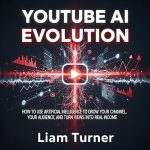
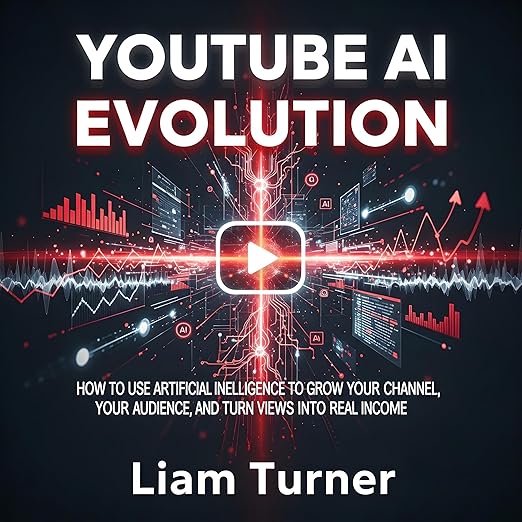
The market for books on YouTube strategy and AI-assisted content creation is moving faster than most publishers can keep pace with. A title published in March 2026 is working with a platform landscape that looks quite different from one published in 2023, which is a genuine structural advantage for Liam Turner’s book. The core argument, that creators who understand how YouTube’s algorithm has been reshaped by AI tooling will significantly outperform those still operating by pre-2023 rules, is a reasonable premise for the current environment and not simply a hook to justify writing a book.
There are no listener reviews at the time of writing, and the book is self-published by the author. That combination warrants caution, but also fairness: the self-publishing landscape for business how-to titles has matured considerably, and the absence of a traditional imprint does not automatically indicate a quality problem. The key question is always whether the content matches the promise of the synopsis, and that is something only a full listen can establish.
About the Audiobook
The book positions itself as a complete system for building, growing, and monetising a YouTube channel in what Turner characterises as the AI era. It covers the specific signals that prompt YouTube’s algorithm to promote videos, AI production tools that reduce editing time while improving output quality, a keyword research methodology for discoverability, strategies for repurposing long-form content into multiple shorter pieces without additional filming, YouTube Shorts as a driver of subscriber growth, and stacked monetisation approaches. That is a substantive list of topics for a three-and-a-half-hour runtime.
The emphasis on building something sustainable rather than chasing virality is the right framing for 2026. The algorithmic volatility of the past three years has made the overnight-success model increasingly unreliable as a strategy, and the creator economy has matured toward the view that consistency and audience loyalty outperform individual viral hits. Turner appears to be writing from within that understanding rather than against it.
The risk with short business titles is that they gesture toward topics rather than providing the depth a practitioner needs to act. The most credible signal of value here would be the specific tools and strategies named and assessed, which are not available from the synopsis alone. The self-publication model means there is no editorial gatekeeping to ensure the content is accurate and current, which is a consideration worth holding in mind.
The Narration
Patrick Shannon narrates. Without prior experience of his work to draw on specifically, the relevant consideration is whether his voice suits instructional content aimed at a platform-savvy audience of independent creators. The register for this category needs to be knowledgeable without being corporate, and engaged without tipping into evangelical enthusiasm for the subject matter. A sample listen would give a clearer sense of whether Shannon’s delivery hits that balance across the full runtime. Three and a half hours of instructional content lives or dies on whether the narration maintains momentum.
What Readers Say
No listener reviews exist at the time of this writing. The absence is a limitation rather than a signal of quality in either direction; it simply reflects a recent self-published release with limited market penetration at this stage. Prospective listeners are advised to use the sample function, paying particular attention to whether the content engages with specific current tools and algorithmic realities rather than offering generic strategic advice that would have been equally valid three years ago.
The broader context for this book is worth acknowledging. The creator economy in 2026 is significantly more competitive than it was five years ago, with billions of videos competing for attention and algorithmic discovery becoming harder to predict as YouTube adjusts its systems continuously. Books in this space that claim to provide a reliable system for growth are making a promise the platform itself may not allow them to keep. The most honest framing is not a guaranteed pathway but a current understanding of how the system works, with the implicit acknowledgement that the understanding will need updating. Whether Turner’s book frames its advice with that appropriate humility is a question the sample should answer.
Who Should Listen?
For creators who are already producing YouTube content and feel stuck at a plateau, particularly those who have not yet integrated AI tools into their production workflow in any systematic way. This is not for people seeking a philosophical or cultural analysis of YouTube as a medium or a business. It is firmly practical how-to content. If the sample suggests the content is as current as the publication date implies, it may represent a useful three and a half hours for someone at the right stage of their creator journey. Sample before purchasing, and approach specific tool recommendations with the understanding that the AI landscape continues to shift quickly.