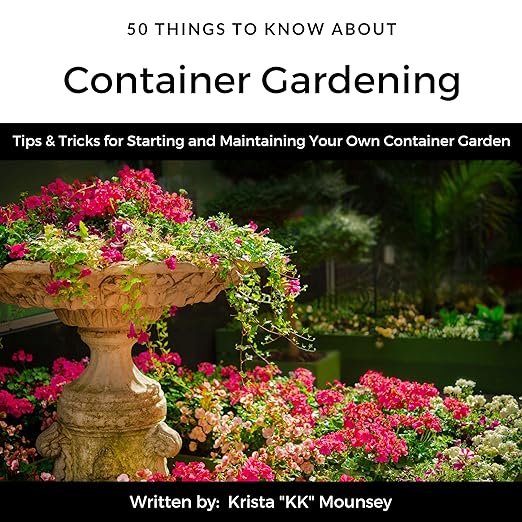
Clara’s Verdict
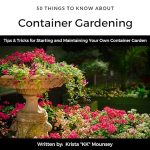
At thirty-six minutes, 50 Things to Know About Container Gardening is more of an extended pamphlet than a book, and to its credit it is honest about being exactly that. Krista “KK” Mounsey has written a starter guide for people who want a small indoor garden and need someone to tell them, simply and quickly, what to actually do. It does not attempt comprehensiveness, and it does not pretend to. Whether it merits your time depends entirely on what you are after: if you want a thorough horticultural education backed by decades of specialist knowledge, look elsewhere; if you want a brisk, practical nudge into container gardening without being overwhelmed by complexity, this does the job. Rated 3.2 from eight listeners, it sits in the honest middle ground between a useful quick-start resource and a mild disappointment for those who arrived hoping for depth.
The book is part of a series – 50 Things to Know – designed specifically for short, accessible introductions to practical topics. Understanding that context changes how you receive it. Judged as a comprehensive guide to container gardening, it falls short. Judged as a thirty-six-minute orientation for a complete beginner, it delivers what it promises.
About the Audiobook
The content is organised around fifty discrete tips, covering container selection, plant choice, soil preparation, watering regimes, drainage requirements, and the particular considerations of growing herbs and food plants indoors. Mounsey draws on expert sources to argue that gardening – even at this modest, domestic scale – measurably reduces stress and improves indoor air quality, which gives the book a wellness dimension that sits alongside its practical focus without overwhelming it. The approach is consistently pragmatic: which plants thrive in containers, which don’t, and the specific reasons why. The advice on plant selection covers a range of options from decorative flowering plants through culinary herbs to small food crops, which is more useful than a purely ornamental focus would be.
What the book lacks in depth it compensates for in clarity. There are no wasted paragraphs, no padding to justify a longer runtime, no diversions into garden history or philosophy. It is information, delivered plainly, in a format you can absorb on a lunch break and act on that evening. For a first-time indoor gardener standing in a garden centre wondering what on earth to buy, the plant selection advice alone justifies the listen.
The Narration
Ralph L. Rati delivers a clean, no-frills narration that suits the material’s instructional tone. The style is measured and practical rather than conversational or warm – this is a how-to guide, and Rati reads it as one, which is the correct approach. There is nothing showy here, and the absence of showiness is a virtue in this context. A narrator who performed this material with too much personality would simply distract from the content. The audio quality is competent and the pacing is sensible throughout.
What Readers Say
Eight ratings produce a 3.2 average, which reflects a genuine and honest split in expectations. One US listener rated it five stars and praised the plant-care detail as comprehensive and practically useful across all four seasons. Another gave it four stars but noted it felt “vague” and “very limited” in its suggestions, wishing the author had included more personal recommendations – favourite pots to work with, preferred soil mixes, specific brand suggestions. That tension between “a useful starting point” and “I wanted more substance” runs consistently through the feedback. It is, in the end, the correct response to a thirty-six-minute audiobook: useful for precisely the audience it was designed for, insufficient for those who needed something more substantial.
One area where the book punches above its modest weight is its insistence that container gardening is not simply a decorative pursuit. Mounsey makes a reasonable case that access to growing things – even in the most limited indoor form – has measurable benefits for mental wellbeing, and that the act of tending something living, watching it respond to care, is worth preserving even when square footage is in short supply. That argument, stated simply and without elaboration, gives the book a dimension beyond the practical that makes it more interesting than a pure how-to guide would be.
Who Should Listen?
Ideal for flat-dwellers, people with no outdoor space, or anyone who has killed every houseplant they have ever owned and wants a simple explanation of why. Also genuinely useful for parents wanting to introduce children to growing things without committing to a full garden or significant investment in equipment. The format is well-suited to complete beginners who might find a longer, more comprehensive guide discouraging before they have even started. Keep your expectations calibrated to the runtime – thirty-six minutes – and you will get fair value from the experience. Available on Audible UK, where it sits comfortably alongside longer gardening titles if you find yourself wanting to go further after this introduction.
Listen to 50 Things to Know About Container Gardening on Audible UK