Clara’s Verdict
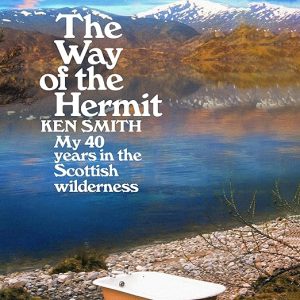
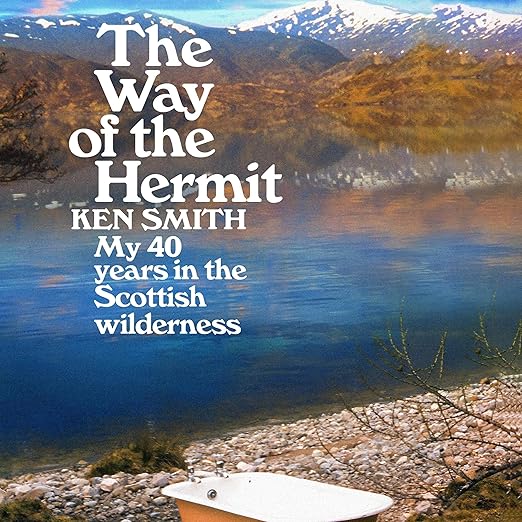
Every so often a memoir arrives that genuinely earns the word “life-affirming” – not because it is relentlessly cheerful, but because the life it describes was genuinely, deliberately, freely chosen. Ken Smith, the Hermit of Loch Treig, has spent four decades in a log cabin in the Scottish Highlands with no electricity, no running water, and – crucially – no apologies. The Way of the Hermit is his account of that life, and it is one of the more remarkable audiobooks I’ve encountered in this particular territory of memoir: it is funny, it is honestly self-aware, and it makes you rethink the bargains you’ve made without lecturing you about them. The Washington Post called it “a love story to the mountains in the mist.” That is, if anything, an understatement.
About the Audiobook
Smith grew up working-class in Derbyshire, spent formative years in the Yukon, and eventually settled near Loch Treig – “the lonely loch” – in the Scottish Highlands, where he has lived alone ever since. At 74, he has built his log cabin twice (the first was destroyed), fished for his supper, brewed his own drinks, and watched the natural world around him with the attention of someone who has no other distractions competing for it.
The memoir draws on decades of diary entries, which gives it a texture of genuine memory rather than retrospective reconstruction. Smith reflects on why he turned away from society – the reasons are personal rather than ideological – and is honest about the vulnerability that comes with ageing alone in a remote location. He is not naive about what he has given up. But he is equally clear about what the conventional life would have cost him. The Kirkus review that called this “a Thoreauvian account of solitary life” is apt: Smith has read his Thoreau, but he has also built his own cabin and fixed his own fishing lines, which Thoreau famously did not do quite as completely.
At 9 hours and 49 minutes, this is a comfortable and generous memoir that earns every hour.
The Narration
Dean Williamson’s narration suits the material well – there is a quality of patient attention in his delivery that matches Smith’s own relationship to the world he describes. The Highland sequences are given appropriate weight, and Williamson handles Smith’s occasional dry humour without over-signalling it. This is a memoir that requires a narrator who can convey interiority as much as event, and Williamson achieves that with quiet competence.
What Readers Say
Rated 4.6/5 from listeners. The reviews from UK readers are notably warm: “Ray Mears eat your heart out – this is a fascinating account of a real life, well lived, with great courage and insight,” writes one. Another called it “one of the best books I’ve ever read about the healing power of a life in nature” and signed off with “Go well Ken and go free.” The one measured assessment in the collection notes that Smith is “a little conceited at times as he criticises the lifestyles of regular folk,” but acknowledged that he makes his points engagingly and presents his achievements – including the twice-built cabin – “modestly.” The consensus is that this is both inspiring and, quietly, important.
Who Should Listen?
For nature lovers, wild campers, and anyone who has felt the gap between the life they are living and the one they might choose. For readers of Robert Macfarlane’s landscape writing, or fans of Chris Stewart’s Driving Over Lemons – though Smith’s circumstances make those books look positively comfortable. This suits long winter evenings and the kind of reflective mood in which you want to be reminded that other ways of living are possible. Also available on Kobo, Scribd, and Storytel.