Clara’s Verdict
I will confess to a certain scepticism about the indoor plants genre. There is a subset of home and wellness publishing that has been riding the houseplant wave for several years now, producing books that are essentially the same Peace Lily photographed from a dozen different angles, accompanied by advice anyone with a smartphone could locate in thirty seconds. The category is crowded with the merely decorative masquerading as the genuinely useful.
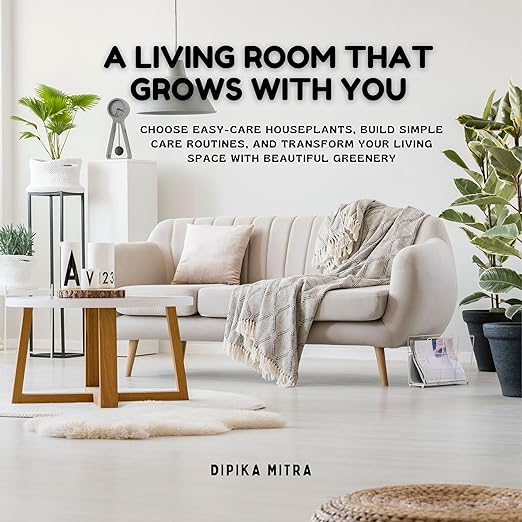
What caught my attention about A Living Room That Grows With You, released in March 2026 by Dipika Mitra, is the framing. This is not a book about plants so much as a book about rooms, and about the quiet way the presence of living things changes how a space feels and how we feel within it. The emotional architecture of a home – the way certain rooms make you exhale while others create a low-level tension you can rarely explain – is the territory Mitra is working in. That is a subtler proposition than most houseplant guides offer, and one worth exploring. At just over an hour in duration, this is a brief audiobook – more of an extended essay than a comprehensive horticultural guide. Narrator Jake Andrews reads Mitra’s text in a tone that suits the material: unhurried, warm, unpretentious. There are no ratings yet on Audible UK, as this is a very recent release, so I am working primarily from the text itself and what it promises.
About the Audiobook
Mitra’s central premise is that the living room is the emotional centre of a home, and that introducing carefully chosen plants is less an aesthetic decision than a psychological one. The book is explicitly designed for people who consider themselves bad at keeping plants alive – those for whom previous houseplants have become guilty brown monuments to good intentions abandoned sometime in February. Rather than prescribing complex care regimens that require consulting a chart before you water anything, Mitra focuses on resilient, low-maintenance species suited to typical living room conditions: filtered light, indoor temperatures, varying humidity, the neglect that inevitably accumulates around a busy life.
The plants she introduces – Peace Lilies, Anthuriums, African Violets, Kalanchoe, Christmas Cactus, Bromeliads – are chosen precisely because they thrive under the kind of minimal attention that busy individuals can realistically sustain. Beyond species selection, the book addresses placement and styling with genuine care: how to use plants to soften architectural edges, bring life to overlooked corners, create calm focal points, and enhance a room’s mood through texture, colour, and natural vitality. Watering rhythms, pot selection, light coordination, and basic maintenance all receive practical coverage. The overall philosophy is that beauty and sustainability are not in tension – that the most elegant living spaces are often the most effortlessly maintained ones, and that the most effortlessly maintained spaces are those where plant selection was thoughtful from the beginning.
The Narration
Jake Andrews brings a pleasantly domestic quality to the reading – there is nothing performative about his delivery, which suits a book that is essentially an invitation into a more considered relationship with your home. The pacing is gentle, appropriate for material you might absorb on a Sunday afternoon with a cup of tea rather than during a pressured morning commute. At 69 minutes, the runtime is short enough that you could take in the whole book in a single session, which Andrews’ measured delivery makes genuinely easy. For practical content like plant care guidance, a calm and clear narrator matters more than an expressive one – you need to be able to follow what is being said without the performance getting in the way – and Andrews delivers both qualities throughout.
What Readers Say
This audiobook is too new to have accumulated reviews on Audible UK at the time of writing, having been released in March 2026. What the synopsis and Mitra’s approach suggest is a book that will resonate most with listeners who have been intimidated by the idea of indoor gardening – which is, anecdotally, a very large proportion of the people who buy plant books and then watch them die. The absence of jargon and the consistent focus on practical, low-effort routines positions this as a genuine entry point for the reluctant plant keeper rather than as a reference text for the already committed. Early listener response, when it accumulates, will tell us whether the practical frameworks translate as cleanly into real domestic experience as they do on the page.
Who Should Listen?
This is a book for people who want their home to feel more alive but have been put off by the complexity often associated with indoor plants – or by the memory of previous plants that did not survive their care. It will particularly suit renters and first-time homeowners looking for accessible ways to personalise a space without committing to expensive renovation, as well as those who have tried and failed at keeping plants before and want a more realistic starting point. At just over an hour, it is not a comprehensive horticultural reference – experienced gardeners seeking in-depth technical guidance should look elsewhere. But as an introduction to thinking about your living room differently, through the lens of greenery and atmosphere and the psychology of how a room feels to live in, it offers a genuinely calming and useful hour. Listen on Audible UK