Clara’s Verdict
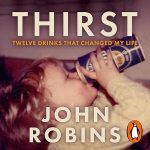
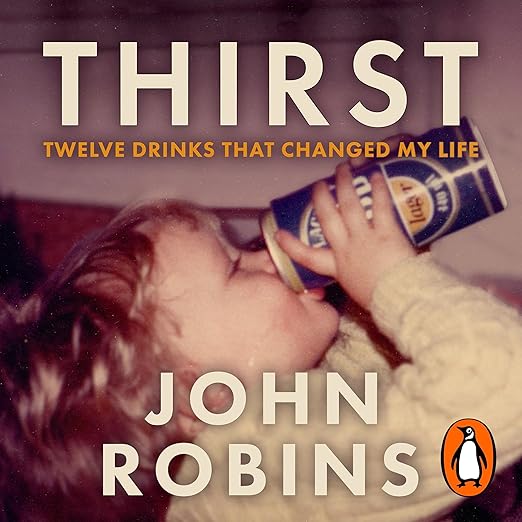
John Robins is one of those comedians whose work has always sat in uncomfortable proximity to something real. His stand-up has long engaged with mental health, anxiety, and the particular kind of loneliness that performs well in public, that uses comedy as both shield and confession simultaneously. Thirst, published by Penguin in May 2026, is his memoir of alcoholism and recovery, and the subject has found in him an author perfectly calibrated for it: funny enough to prevent the book becoming a dirge, honest enough to prevent it becoming a performance of honesty. That balance is genuinely difficult to achieve in addiction memoir, and Robins achieves it.
The central question the book circles, what is an alcoholic, is the right question, because it refuses the comfortable binary of problem drinker versus normal person that most addiction narratives rely on. Robins traces his relationship with alcohol from the age of five through to his last drink in 2022, and the cumulative effect is a portrait of how drinking becomes structural to a life before the person living that life has noticed what is happening. It is also, in places, very funny, which is the appropriate response to decades of gradually escalating, well-intentioned, and occasionally spectacular terrible decision-making.
About the Audiobook
Published by Penguin Audio in May 2026, with a runtime not yet confirmed at time of writing, Thirst covers Robins’ life as a drinker from his first experiences through university and into his career as a comedian, broadcaster, and Taskmaster champion. The memoir moves across mental health, friendship, creativity, and addiction, drawing on Robins’ experiences in sobriety and the particular clarity, and disorientation, that follows the removal of a substance that has been load-bearing in a life for decades. The Buddhist diversion, apparently including reflections on dealing with haemorrhoids through meditation, sounds characteristically Robins in its refusal to keep the emotional and the ridiculous in separate compartments. That refusal is the book’s signature quality.
The book sits in a tradition of comedian memoirs that use professional distance to approach personal subjects. Robins’ angle is more genuinely interrogative than most of his genre neighbours: he is asking questions rather than offering solutions, and that epistemic humility gives the book a quality that more prescriptive addiction narratives lack. For listeners who found Russell Brand’s Recovery too evangelical in register, Robins’ approach will likely feel more trustworthy and considerably less certain of its own conclusions.
The Narration
Robins narrates his own work, and this is the only version of this book that makes any sense. He is an award-winning radio broadcaster; his voice is one of his primary professional instruments, and he knows how to use it. More than that, a memoir about alcoholism and recovery delivered in someone else’s voice would lose the specific texture of self-examination that makes this kind of writing worth reading. Robins’ timing, his ability to deliver a line that is simultaneously funny and devastating, and his instinct for when to slow down and when to accelerate, are the book in a way that no adapted performance could replicate. Self-narration is often a risk in audiobook production, an author’s attachment to their own prose leading to rhythms that work on the page but not in the ear. Here it is a structural necessity, and Robins has the professional background to execute it well.
What Readers Say
Thirst carries no Audible ratings at the time of writing, having been published in May 2026. The absence of listener responses means this review rests primarily on what the text and its author’s reputation promise. Robins has a significant existing audience through his stand-up, his BAFTA-winning radio work on The Edge and elsewhere, and his Taskmaster win, and the crossover between that audience and the memoir readership is substantial. The subject matter, alcoholism, mental health, and sobriety, has found extraordinary readership in recent years, and a voice as distinctive and trusted as Robins’ addressing it with honesty and humour is likely to generate considerable response once the listening community has had time to engage with the book.
Who Should Listen?
Listeners who have enjoyed Robins’ stand-up or radio work will find this a natural and rewarding next step. More broadly, anyone who has questioned their own relationship with alcohol, or who is supporting someone navigating sobriety, will find the book thoughtful, honest, and humanising without being prescriptive. It is not a recovery manual or a cautionary tale in the conventional sense; it is a comedian trying to understand himself, and that process, conducted with Robins’ particular combination of raw honesty and hilarious digressions, is both funnier and more useful than either of those categories. The book also arrives at a cultural moment when conversations about alcohol and sobriety have shifted significantly, particularly among younger adults reconsidering inherited drinking culture. Robins’ perspective, shaped by decades of performing for rooms that ran on alcohol, gives him a particular vantage point on that shift. Listen on Audible UK.