Clara’s Verdict
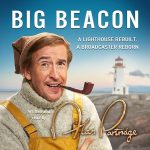
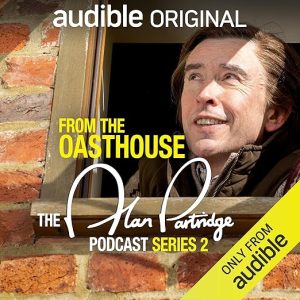
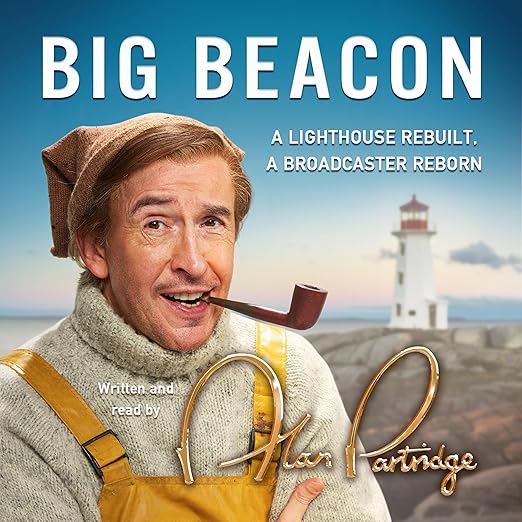
Authorship is a slippery thing in the Partridge universe. Steve Coogan and Rob Gibbons wrote Big Beacon; Alan Partridge "wrote" it. The audiobook is narrated by Alan Partridge. This is a joke, but it is also genuinely the correct creative decision, because the Alan Partridge project has always lived most fully in its audio. From the original radio series On the Hour through I’m Alan Partridge to the podcast From the Oasthouse, Partridge has always been a voice creature. Hearing him narrate his own dual-structure memoir, which runs two interlocking storylines simultaneously and does so with great solemnity about what a revolutionary narrative technique this is, is to appreciate Coogan’s creation at its most baroque and its most funny.
Jon Ronson called it "not only a new storytelling structure but very funny indeed." David Baddiel declared it possibly "the funniest thing ever committed to sound." These are not small claims. I would not go quite that far, but it is certainly Partridge at his most ambitious, and that ambition is itself part of the comedy.
About the Audiobook
The two strands of the innovative dual narrative, explained by Alan in an author’s note that is worth the price of admission alone, follow his triumphant return to national television after the purgatory of local radio, and separately his restoration of Big Beacon, an old lighthouse on the Kent coast where he has relocated following his departure from his old life. The parallels between the two, Alan assures us, will be made abundantly clear to the less able reader. This footnoted clarification is vintage Partridge: deeply condescending, deeply revealing, and somehow making him more loveable rather than less.
What makes the book work as a comedy document is its consistency of register. Partridge’s voice, the specific texture of his self-regard, his linguistic tics, the way he frames every minor triumph as world-historical and every setback as persecution, is maintained across nearly eight hours without a single false note. The similes are reliably extraordinary: you can tell an experienced Partridge writer from an impersonator because the similes operate on their own internal logic while being completely absurd. The coastal village community scenes have their own pleasures, and the lighthouse subplot is funnier than it has any right to be given how little should be funny about a man befriending a lighthouse.
One reader offered a thoughtful comparison: Big Beacon does not quite reach the sustained heights of I, Partridge: We Need to Talk About Alan, which remains perhaps the peak of the long-form Partridge text format. The structure here is more self-conscious, and occasionally the dual narrative device calls attention to its own ingenuity at the expense of forward momentum. But for anyone with genuine affection for the character, these are relatively minor complaints against something that produces consistent, repeated laughs.
Performance as the Product
Coogan’s performance as Partridge in audio format is one of the great ongoing British comedy achievements. Every pause, every misplaced emphasis, every moment where Alan has clearly convinced himself he has said something devastating and wise, is calibrated to the millimetre. The audiobook also features additional production touches that elevate it above a simple reading. Richard Osman, himself an admirer of the project, noted that "the audiobook is an absolute dream." He is right. This is audio comedy that understands exactly what it is doing and executes it without compromise.
What Readers Say
UK reviewers gave this 4.5 out of 5. "Alan Partridge at his finest, back to his best," wrote one, singling out the idioms and similes as "giggle out loud brilliant." They observed that "somehow, Alan Partridge is shallow, narcissistic, and mean in a loveable manner," which also functions as a fairly precise summary of why the character has endured for three decades. A more measured voice noted it is not quite at the level of Nomad or We Need to Talk, but conceded it is "a must-have for addicts of this character."
The lighthouse itself deserves a moment’s attention as a piece of comic architecture. Partridge’s project of restoring Big Beacon has an obvious allegorical dimension that he strenuously denies in the author’s note, and this denial is, of course, the joke. Alan Partridge has always been about a man insisting on his own significance against the indifference of a world that has moved on. The lighthouse, alone on a cliff, its light still functioning in the dark whether or not anyone needs it, is a perfect objective correlative for that condition, and the book’s best comic sequences involve Alan explaining at length why the comparison is not one he has made.
Who Should Listen?
Existing Partridge fans: essential. People who have enjoyed the television series but never tried the books: start here rather than I, Partridge if you want the most audio-specific experience. Complete newcomers to the character would benefit from the TV series first, since some of the comedy depends on accumulated knowledge of Alan’s history. Not for anyone who finds comedy characters with delusions of grandeur fundamentally unfunny rather than illuminating about the particular kind of English self-regard they satirise.