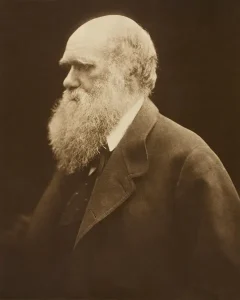
Charles Darwin was the nineteenth-century naturalist whose work sits at the foundation of modern biology and the theory of evolution – and, in consequence, at the centre of some of the fiercest debates about science and religion ever conducted. From a non-conformist Unitarian background but schooled in the Anglican tradition, he went up to Cambridge intending to become a clergyman, and came away instead filled with zeal for science and natural history.
The voyage of the Beagle changed everything. He boarded orthodox in his beliefs, looking for “centres of creation” to explain how species were distributed; by the voyage’s end he had begun to doubt that species were fixed at all. What followed – the long road to On the Origin of Species, and the wrestling with faith that led him in later life to describe himself as an agnostic rather than an atheist – is one of the great intellectual dramas of the age.

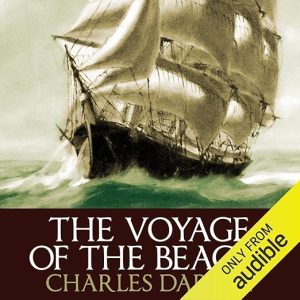 25 hours and 17 minutes