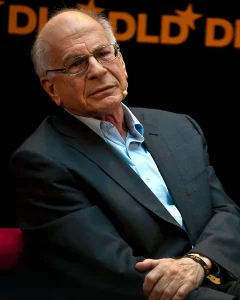
The psychologist who won a Nobel Prize in economics never took a single course in economics. Daniel Kahneman, born in Tel Aviv in 1934 and raised partly in occupied France, taught at the Hebrew University of Jerusalem, British Columbia and Berkeley before settling at Princeton, and did his defining work in partnership with Amos Tversky between 1969 and Tversky’s death in 1996.
Together they demonstrated, experiment by experiment, that human judgement under uncertainty runs on predictable shortcuts rather than the tidy rationality economic models assumed. Prospect theory, published in 1979, reframed how losses and gains are weighed and eventually earned Kahneman the 2002 Nobel Memorial Prize, an award Tversky did not live to share.
He wrote for the general reader late and only twice, with Thinking, Fast and Slow in 2011 and Noise in 2021, the latter with Olivier Sibony and Cass Sunstein. Kahneman died in March 2024, at ninety, having spent six decades arguing that the most interesting thing about the mind is where it reliably goes wrong.


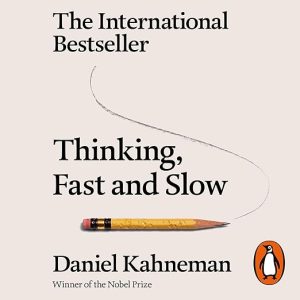 20 hours and 4 minutes