Clara’s Verdict
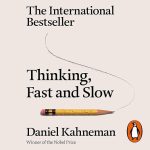
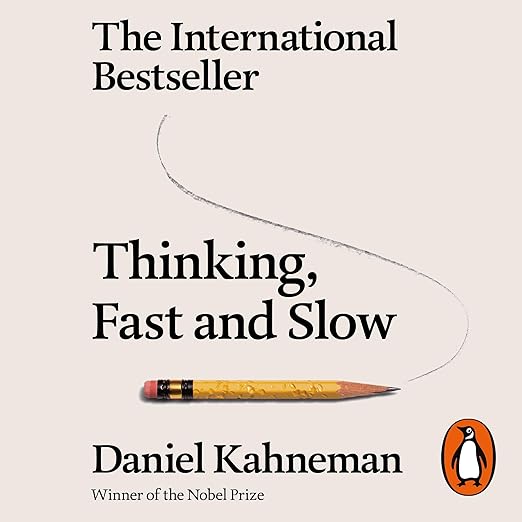
There are books that change how you think about a topic, and then there are books that change how you think about thinking itself. Daniel Kahneman’s Thinking, Fast and Slow is firmly in the second category – and after twelve years of recommending it to anyone who’ll listen, I’m still not sure we’ve fully reckoned with what it contains. The audiobook, running to just over 20 hours and read by Patrick Egan, is the version I actually prefer to the print edition. Egan’s measured pace suits the material perfectly; you need time to sit with each experiment, each cognitive trap, each quietly devastating demonstration of how little we understand our own minds.
This is not comfortable listening. It will make you question decisions you thought were rational. It will make you distrust your own intuitions. And it will leave you with a framework for understanding human behaviour that is both humbling and genuinely useful.
About the Audiobook
Kahneman, a cognitive psychologist who won the Nobel Prize in Economics for work he never quite believed belonged in that discipline, structures the book around two systems of thought. System 1 is fast, automatic, emotional – it’s why you flinch before you’ve consciously processed the threat, why you complete “bread and…” without pausing. System 2 is slow, deliberate, effortful – it’s what you engage when you do long division or navigate an unfamiliar city. The genius of Kahneman’s work is in showing how comprehensively System 1 runs the show, even when we believe System 2 is in charge.
The topics covered are staggering in their range: cognitive biases, the anchoring effect, loss aversion, the planning fallacy, the distinction between the experiencing self and the remembering self, the miswanting problem in happiness research. Each chapter introduces a new wrinkle in the fabric of human rationality – and each one lands with the quiet force of genuine scientific discovery. Kahneman draws on decades of work with his late collaborator Amos Tversky, and you can feel throughout how much those conversations cost him and how much they gave him.
The Narration
Patrick Egan is the right choice for this material. He has a clear, academic quality to his voice – unhurried, precise, never sensationalist – that matches Kahneman’s own writing style. The thought experiments land well in audio format, and Egan resists the temptation to dramatise material that is, at its core, quietly revolutionary rather than theatrical. At 20 hours and four minutes, this is a substantial commitment, but the pacing means you rarely feel the weight of it. I’d suggest listening in shorter sessions to give each chapter time to settle before you move on.
What Readers Say
Thinking, Fast and Slow carries a 4.5-star rating from 47 listeners on Audible UK – strong, consistent approval from an audience that tends to be demanding. Reviewer Joseph Augustine, drawing connections to Prospect Theory and Bernoulli’s utility errors, notes it as an essential counter to the rational-agent model of the world. Olly Buxton describes it as “a monster book packed with fascinating insights” about how our cognitive systems process information. A reader from the US praises the System 1/System 2 framework for its immediate applicability: “thoughtful, applicable, insightful, entertaining.” The consensus is that this is one of those rare books that genuinely earns its reputation.
Who Should Listen?
Anyone who makes decisions – which is to say, everyone – will benefit from this book. It’s particularly valuable for people in roles involving risk assessment, management, medicine, law, finance, or policy. But the insights about memory, happiness, and the experiencing self are just as relevant to the rest of us. If you’ve ever wondered why you made a choice that seemed rational at the time and baffling in retrospect, Kahneman has the answer. Requires concentration; rewards it generously.
Available now on Audible UK: Listen to Thinking, Fast and Slow on Audible UK.