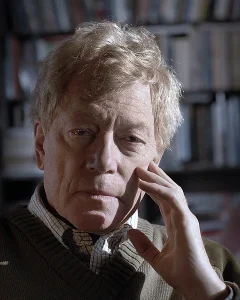
Sir Roger Scruton, who lived from 1944 to 2020, was that increasingly rare thing: a professional philosopher who wrote for the general reader without once condescending to them. He read philosophy at Cambridge and happened to be in Paris during the student uprising of May 1968, an experience he always named as the moment his own politics settled into place.
He taught aesthetics at Birkbeck College in London for two decades and wrote, prolifically, on music, architecture, wine, sexual desire, hunting and the English countryside. Through the 1980s he helped run clandestine seminars for students in communist Czechoslovakia, work for which the Czech state later decorated him. He founded The Salisbury Review, argued in public for most of his adult life, and was knighted in 2016.
The prose is the reason to listen. Scruton could compress an entire philosophical system into a paragraph without flattening it, and he wrote about beauty with a seriousness that made him both admired and vigorously contested. Whatever readers made of his politics, few disputed that he explained ideas better than almost anyone writing in English.

 10 hours and 31 minutes