Clara’s Verdict
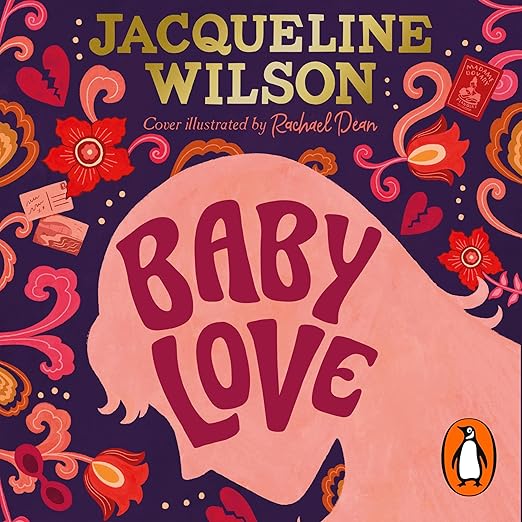
Jacqueline Wilson has always been willing to go where other writers for young readers hesitate, and Baby Love is among the most serious – and most necessary – things she has written. Set in 1960, it deals with teenage pregnancy, forced separation, and the quiet heroism of girls who were given no good choices. Narrated by Tamla Kari with real sensitivity, this is a book that will mean different things depending on your age and experience. Younger readers will find it revelatory. Older ones may find it uncomfortably familiar. Both responses are the point.
About the Audiobook
Laura is sixteen when she meets Leon, a French exchange student who flatters her with an attention she has never experienced before. One night, walking her home, he makes a decision that changes everything – and Laura doesn’t fully understand what has happened to her until the evidence becomes impossible to ignore. When her family discovers her pregnancy, the shame is immediate and total. She is sent away, as so many girls were in 1960, to a home run for girls in her situation – girls whose families had decided that distance was the solution.
What Wilson does brilliantly is to locate Laura’s experience within a specific historical moment without making it feel like a document. The friendships Laura forms at the home – with girls from all backgrounds, all united by the same impossible situation – are drawn with warmth and precision. The period detail is exact without being fetishistic. And the emotional truth is absolutely unsparing: Wilson doesn’t offer false comfort, but she does offer something more durable, which is solidarity. At eleven hours and thirty-four minutes, this is a substantial listen that earns every moment of its length.
The Narration
Tamla Kari brings a lightness of touch that prevents the material from tipping into misery memoir territory. She handles the period dialogue – the clipped propriety of Laura’s family, the cautious vernacular of the girls at the home – with ease, and her reading of the emotional climaxes is controlled and affecting. For a story that could so easily become relentless, Kari finds moments of levity without softening the harder truths. It’s a genuinely skilled piece of work.
What Readers Say
UK listeners have responded with great feeling. Olivia Richardson called it “a moving, emotional story that highlights the importance of family when you most need them.” Another reviewer, who has been reading Wilson since childhood, described being in tears repeatedly: “a beautifully written story giving a voice to those whose stories may be unknown.” The rating of 4.6 across 665 reviews is particularly impressive given the difficulty of the subject matter. MadamePram, aged fifty-eight, noted: “I would also recommend to adults who enjoy misery memoirs” – a line that might serve as an unintentional masterclass in review writing.
Who Should Listen?
Recommended for readers fourteen and upwards – this is on the more mature end of Wilson’s catalogue, and deals with coercion and grief directly enough that younger listeners should have an adult nearby. It will resonate particularly with anyone who has studied mid-twentieth-century social history, anyone who has experienced the weight of family shame, and anyone who has simply loved Wilson’s earlier work and is ready to find out how far her range extends.
Listen to Baby Love on Audible UK – a story about the girls history preferred to forget, told with the compassion they deserved.