Clara’s Verdict
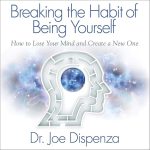
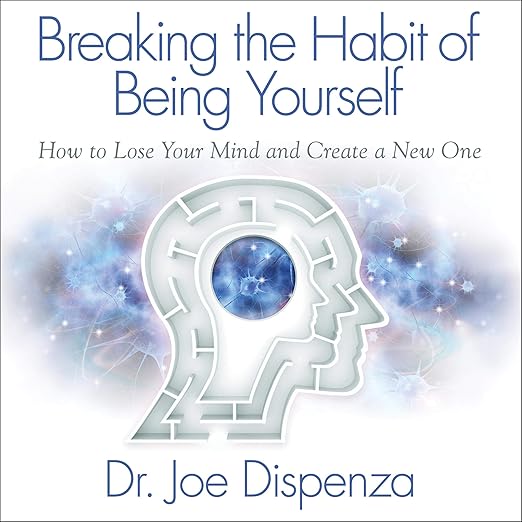
Dr Joe Dispenza occupies an unusual position in the self-help landscape: taken seriously by a significant portion of readers who approach the genre sceptically, dismissed by others who find his bridging of quantum physics and personal transformation too conveniently grand. Having listened to Breaking the Habit of Being Yourself carefully, I find myself in a more nuanced position than either camp. The book is at its strongest when it discusses what neuroscience genuinely does know about neuroplasticity, habit formation, and the relationship between sustained thought patterns and physiological state. It is at its weakest when it reaches for quantum entanglement as a metaphysical catch-all. Treat the science at face value and the metaphysics as inspirational scaffolding rather than literal claim, and there is genuinely useful, well-structured material here.
About the Audiobook
The core argument, stripped of its more ambitious theoretical framing, is this: most of us are addicted to our own emotional states. The repeated firing of familiar neural pathways makes habitual thoughts, feelings, and reactions feel like identity – like simply who we are – rather than what they actually are, which is deeply ingrained conditioning. Dispenza draws on neuroscience, epigenetics, and his reading of quantum physics to argue that this conditioning is reversible, and that through a structured combination of understanding and guided meditation practice, we can genuinely rewire our neurological patterns over time.
The book is organised in two halves: the theoretical section establishes the scientific and philosophical foundation, and the practical section moves into a four-week programme of guided meditations and specific exercises designed to make the rewiring process active rather than passive. The accompanying PDF, available in your Audible library, provides the visual diagrams and frameworks that support the audio content – particularly useful for the meditation sections, which benefit from written reference material. Thousands of people across dozens of countries have used these principles in Dispenza’s workshops; the programme is road-tested in a way that laboratory novelty is not.
The Narration
Adam Boyce narrates with consistent authority – clear, measured, and well-paced for material that demands attention rather than passive listening. He handles the scientific terminology without awkwardness and manages the tonal shift between intellectual explanation and meditation guidance smoothly, which is a non-trivial skill. At nearly 11 hours this is a substantial listen, but Boyce sustains the energy without falling into the numbing monotony that can undermine longer self-help audiobooks. The meditation sections particularly benefit from his calm, unhurried delivery.
What Readers Say
Sixteen reviews average 4.6 stars, with genuine enthusiasm from the majority and one measured dissenting voice that adds useful intellectual texture. UK listeners who engaged with the full programme reported real shifts: “I actually caught myself noticing old habits playing out in real time, which doesn’t happen with most self-help books,” wrote one reviewer. Another, who has ADHD and found concentration difficult, praised Dispenza’s use of simplified analogies to make complex explanations accessible. The dissenting voice – from a reader with a psychology background – made the valid point that “one size fits all” is an inadequate model for human diversity, and that the guided meditation approach may not suit everyone. This is fair, and worth holding in mind as you approach the programme.
Who Should Listen?
Well-suited to listeners who have found conventional self-help advice too vague, and who want a more structured, scientifically engaged approach to understanding why they behave as they do. Those already committed to meditation practice will find the guided sections a natural extension of existing habits. Readers with a strong empiricist bent should approach the quantum physics passages with appropriate critical distance – but the neuroplasticity and habit-formation content is well-founded and genuinely useful. This is, at its best, a practical toolkit rather than an aspirational text. Listen on Audible UK and decide for yourself whether you’re ready to break the habit of being yourself.
Listeners who complete the theoretical sections and engage seriously with the guided meditations report a common observation: the programme requires commitment over several weeks rather than yielding results from a single listen. Dispenza is explicit about this – the neuroscience he cites suggests that genuine neural rewiring requires repetition over time, not a single decisive moment of insight. This is either reassuring or disappointing depending on your temperament and the urgency of your situation. Approach this as a long-term practice tool rather than a quick fix, and the programme’s strengths become considerably more apparent.
The book’s strongest practical section is the guided meditation programme in the second half, which Dispenza has refined through years of workshop delivery. The meditations move from body awareness through breath work to a sustained practice of visualising and emotionally inhabiting a desired future state – a technique with roots in both contemplative tradition and sports psychology. Whether you accept the theoretical framework or not, the meditation practice itself is genuinely well-constructed and stands on its own merits.