Clara’s Verdict
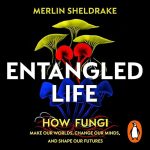
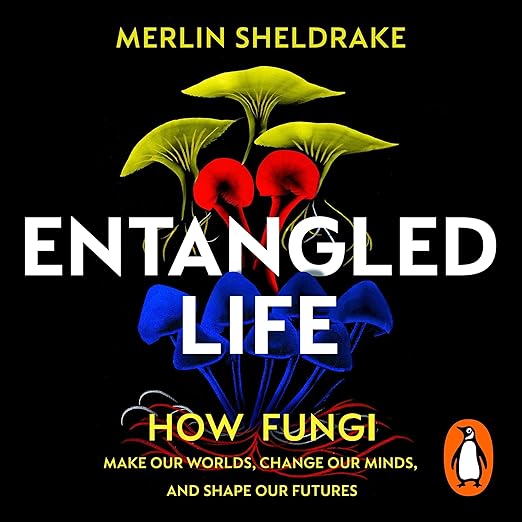
I’ve read a great deal of popular science in my years as a critic – probably more than I’ve admitted in polite company. The genre has genuine classics and an enormous amount of competent mid-tier work that explains things clearly without quite igniting anything in the reader. Entangled Life is the rare third thing: a book that doesn’t just explain its subject but genuinely transforms the way you see the world after you’ve finished it. Merlin Sheldrake is a mycologist who studies fungi, and he is also a writer of unusual grace and ambition. The combination produces something extraordinary. Winner of the Royal Society Book Prize 2021 and the Wainwright Prize for Conservation Writing 2021, shortlisted for the Rathbones Folio Prize and the British Book Awards Book of the Year – the accolades accumulate because they are deserved. The audiobook, narrated by Sheldrake himself, is the ideal format for this particular journey.
About the Audiobook
Fungi are not plants. They are not animals. They are their own kingdom – ancient, vast, and almost entirely hidden. Sheldrake’s book begins with this basic fact and then proceeds to reveal just how radical its implications are. Fungi are the soil, in a meaningful sense: without mycorrhizal networks – the fungal threads that connect and exchange nutrients between the roots of plants – most terrestrial life as we know it would not function. The “wood wide web” that popular science journalism has made familiar is only one of several extraordinary phenomena that Sheldrake explores with equal rigour and imagination.
He takes us into the world of lichens – fungi and algae living in symbiosis, each transforming the other beyond easy recognition. He explores zombie-ant fungi that parasitise insects with what can only be described as cinematic precision. He writes about psychedelic fungi and their effects on human consciousness with neither sensationalism nor squeamishness. He visits researchers and companies working to grow new materials and foods from mycelium, describing what a genuinely fungal economy might look like. Each chapter is a separate dive into a different corner of the kingdom, but the book accumulates into something coherent: an argument that our most fundamental categories – individual and collective, organism and environment, self and other – are far less stable than we assumed.
The best popular science writing does two things at once: it explains, and it unsettles. Sheldrake does both. Running time: 9 hours and 32 minutes, not a minute of which feels surplus to requirements.
The Narration
The decision to have Sheldrake read his own work is the right one, and Penguin Audio understood this. He has a quiet, considered voice that suits the sense of someone genuinely in love with their subject – not performing enthusiasm for an audience, but sharing something he can barely believe he gets to think about for a living. The more lyrical passages benefit from his unhurried delivery; the more technical sections never feel like lectures. For a book whose central argument is about the dissolution of neat categories, the slightly unpolished voice of the scientist-author feels philosophically appropriate. He is not doing a performance of knowledge. He is thinking aloud.
There is also, threaded through the more obviously scientific chapters, a consistent philosophical argument that most popular science tends to leave implicit. Sheldrake is genuinely interested in what fungi tell us about the nature of selfhood – whether the concept of an individual organism makes sense in a world where organisms are fundamentally constituted by their relationships with other organisms. This is not a digression from the science; it is one of the conclusions the science generates. Readers who come for the biology will find the philosophy growing naturally out of it, which is the sign of a genuinely integrated mind writing about their subject rather than a popular science writer grafting significance onto interesting facts.
What Readers Say
The Audible audience, though modest in number – 7 ratings at 4.7 out of 5 – is unanimous in enthusiasm. “One of the most amazing books I have read,” writes one UK listener, a self-described compulsive reader of both fiction and non-fiction who found the science accessible and the writing beautiful. Another called it “mind-altering – and not because it references certain mushrooms,” praising the way it challenges fundamental assumptions about individuality and taxonomy. A third described the experience simply as “fascinating and extremely insightful.” The print edition has gathered tens of thousands of similar responses across platforms. This is a book that consistently exceeds the expectations of its readers, regardless of what those expectations were when they opened it.
Who Should Listen?
Anyone with even a passing interest in natural history, ecology, or the philosophy of biology will find this essential. It is also for readers who love beautifully written books and don’t necessarily think of themselves as science readers – the writing is genuinely literary, and the ideas are accessible without being simplified or condescended to. Robert Macfarlane called it “dazzling, vibrant, vision-changing.” Helen Macdonald called it “urgent, astounding and necessary.” Both assessments hold up. If you listen to one popular science audiobook this year, make it this one. You will see trees differently afterward. You will see yourself differently, too.
Listen to Entangled Life on Audible UK: Find it on Audible UK. Also available via Kobo, Scribd, and Storytel.