Clara’s Verdict
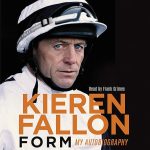
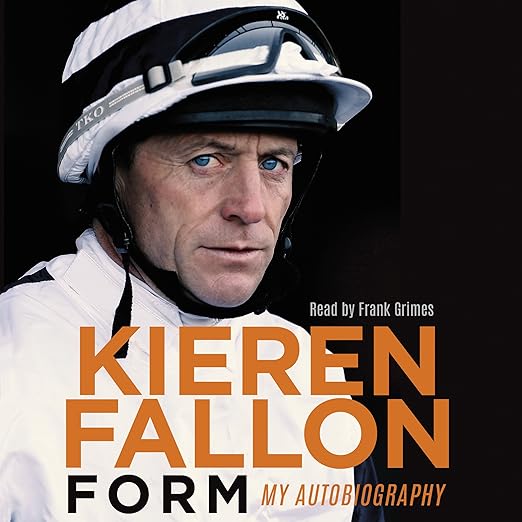
The best sporting autobiographies don’t simply tell you what happened across a career. They explain the texture of a life – the obsession, the physiology, the unglamorous and often punishing machinery of elite performance, and the specific psychology that keeps someone driving themselves when ordinary motivation would have long since run dry. Kieren Fallon’s Form, which won the Sports Book Awards International Autobiography of the Year, belongs in that category. Fallon was, by most objective measures, one of the greatest flat-racing jockeys of his generation: six Champion Jockey titles, a unique and much-remarked-upon rapport with the horses in his care, and a career record that very few have approached. He was also a man whose combative nature and complicated relationship with authority generated controversy at more or less every stage of his working life. This book doesn’t flinch from either half of that story, and the result is compelling throughout. At 4.5 stars from 360 UK listeners, it has found the audience it deserves.
About the Audiobook
Fallon grew up in rural Ireland and came to the UK to make his name in a sport where success requires a very particular combination of physical talent, psychological tenacity, sensitivity to an animal that weighs approximately ten times what you do, and the specific courage that climbing aboard a thoroughbred at full gallop requires every working day. He had all of these qualities. What he also had was a temperament that made enemies efficiently and a tendency to resolve disputes through direct physical action that the racing establishment found difficult to accommodate.
The 1994 incident in which he dragged a rival jockey off his mount was the beginning of a series of confrontations with the authorities that culminated in a race-fixing trial at the Old Bailey – a process that took years, dominated the racing pages, and damaged his career even before the verdict. He was acquitted: the judge found no case to answer. But the damage to his reputation had been done, and Fallon writes about this with bluntness rather than self-pity, which is one of the book’s most admirable qualities.
The sections on his working relationships with trainers Henry Cecil, Michael Stoute, and Aidan O’Brien – “arguably the three greatest trainers of recent times,” as one reviewer rightly notes – are illuminating both about racing strategy and about Fallon’s highly individual approach to his craft. His understanding of horses, the intuitive communication that distinguished his riding at its best, remains the most fascinating thing about him and the thing the book returns to most affectionately. The physical demands of race riding are described with the same candour: the weight management, the methods that will raise eyebrows in the health-conscious present, the accumulated wear on a body asked to do extreme things for decades.
The Narration
Frank Grimes reads with a quality of gritty authority that suits Fallon’s voice perfectly. The memoir is not elegantly written in the literary sense – it is honest and specific and sometimes blunt – and Grimes respects that specificity rather than smoothing it over. The Irish cadences are present without being exaggerated, which is exactly right for a man who spent decades working in English racing. Grimes’s pacing is well-judged in the trial sequences, where clarity of chronology matters considerably, and in the racing set pieces, where pace itself is the point and the narration should carry momentum rather than interrupt it.
What Readers Say
UK listeners are enthusiastic, and several note qualities that go well beyond the expected appeal to racing fans. “Reads like a novel but it’s all true,” wrote one reviewer, invoking Dick Francis and John Grisham in the same breath – high praise in this company. Another praised the book’s account of rural Irish life alongside its racing content, and noted genuine insight into Fallon’s “knowing and affinity with horses.” A third bought the book for his father, an avid racing follower of sixty years, who loved it. The most considered negative response is simply that the reviewer didn’t believe everything Fallon claimed – which is, arguably, an endorsement of the book’s ambition to make claims at all rather than retreating into safe generality.
Who Should Listen?
Racing fans will find this essential – it covers three decades of the sport’s most consequential personalities and races with genuine inside knowledge, and Fallon’s perspective on the major trainers he worked with is available nowhere else. But Form also works for readers with no particular interest in horse racing who simply want a compelling portrait of what extreme dedication to a physical discipline actually costs over the course of a career. Fans of sporting autobiographies in the classic tradition, or of equine fiction like Dick Francis’s racing novels, will find a great deal here. Also recommended for anyone who appreciates memoirs that don’t let their subject entirely off the hook – Fallon’s honesty about his own contributions to his difficulties is one of the book’s most engaging qualities.
Listen to Form on Audible UK – narrated by Frank Grimes, running 8 hours and 18 minutes.