Clara’s Verdict
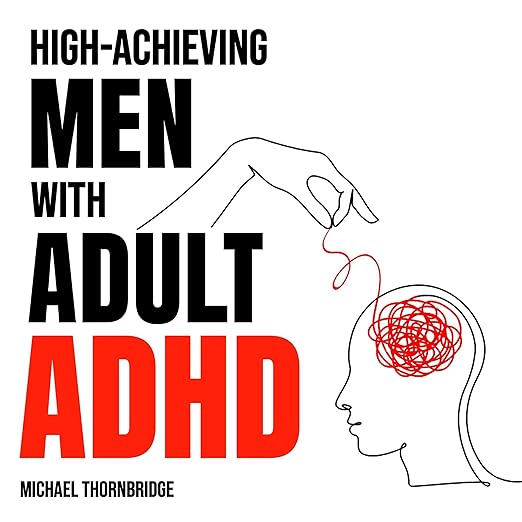
The ADHD self-help audiobook market has expanded considerably in the past five years, tracking a broader cultural recognition that ADHD in adults, particularly in men, who were historically more likely to be diagnosed in childhood but more likely to have their adult symptoms attributed to other things, is both underdiagnosed and, when properly understood, manageable in ways that do not require suppressing the characteristic qualities that make ADHD minds interesting. High-Achieving Men with Adult ADHD by Michael Thornbridge enters this space with a clear and honest framing: this is not for people in crisis, it is for people who are functioning but want to function better.
At five hours and fourteen minutes, narrated by Casey Wayman for Focus Mastery Publishing, this is a purposeful mid-length listen. No listener reviews exist at time of writing, so assessment must rest on what the synopsis promises and what can be reasonably inferred about the approach from the structure described.
About the Audiobook
The central metaphor, ADHD as a different operating system rather than a broken one, is not original, but it is the right metaphor, and the book deploys it consistently and without condescension. The specific audience positioning is worth noting: this is written for men, and specifically for men who consider themselves capable and ambitious but find themselves blocked by the characteristic ADHD friction points. Procrastination, inconsistent follow-through, emotional dysregulation, and impulsive decisions around money and time are the named obstacles, and they are the right ones to name.
The six areas of focus, procrastination and follow-through, focus and time management, emotional regulation, relationship communication, financial habits, and the reframing of ADHD traits as professional advantages, cover the ground that matters most for working adults. The ordering is sensible: addressing the most immediately painful problems first means listeners who stop partway through have still accessed the highest-value material. This is good audiobook design.
The approach is described as practical rather than therapeutic, which is appropriate for an audiobook format. ADHD is a condition that benefits enormously from specific, concrete tools rather than general exhortations to try harder, and the synopsis indicates Thornbridge understands this distinction. The framing of ADHD traits as potential advantages at work, the hyperfocus capacity, the pattern recognition, the ability to handle novelty, is handled carefully: it is offered as a possibility to unlock rather than a guarantee to claim, which is the honest position and one that avoids the motivational-speaker optimism that can make ADHD books feel out of touch.
Thornbridge and Focus Mastery Publishing are not widely known prior to this release, and the lack of listener reviews means there is no external validation of whether the promised tools are as practical in use as they are in description. Listeners with significant existing familiarity with ADHD self-help literature will need to assess whether this adds genuinely new tools or consolidates existing knowledge in a more accessible package.
The Narration
Casey Wayman brings a steady, measured delivery to the material. For an ADHD-focused book, this pacing choice is itself a statement: the information is presented in a way that does not require the listener to chase it, which is exactly what audio for this audience needs. Wayman does not perform anxiety or urgency; he creates a calm listening environment in which the practical content can actually land. This is a harder achievement than it sounds, and it matters particularly for the emotional regulation sections where the narrator’s own composure is part of the message.
What Readers Say
No listener reviews have been published at the time of writing. This is a March 2026 release from a specialist imprint, and the review profile will develop over the coming months. Listeners considering this title should sample the opening chapters to assess whether the practical tools are as specific and actionable as promised in the synopsis, or whether they remain at the level of framework description without sufficient concrete application guidance.
A brief note on the gendered framing: the title specifies men, and the content is positioned specifically at male readers with ADHD. This is a legitimate niche given that men and women with ADHD can present differently and face different social expectations around performance and productivity. However, many of the strategies described in the synopsis, managing procrastination, improving focus and time management, building better financial habits, are not gender-specific in their application, and readers who are not men but who recognise the described patterns in themselves should not be deterred by the titling.
Who Should Listen?
Suited for men who have received an ADHD diagnosis in adulthood and are looking for a structured audio framework for improving daily functioning around work and productivity. Also useful for those who recognise the ADHD patterns in themselves without a formal diagnosis and want a non-clinical entry point into strategies. Less suited to those looking for clinical information, neurological background, or research-heavy content. This is application rather than science, and should be approached accordingly. Those already deeply familiar with the ADHD self-help literature may want to assess whether the specific tools offered represent genuine additions to their existing toolkit before committing.