Clara’s Verdict
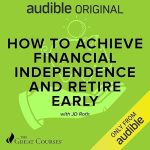
There is a certain courage required to stand in front of an audience and say, “I ruined my finances, and here is exactly how I fixed them.” J.D. Roth does precisely that in this Audible Original, and it is to his considerable credit that the candour never feels performative. This is not a polished guru selling you a system — it is a man who clawed his way out of debt and then spent years thinking rigorously about what actually worked. At under five hours, it is one of the most efficiently argued cases for financial independence I have encountered in audio form.
The FIRE movement — Financial Independence, Retire Early — has attracted its fair share of evangelical zealots and sceptical dismissals in equal measure. Roth cuts through both camps with uncommon precision. He is honest that the maths is simple; the difficulty is entirely psychological and behavioural. That distinction alone makes this worth your time.
About the Audiobook
How to Achieve Financial Independence and Retire Early, released in February 2021 through Audible Originals, distils J.D. Roth’s personal journey and the decade-plus of writing he has done on his celebrated personal-finance blog into ten clear lessons. The book does not promise overnight wealth — it promises a framework for understanding the relationship between money, time and genuine happiness.
Roth begins with his own story: buried in consumer debt in 2004, he set about reading every money book he could find, synthesising their advice, and applying it methodically. The result was financial independence by his early fifties. The audiobook walks listeners through the “shockingly simple maths” of the FIRE movement — the idea that controlling your savings rate is far more powerful than chasing higher income — and then moves into the philosophical territory that most personal-finance books ignore: why we spend the way we do, what we actually want from money, and how to define a rich life on your own terms. The ten lessons span budgeting psychology, investment basics, the concept of “enough”, and the practical realities of retiring early in a world that assumes you will work until 65.
The Narration
Roth narrates his own material, which proves to be a significant asset. His voice carries the quiet authority of someone who has lived through what he describes — there is no false brightness, no motivational-speaker cadence. He speaks to the listener the way a thoughtful friend might over a long dinner: directly, with occasional dry wit, and with genuine respect for the audience’s intelligence. At 4 hours and 39 minutes, the pacing is brisk without feeling rushed, and the conversational delivery makes dense financial concepts feel accessible rather than intimidating. This is the kind of audiobook that rewards focused listening during a commute.
What Readers Say
This title does not yet carry a public rating on Audible UK, which is not uncommon for Originals distributed outside the main catalogue. The absence of a star average should not deter you — Audible Originals of this kind are often underrated simply because they sit outside the usual discovery pathways. The content itself has been refined through years of community feedback on Roth’s blog and speaking engagements, meaning the ideas have been stress-tested in the real world long before they reached audio form.
Who Should Listen?
This audiobook is ideal for anyone in their twenties or thirties who suspects they are not making the most of their income but finds traditional personal-finance books either too prescriptive or too dull to finish. It will also resonate with career-changers and mid-lifers reassessing what they are actually working towards. If you have ever wondered whether early retirement is a realistic ambition rather than a fantasy, Roth gives you the arithmetic and the mindset to find out. Those already deep in the FIRE community may find some familiar ground, but the philosophical framing offers fresh perspective even for veterans.
Ready to rethink your relationship with money? Listen to How to Achieve Financial Independence and Retire Early on Audible UK and start building the framework that could change everything.
One aspect of the book that distinguishes it from the crowded FIRE commentary online is Roth’s willingness to acknowledge the privilege implicit in early retirement planning — high income, stable employment, no dependants with unusual needs — and to adapt his advice accordingly. The chapter on the “rich life” philosophy is particularly well handled: Roth argues, convincingly, that financial independence is not primarily about accumulating a target number but about removing the compulsion to exchange your time for money against your will. That is a subtler and more useful definition than most books in this space manage.