Clara’s Verdict
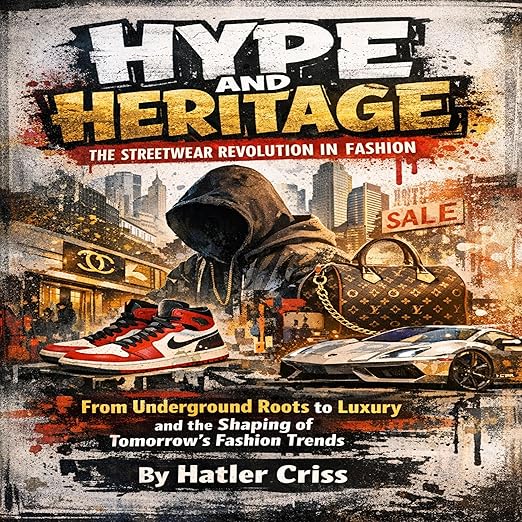
Streetwear is a subject that rewards serious treatment, and the history it has generated over the past four decades is genuinely fascinating: a cultural movement born in skateparks and hip-hop studios that has become the dominant commercial logic of a multi-billion-pound global industry. Hype and Heritage: The Streetwear Revolution in Fashion, by Hatler Criss, attempts to tell that story in 74 minutes, and it does so with more clarity and organisation than such a short runtime might suggest.
The limitations of the format are real and worth stating upfront. Seventy-four minutes cannot hold a full history of anything, let alone a subject with the cultural depth and commercial complexity of streetwear. What it can hold is a clear, well-structured orientation to the key forces and transitions that shaped the movement, and that is what this audiobook delivers. Whether that orientation is sufficient will depend entirely on what the listener brings to it.
About the Audiobook
Published in February 2026, Hype and Heritage covers the origins of streetwear in underground subcultures including skateboarding, hip-hop, and youth counter-culture; the mechanics of sneaker culture and limited releases in creating scarcity and therefore desire; the fusion of streetwear aesthetics with luxury fashion brands; the influence of music, art, and digital media on what gets worn and what gets wanted; and the sustainability and digital fashion dimensions of the industry’s future. That is a substantial amount of ground for 74 minutes, and the book handles it by moving efficiently between topics rather than dwelling on any single one.
The treatment of how branding and storytelling drive demand is one of the more substantive sections. The shift from product-centric to narrative-centric marketing, where what a brand means matters more than what it makes, is handled clearly, and the examples drawn from the history of streetwear brands illustrate the principle with appropriate specificity. The section on the luxury streetwear fusion, the moment when high fashion and street culture found themselves wearing each other’s clothes, is the most culturally interesting part of the book, though at this length it necessarily stays at the level of observation rather than deep analysis.
One of the book’s more interesting observations concerns the role of scarcity as a branding mechanism. The limited drop model, in which a product is released in small quantities and sold out within minutes, does not simply generate sales; it generates a community of people organised around desire, access, and the social currency of having been there at the right moment. That dynamic, which streetwear pioneered and which luxury brands subsequently adopted wholesale, is one of the genuine innovations the culture introduced to mainstream retail.
The future section on sustainability and digital fashion is the most forward-looking material and will age differently from the rest of the book. Digital fashion and the economics of virtual clothing remain contested and rapidly evolving territories, and the treatment here is necessarily provisional. The historical sections are more durable, and the account of streetwear’s commercial evolution from independent label to global brand to luxury collaborator is coherent and well organised.
The Narration
Gordon Webster delivers the narration with an ease and fluency that suits a subject built on the aesthetics of cool. His register is accessible and engaged, and he handles the cultural references, from specific brand histories to the economics of the drop model, without either over-explaining them for novices or assuming prior familiarity that might lose a general listener. For a short guide that is trying to be welcoming to newcomers while remaining credible to those with existing knowledge, Webster’s tone strikes a reasonable balance and the 74-minute runtime is handled without any sense of padding or unnecessary rush.
What Readers Say
No Audible ratings have been recorded for Hype and Heritage at the time of writing. The title is early in its catalogue life and has not yet accumulated listener feedback. Streetwear as a subject has a passionate and vocal global community, and the arrival of reviews over the coming months will be a useful signal of whether the book’s overview-level treatment satisfies listeners who come to it already deeply invested in the culture, or whether its primary value lies in serving as a structured introduction for those approaching the subject fresh.
Who Should Listen?
Hype and Heritage suits fashion students wanting a structured introduction to streetwear’s commercial and cultural history, brand professionals trying to understand the mechanics of hype and scarcity-driven marketing, and general listeners curious about how youth culture became a dominant force in luxury fashion and global retail. The 74-minute runtime makes it an accessible entry point rather than a comprehensive reference, and it should be approached accordingly. Those already deeply embedded in streetwear culture, who have lived the transitions the book describes, may find the level introductory. But as a foundation for further reading, and as a clear-eyed account of how a subculture became an industry, it earns its short runtime.