Clara’s Verdict
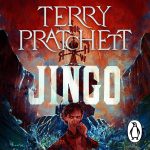
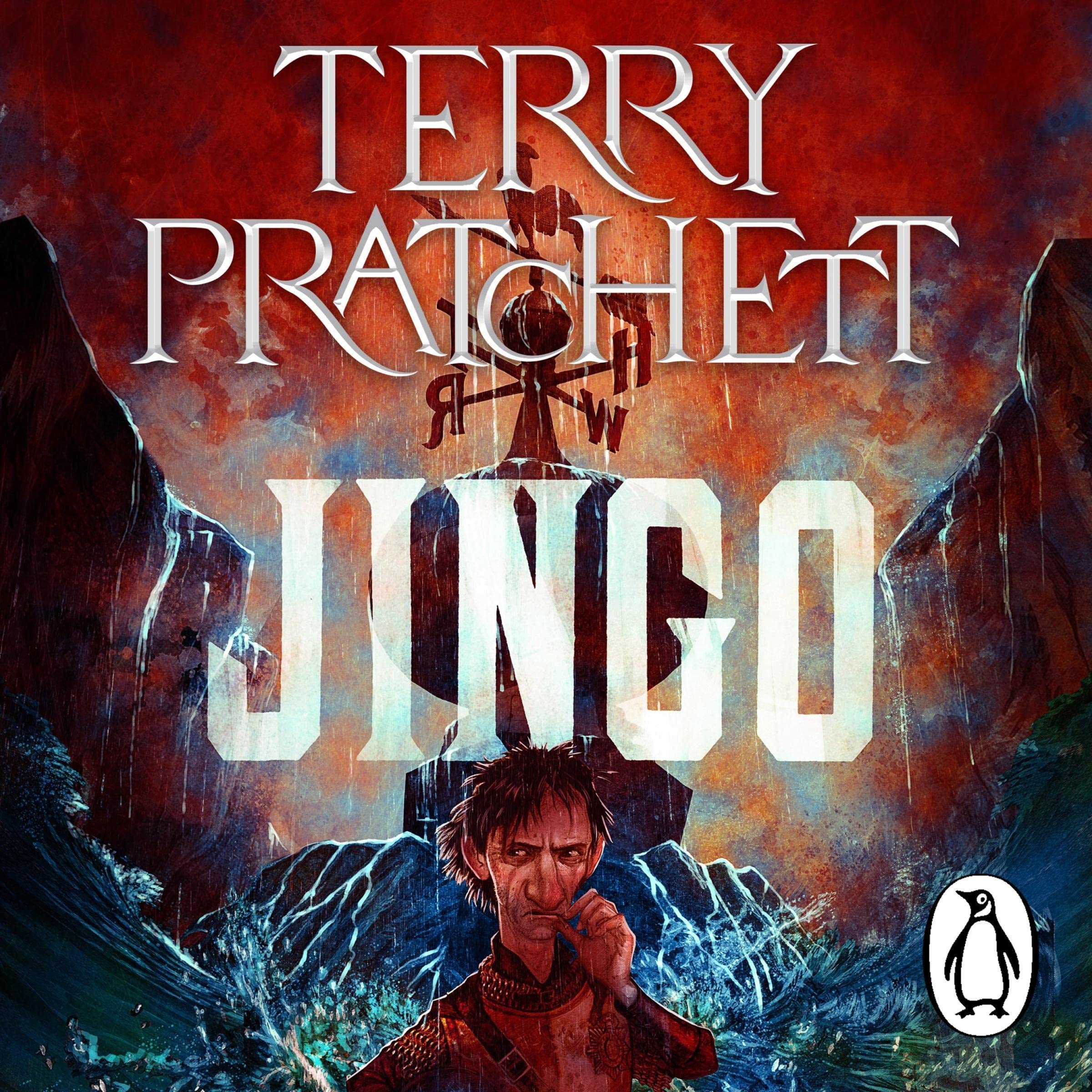
Two nations discover a piece of old rock in the middle of nowhere and immediately begin arranging to kill each other over it. That is the engine of Jingo, and it is the reason this particular Discworld novel keeps being described by readers as though it were published last week. Terry Pratchett was writing about the manufacture of patriotism, and the machinery he describes has not been retired.
Thirteen hours and thirty-eight minutes with Jon Culshaw reading, and a 4.7 average from close to nine thousand ratings, which places it among the well-loved rather than the merely liked. On reading order the publisher is admirably clear: the Discworld novels can be taken in any order, but Jingo is the fourth book in the City Watch sequence and stands twenty-first in the wider series. I would take that advice seriously in one direction only. You can start here. You will get more from it if you have already watched Vimes become the man who is capable of what he does in this book.
About the Audiobook
The neighbours in question are the empires of Klatch and Ankh-Morpork, and Pratchett’s framing of the dispute is characteristically domestic. Neighbours nod amicably at one another on the way to work for years, he observes, until some trivial thing happens and somebody ends up with a garden implement lodged in an unfortunate place. When the neighbours are nations, the garden implements scale accordingly. The trivial thing here is a scrap of territory that both sides have abruptly decided is strategic.
What follows is a book about the right to bear arms in defence of your own property, complicated by the fact that the property is not technically anybody’s and that the parties involved are not especially well armed. Two armies march. Commander Vimes of the Ankh-Morpork City Watch faces a set of unpleasant enemies determined to see him fail, and the running joke, which is not entirely a joke, is that a substantial number of them are nominally on his side. The enemy, the copy adds, might be even worse.
Thirteen and a half hours is a full-length Discworld and the plot earns it. This is one of the more structurally ambitious books in the sequence, the action splitting across a large cast, doing satire and farce and a genuine moral argument at once. Vimes holds those registers together: his exhausted, unimpressed decency is the fixed point against which the surrounding hysteria is measured.
The City Watch strand suits readers who like crime fiction, since it puts a copper at the centre of the story. Jingo is a war novel wearing that costume, and the tension between the two is where much of its best writing lives.
The Narration
Jon Culshaw’s job here is the one that separates competent Discworld narration from the real thing. Pratchett places an unusual demand on a solo reader: dozens of named characters, many of them appearing in crowded scenes, all of whom need to be identifiable within a line of dialogue and none of whom can be allowed to slide into another. Culshaw’s differentiation is genuinely strong, and he keeps it stable across a long book, which is the harder half of the trick.
Vimes is the performance the whole recording rests on, and Culshaw judges him well. The temptation with Vimes is to play the growl and stop there, which produces a gruff copper rather than the specific thing Pratchett wrote, a man whose cynicism is the scar tissue over an unreasonably intact moral core. Culshaw keeps the weariness in the delivery without letting it flatten, so that the moments where Vimes genuinely will not budge arrive with real force rather than as more of the same. Vetinari is the other test, and he demands the opposite technique: an unhurried quiet that makes the menace a matter of pace rather than volume.
One caveat applies to any Discworld listener with established habits. If you have a particular voice already fixed in your head for these characters, expect an adjustment period of a chapter or two before Culshaw’s choices stop sounding like departures and start sounding like the book. That settling is normal and it passes. His own approach is performance-led rather than atmospheric, the right instinct for Pratchett: the comedy sits in the timing of the sentences and needs delivering rather than decorating.
What Readers Say
The reviews cluster around the book’s contemporary relevance, which is unusual for a novel that has been in print this long. A five-star reader writes that like most Discworld books it could have been written today or at any point in history and would still work, and connects it directly to the fake patriotism visible everywhere at present. Their summary of the appeal is exactly right: “Vimes and The Watch taking a stand and doing what’s right”, set against a self-satisfied aristocrat who believes himself clever and is not.
Another five-star reviewer calls it “Probably my favorite book in the watch series yet” and singles out Vetinari, writing that “Vetinari is particularly brilliant in this one”. That is a fair steer for anyone who enjoys Vetinari’s particular brand of unhurried menace, and it points at material a first-time Discworld reader might otherwise miss.
The single four-star response deserves the most careful weighing of the three, because it names a real audio problem rather than a fault in the book. The reviewer liked the story but writes: “Good story, although I did get confused with who was doing what.” They blame their own attention, cheerfully, and move on to the next novel. I would not let them take all the blame. A cast this large, split between two marching armies at this length, is genuinely harder to track by ear than on a page you can turn back through, and this is the specific risk of taking Jingo in audio rather than in print.
Who Should Listen?
Discworld readers who have reached the Watch books and want the strongest political entry in the sequence should go straight to this one. It also suits anyone who arrives at Pratchett from satire rather than from fantasy, since the fantastical element here is thin and the target is entirely recognisable. Crime readers curious about Discworld will find the Watch structure familiar enough to be comfortable and strange enough to be worth the trip.
Complete newcomers can technically start here, as the publisher says, though I would gently suggest beginning earlier in the Watch sequence so that Vimes arrives with his history attached. Anyone who struggles to hold a large cast without visual reference should take that four-star confusion as a warning. If you want your fantasy to take its own world seriously, be aware this one is a vehicle for an argument about nationalism and never pretends otherwise. And a listener wedded to a previous Discworld narrator should allow a chapter before judging.