Clara’s Verdict
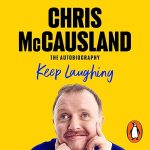
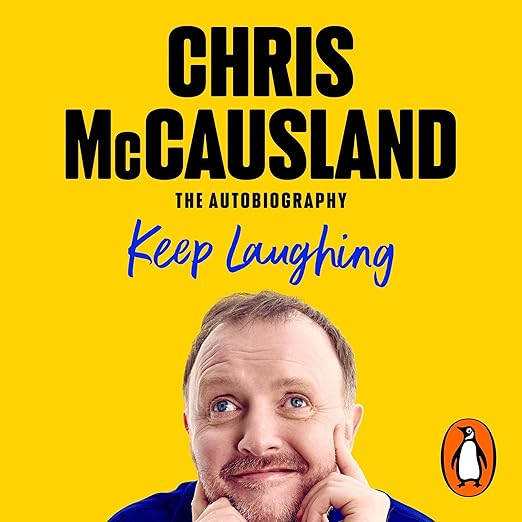
I was genuinely moved by Keep Laughing, and I say that as someone with a fairly robust resistance to celebrity memoirs. Chris McCausland has written something that transcends the Strictly-adjacent autobiography genre almost entirely. The book is funny, yes, because he is a comedian, and because his childhood in Liverpool in the 1980s and 90s provides exceptionally rich material. But what gives it real weight is the way it handles progressive sight loss: not as tragedy, not as triumph-over-adversity narrative, but simply as one thread in a life lived with considerable verve and self-awareness.
At 10 hours and 5 minutes, narrated by McCausland himself, published by Penguin Audio in October 2025, and rated 4.6 from 770 listeners, this is one of the strongest memoir performances I have encountered this year. Richard Osman’s endorsement on the cover, that the thing about Chris is that he’s funnier than everybody else, is not misplaced.
About the Audiobook
This is McCausland’s account of the 25 years between the onset of a hereditary degenerative eye condition in his youth and his astonishing run on Strictly Come Dancing, which culminated in the Glitterball Trophy with Dianne Buswell. The structure is broadly chronological. He begins with his Liverpool childhood, moves through his gradual sight loss, and traces his unlikely career path: through an MI5 approach that was apparently real, a bootlegging empire that was only sort of real, and eventually into stand-up comedy, panel shows, and national fame.
The book’s title comes from McCausland’s own stated philosophy, an attitude forged not through denial of difficulty but through the discovery that laughter was the most effective tool he had for navigating the relentless practical challenges of losing his sight while trying to build a career. The title is not a platitude; it is a description of a survival strategy that turned out to work.
What distinguishes this memoir from the typical celebrity treatment is the absence of self-pity and the absence of false heroism. McCausland does not frame his blindness as an obstacle overcome. He frames it as something that happened, that required adjustment, and that ultimately shaped the comedian he became. The Strictly chapters, which might have been the most straightforward part of the book, are actually some of the most illuminating, partly because he is consistently honest about his own surprise at enjoying it so much. He expected not to be able to dance. He still cannot see the Glitterball he won.
The Narration
Self-narrated audiobooks live or die on whether the author can sustain a performance across the full runtime, and McCausland can. His stand-up background means his comic timing is impeccable. He knows exactly when to let a beat land and when to move on. The Liverpool accent is warm and unforced, and it grounds the childhood sections in a very specific geography that adds texture rather than merely colour.
More importantly, he handles the more difficult passages with remarkable steadiness. The moments describing his gradual vision loss, the practical adaptations his daily life required, the quieter kinds of loss that accumulate over years, are delivered with the same unhurried, undramatic voice he uses for the jokes. That tonal consistency is exactly right. It would have been easy to modulate heavily for emotional effect. He does not. The result is something more affecting precisely because it does not ask you to feel anything in particular.
What Readers Say
The listener response is unusually enthusiastic even by bestseller memoir standards. Multiple reviewers describe being surprised by how much the book moved them, and several note that they came to it as Strictly fans and left with genuine admiration for the person behind the performance. One listener wrote that McCausland never allows his condition to identify him and documented his journey up to receiving the Strictly BAFTA with striking emotional intelligence. Another noted the rich 80s and 90s nostalgia woven into the childhood stories, and the book’s evident affection for family and close friends.
No reviewer reported finding the memoir shallow or promotional. The overwhelming response is that the book exceeded expectations in depth, honesty, and laugh-out-loud comedy. At 770 ratings and a 4.6 average, this is a well-evidenced verdict and one of the most confident recommendations I can make from this batch.
Who Should Listen?
Strongly recommended for anyone who watched McCausland on Strictly and wanted to understand him better, for listeners who enjoy memoirs that deal with disability without sentimentality, and for fans of stand-up comedy who want context for a significant career. This will also appeal to readers of memoirs by comedians such as Frank Skinner or Lee Mack, where the comedy and the autobiography are genuinely integrated. Those who have no interest in either disability narratives or comedy are probably the only audience for whom this would not land.
Keep Laughing is available on Audible UK. Listen on Audible UK