
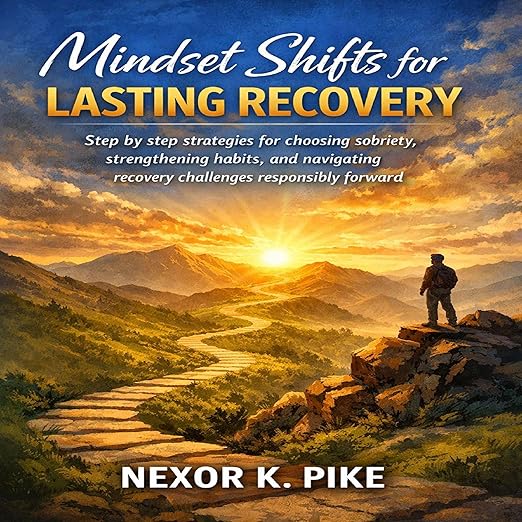
Clara’s Verdict
Recovery literature has a tendency towards two extremes: the relentlessly upbeat, which can feel patronising to anyone who has experienced the grinding difficulty of what recovery actually involves, and the clinically dry, which can feel alienating when you are the person in the middle of it. Mindset Shifts for Lasting Recovery by Nexor K. Pike appears to chart a more useful middle course – acknowledging that addiction recovery is fundamentally a cognitive and emotional transformation, not simply a matter of stopping a behaviour, and that addressing only the behaviour whilst leaving the underlying thought patterns intact is a reliable route to relapse.
That framing distinguishes this audiobook from more superficial entries in the genre, and it reflects the best current understanding of how sustained recovery actually works. At just over three hours, it is a concise listen – this is a book designed to be returned to, not consumed once and shelved.
About the Audiobook
Pike’s central argument is straightforward but important: most recovery programmes focus on what you do, but the deeper work is about how you think. Negative self-talk, shame cycles, relapse thinking, emotional avoidance, and rigid cognitive habits are not side effects of addiction – they are often the soil in which addiction grows, and they will keep growing long after substance use has stopped unless they are specifically addressed.
The book works through three principal mindset shifts: from a survival mindset to a growth mindset; from shame to self-compassion; and from avoidance to accountability. These are not new concepts in the therapeutic literature – anyone familiar with cognitive behavioural therapy or acceptance and commitment therapy will recognise the frameworks – but Pike’s achievement is in making them feel actionable in the specific context of recovery rather than as generic self-improvement advice. The language is clear and the tools are practical; this is not a theoretical text but a working guide.
Published in March 2026, the book is designed to be used alongside professional support, not as a replacement for it. It is suited to anyone in active recovery, in early recovery, or supporting someone who is.
The Narration
Robyn Green narrates at a measured pace suited to reflective listening. This is the kind of audiobook that benefits from being heard in segments rather than consumed in a single sitting – Green’s delivery actively supports that approach, with a calm, grounded tone that neither pushes nor rushes. The three-hour runtime is a genuine asset here; long enough to be substantial, short enough to be completed across a few commutes or evening sessions without the commitment of a longer work. Green brings warmth to the self-compassion sections without veering into the cloying register that can make wellness narration feel performative.
What Readers Say
Mindset Shifts for Lasting Recovery does not yet have a substantial body of verified Audible UK reviews, having been published in March 2026. The book appears to be gaining traction in personal development circles and among listeners who have found mainstream recovery resources either too prescriptive or insufficiently engaged with the psychological dimensions of addiction. The cognitive-behavioural framework Pike employs is well-regarded in clinical settings, and readers familiar with ACT or CBT approaches will find the material resonant and practically grounded. Early feedback from listeners suggests the shame-to-self-compassion section is particularly valued.
Who Should Listen?
This audiobook is designed for anyone in recovery – from addiction, from harmful behavioural patterns, from the kind of self-defeating thinking that keeps people stuck in cycles they recognise but cannot seem to break. It will also be useful for friends and family members of people in recovery who want to understand the internal landscape of what their loved one is navigating, and for therapists and support workers seeking an accessible resource to recommend.
It is not a replacement for professional support, and it does not claim to be. What it offers is a thoughtful, practically oriented companion for a process that is, at its core, about learning to think differently about yourself and your capacity for change.