Clara’s Verdict
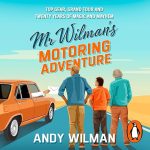
I am not a petrolhead. I have never watched an episode of Top Gear with genuine enthusiasm for the cars. I started Mr Wilman’s Motoring Adventure on a weeknight out of professional obligation and was, approximately forty minutes in, laughing at a story involving Argentina and the realisation that the truth behind one of the show’s most controversial moments was considerably more frightening than the television version allowed. The book had me from that point onwards, and I stayed with it for all eleven hours.
Andy Wilman is the co-creator of Top Gear’s modern era and The Grand Tour, Jeremy Clarkson’s oldest friend, and the man who spent two decades as the invisible architecture behind television that reached the largest factual TV audience in the world. He has, with characteristic timing, chosen to tell his story only after the show is definitively over. That retrospective clarity gives the book an emotional weight that an authorised promotional memoir written during the show’s run could never have had.
About the Audiobook
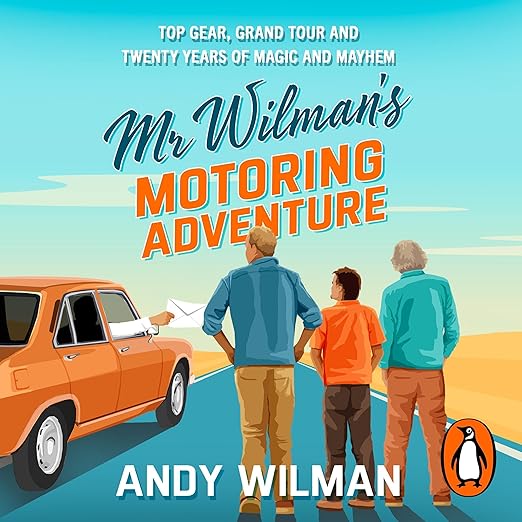
Running to eleven hours and published by Penguin in November 2025, the book covers the full arc from Top Gear’s origins as a straightforward consumer car programme to its transformation into a global cultural phenomenon, its collapse following the Clarkson fracas with producer Oisin Tymon in 2015, and the phoenix story of The Grand Tour, including the final film that brought the trio’s on-screen career together to a close. Wilman is neither hagiographic nor uncharitable about any of the people involved, including his oldest friend, and that balance is one of the book’s considerable strengths.
The behind-the-scenes material is the obvious draw, but Wilman writes with enough self-awareness to know that the real subject is what made those twenty-odd years of television so remarkably effective. His analysis of the Clarkson-Hammond-May chemistry, what it was, how it was discovered, and why it was so difficult to replicate or replace, is the most insightful account of that dynamic I have encountered in any format. He is particularly good on the collaborative writing process and on the strange institutional culture of a show that operated somewhere between journalism, performance art, and organised chaos.
The Argentina incident gets the treatment several reviewers specifically note: Wilman’s version of what actually happened is more frightening, more complex, and more human than the edited television sequence suggested. Similarly, the account of the show’s final years and the internal disintegration that preceded the end is honest without being self-serving. He does not position himself as the only responsible adult in the room, which is the kind of restraint that makes personal memoirs worth reading.
The book has been described by one reviewer as the best book about Top Gear in the world, a phrase that deliberately echoes the show’s own superlative register and suits it perfectly. For fans who have also read Richard Porter’s …And On That Bombshell, this is the complementary account from the other side of the creative partnership that defined the programme.
The Narration
Wilman reads his own book, and this is definitively the right decision. The prose is written in a voice that is entirely his own: irreverent, fast, occasionally tender, and very funny. It requires exactly his timing to land. He has, presumably from years of working in television, a strong sense of pace, and the audiobook benefits from it throughout. The production quality from Penguin Audio is clean and warm, and this is a performance that functions as entertainment in its own right rather than merely a transcription of a text.
What Readers Say
Mr Wilman’s Motoring Adventure carries a 4.8 rating, with five detailed UK reviews published between November 2025 and February 2026. The consensus is striking in its consistency. Reviewer Dimensionaut recommended it alongside Richard Porter’s memoir as essential reading for fans of the show, arguing that together the two books explain where the creative thinking and irreverence actually came from. Paul D. Elliot promised readers they would discover what the Stig’s first spoken words were and called the Argentina account “more frightening than what you seen on screen.” The sole substantive criticism across the batch was from a reviewer who found most events treated at a high level, with extended detail reserved primarily for Argentina and the final Grand Tour film. For fans wanting depth on specific individual episodes, that is worth bearing in mind. The majority, however, found the overview entirely satisfying.
Who Should Listen?
Anyone who watched Top Gear during its peak years will find this enormously entertaining. Anyone who watched The Grand Tour and wondered what was happening behind the camera will find it illuminating. And anyone curious about how genuinely successful long-form television is made, including the collaboration, the instincts, the institutional culture, and the eventual human costs, will find this more thoughtful than the premise might suggest. Non-petrolheads, I can confirm from personal experience, are not excluded. The cars are really the least of it.