Clara’s Verdict
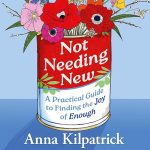
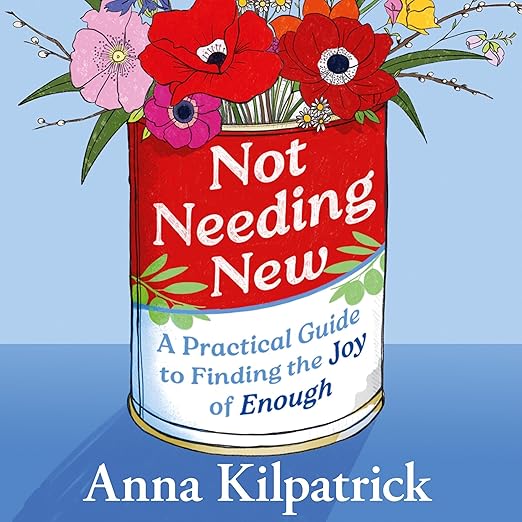
I came to Not Needing New with mild scepticism, I will admit. The sustainable living genre has produced a fair amount of content that is essentially aspirational aesthetic: beautiful photographs of carefully curated thrifted interiors that are as carefully composed and ultimately as consumerist in their own way as the glossy magazines they ostensibly critique. Anna Kilpatrick’s book is not that. Published in March 2026 and narrated by the author herself, it is a practical, genuinely personal account of how she rebuilt her sense of wellbeing and financial stability through second-hand living during a difficult period in her life, and the book carries the conviction of someone who has actually done the thing rather than theorised about it from a position of comfortable abundance. The endorsement from Nancy Birtwhistle, Sunday Times bestselling author of Clean and Green, is apt: Kilpatrick writes in that same accessible, non-judgmental, genuinely useful tradition.
There are only six Audible ratings at the time of writing, all five stars, but this is a book published within days of when I am writing this review. The early response, limited as the sample is, is uniformly enthusiastic and consistent with what you find from early buyers across other platforms.
About the Audiobook
Running to six hours and forty-six minutes, the book is organised around practical advice covering discovering your second-hand style, budgeting for holidays and travel, simplified and sustainable parenting, and reducing the psychological pressure of consumerism on family and personal life. Alongside the practical content, Kilpatrick includes reflective exercises that invite the reader to examine their own relationship with acquisition, novelty, and the feeling of not having enough. Patrick Grant, in his endorsement, says the book will challenge how you think about consumption and happiness, and the early reviews suggest he is right: several readers describe the journal exercises as unexpectedly useful and the mindset shifts as more lasting than they anticipated from a book of this kind. The book is published by Orion Spring, an imprint with a strong track record in accessible wellbeing and lifestyle titles, and the production is clean and professionally handled throughout.
The Narration
Kilpatrick narrates the audiobook herself, and it works. Her voice carries the warmth and accessibility that readers consistently describe in the text: one reviewer notes that the book feels friendly and written with understanding and empathy, and those qualities come through in the narration rather than being lost in the translation to audio. The self-narration is not a liability here. This is a book about personal transformation told in the first person with considerable vulnerability, and hearing the author’s own voice adds a layer of authenticity that a professional narrator, however skilled, would struggle to replicate. The format is also particularly well suited to the reflective exercises and prompts that punctuate the chapters, which work better when delivered in the voice of the person who wrote and lived them. Listeners may want a notebook to hand while listening to get the most from those sections.
What Readers Say
All six early Audible reviews are five stars, which is a small sample but a consistent one. Readers who have followed Kilpatrick on Instagram describe the book as going considerably deeper than her social media content, particularly in the reflective exercises and in the personal narrative of the difficult period that led her to second-hand living as a life philosophy rather than just a shopping habit. The response to the exercises is notably positive: several reviewers who expected to skip them report having completed every single one. The emotional tone across early responses is one of genuine gratitude rather than mere satisfaction. One reader’s account of reframing her relationship with an outdated 1980s bathroom through gratitude for basic sanitation is both funny and genuinely moving in the way that small, unexpected personal shifts sometimes are when they land.
The timing of this book’s publication in March 2026 is worth noting. The cost-of-living pressures that have defined the past several years in the UK have made conversations about consuming less both more urgent and more accessible to a wider audience than they might have been in a period of relative economic ease. Kilpatrick’s approach, which frames second-hand living not as austerity or deprivation but as a route to genuine contentment, speaks directly to that moment. She is not asking her readers to suffer. She is asking them to reconsider what sufficiency feels like, and the response from early readers suggests that question is landing with real resonance.
Who Should Listen?
Anyone who has felt the gap between their stated values around consumption and their actual behaviour will find something useful here. This is not a book for the already committed minimalist who has read everything in the genre; it is for people who are curious about second-hand living, uncertain where to begin, or experiencing the kind of financial pressure that makes consuming less a practical necessity rather than a lifestyle choice. Kilpatrick writes without judgment and with considerable warmth throughout, and the book is well suited to audio precisely because her voice carries both of those qualities in a way that text on a page sometimes cannot. Those looking for radical political theory about consumerism or detailed data-driven analysis of fast fashion’s environmental impact should look elsewhere; this is practical, personal, and grounded in lived experience rather than argument.