Clara’s Verdict
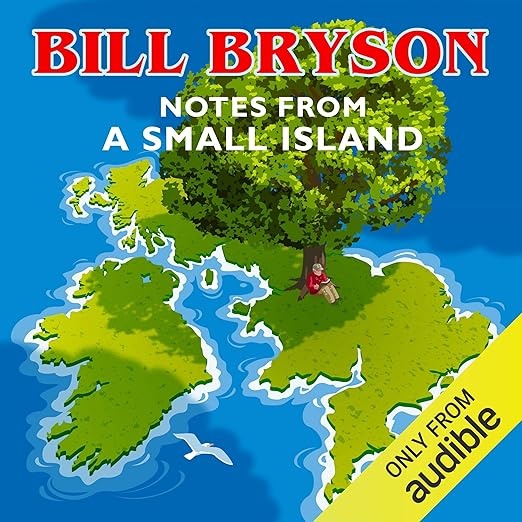
Bill Bryson is, by his own accounting, the most affectionate foreigner Britain has ever produced. Notes from a Small Island, written as he prepared to return to the United States after nearly two decades living in North Yorkshire, is his farewell tour of the country that adopted him, and it remains one of the funniest books ever written about this particular collection of islands. I have read it twice and parts of it made me laugh in public on both occasions, which is not a thing I generally recommend doing on your own in a coffee shop.
The book is built on a conceit that is simple and generous in equal measure: Bryson is leaving, so he sets off on one last journey across Britain, taking stock of everything he loves and a great deal he finds genuinely baffling. The result is social observation carried by the momentum of real affection. He is not being ironic about loving Britain. He actually does love it, which is what makes the jokes about zebra crossings, incomprehensible place names, the British inability to discuss money without acute discomfort, and the remarkable national genius for producing both Marmite and Shellow Bowells land as well as they do.
About the Audiobook
The book was written in the early 1990s, which a thoughtful listener needs to hold in mind. One reviewer makes the fair and specific point that the country has changed enormously in the decades since, and that some of Bryson’s political references have been overtaken by subsequent history in uncomfortable ways. That is true and worth acknowledging. But the passages that have dated most are not the heart of the book. What endures is the portrait of a certain kind of mid-century British character, a set of social habits and assumptions and enthusiasms that are still recognisable even when individual details have changed. Marmite still exists. The place names are unchanged. The queuing, if anything, has become more baroque.
The audiobook edition includes a special introduction written specifically for this format and read by the author himself, which is a small but meaningful addition. Bryson’s voice in conversation is distinctive and warm, and hearing him frame the material in his own words adds a layer of context and intimacy that a production note cannot replicate. The main narration then continues with William Roberts across the full ten-and-a-half hours.
The structure of the book, following a roughly circular route around Britain with diversions into memory and anecdote at every stop, suits audio particularly well. Bryson’s prose is conversational and digressive by nature, and the audiobook format leans into those qualities rather than fighting them.
The Narration
William Roberts handles the bulk of the narration, and his voice is well-suited to Bryson’s peripatetic, digressive style. The comedy in Bryson’s writing lives in the timing of the sentence, and Roberts understands that instinctively. He does not overplay the jokes. He sets up the observation and trusts the reader to arrive at the absurdity at the right moment without being pushed. The pauses are well-judged. This is a narrator who has read the material carefully enough to understand how Bryson’s humour works rather than simply translating words into sound at a steady pace.
What Readers Say
The 4.4 rating from nine listeners reflects a combination of genuine enthusiasm and one honest note of caution about the age of the material. The enthusiastic responses are emphatic: one reviewer recommends not reading in public because the laughing will require explanation to strangers, another returns to the book as a re-read years later and finds it still entirely holds up. A German reviewer calls it essential for UK fans, which speaks to the book’s reach beyond its intended audience. The sole note of caution wishes for a new version covering the Britain of today, which is as much a compliment to the original as a criticism of its age.
The audiobook format brings one additional dimension to Bryson’s prose that print cannot replicate: the rhythm of his sentences, which are constructed for the ear as much as for the eye, benefits from being spoken aloud by a narrator who understands them. Bryson’s humour is fundamentally comic in the theatrical sense, with timing that depends on pause and cadence. Reading him silently is satisfying. Hearing him is, for those who have not tried it, a genuinely different and often funnier experience. Roberts’s narration, combined with the author’s own introduction, makes this the definitive way to encounter this particular book.
Who Should Listen?
Anyone who has ever tried to explain Britain to a foreigner, or to themselves, will find something here. This is also the obvious listen for anyone on a journey around the UK, or planning one. It works particularly well as a travel companion, as the geographical structure means you can find your own location in the book. Listeners who want a current guide to contemporary Britain will need something more recent to supplement it, but as a portrait of a time, a sensibility, and the experience of loving a country that baffles you, it is irreplaceable. And very funny.